

Table of Contents
- Why Beanies Matter for Frizzy Hair
- Best Beanie Fabrics for Curly Hair and Frizz Control
- Satin-Lined Beanies for Hair Protection
- How to Fix a Bad Hair Day with a Beanie
- Cuffed vs. Slouchy Styles for Frizzy Hair
- Care and Maintenance to Preserve Your Beanie's Fit
- Styling Tips for Maximum Comfort and Coverage
- Frequently Asked Questions
Last Updated: September 21, 2026
Why Beanies Matter for Frizzy Hair
Frizzy hair and winter don't mix well. Cold air strips moisture from your strands, static electricity makes everything worse, and humidity swings leave you battling flyaways all season. That's why the right beanie can solve this problem. The right one protects your hair while keeping you warm, but the wrong one makes frizz worse by creating friction and trapping moisture unevenly.
7 best beanies for frizzy hair 2026 aren't just about warmth. They're about protecting your hair's moisture barrier while maintaining a silhouette that actually works with your look. The key difference between a beanie that helps and one that harms comes down to fabric choice, lining material, and how the fit manages friction against your strands.
At Crazy Beanies, we've spent 25 years perfecting the craft of headwear. Our 3D knit technology creates a structure that sits securely without slipping. When you're dealing with frizzy hair, that stability matters, a beanie that slides around creates more friction, not less.
The best beanies for frizzy hair share three core traits: they use moisture-retaining fabrics, they have smooth interior linings that reduce friction, and they fit snugly without compressing your curls. Below, we'll show you exactly how to choose the right one and style it so it actually solves your bad hair day instead of creating a new problem.
Best Beanie Fabrics for Curly Hair and Frizz Control
Fabric choice determines whether a beanie protects your hair or damages it. Merino wool, cashmere blends, and acrylic fibers each have different moisture-wicking and frizz-fighting properties. The best fabrics for curly and frizzy hair share one trait: they don't create static electricity the way synthetic materials do.
Merino wool is the gold standard for frizzy hair. It naturally regulates moisture, wicks sweat away from your scalp, and doesn't generate static. The ribbed texture of most merino beanies also allows airflow. Merino does require gentle care, hand-wash only, lay flat to dry, but the frizz control is worth the maintenance.
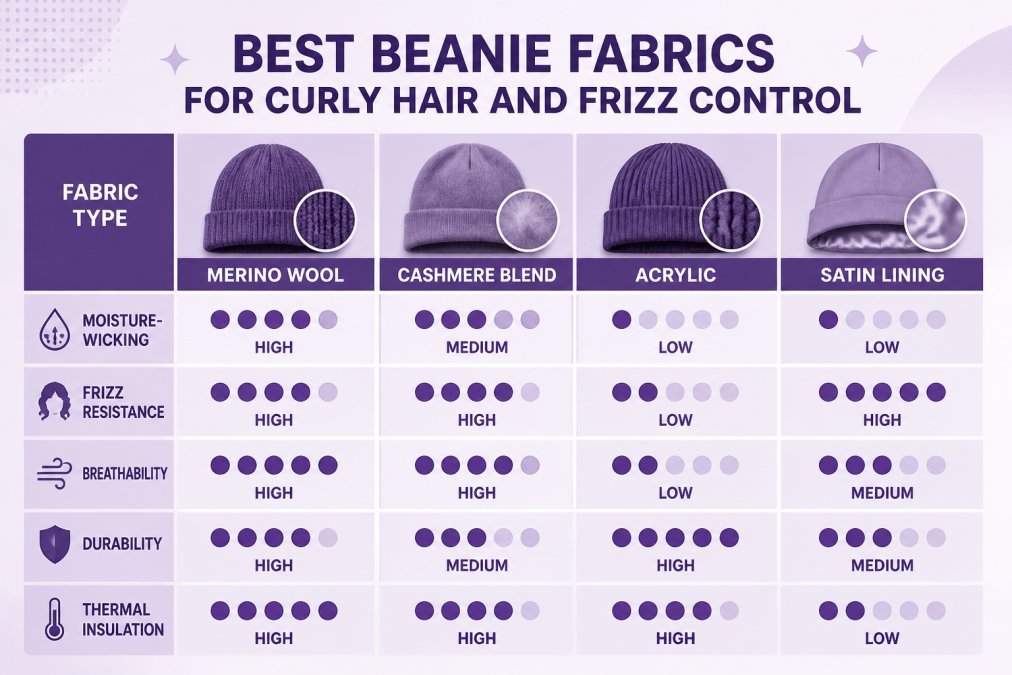
Avoid pure polyester and nylon beanies if you have frizzy hair. These materials trap moisture against your scalp and generate static electricity, which makes frizz worse. They're cheap, but they'll work against you, not for you.
Satin-Lined Beanies for Hair Protection
The interior lining of your beanie matters as much as the outer fabric. Satin-lined beanies for hair protection reduce friction dramatically, which is crucial for frizzy and curly hair. Cotton linings absorb moisture and create drag. Satin glides across your hair without catching or disrupting your curl pattern. Maintaining this smooth texture throughout the day often requires pairing your headwear with the right styler for curly hair to lock in definition and prevent unwanted flyaways.
A satin lining acts as a barrier between your hair and the beanie's inner texture. This prevents the microscopic friction that causes frizz. When you move your head, a cotton-lined beanie creates thousands of tiny tugs on your hair cuticles. A satin lining lets your hair slide smoothly, maintaining your curl structure and reducing static buildup.
Not all satin linings are equal. Real satin (made from silk or polyester with a smooth weave) works better than faux satin. Check the tag, genuine satin feels noticeably smoother and cooler to the touch than cotton. Many affordable beanies claim a "satin feel" but use glossy cotton, which offers minimal protection.
Crazy Beanies uses smooth interior finishes on all our designs to protect your hair's moisture barrier. Our 3D knit technology creates a structure that sits securely. The result is a beanie that keeps you warm.
How to Fix a Bad Hair Day with a Beanie
A beanie isn't just a winter accessory, it's a legitimate solution for a bad hair day. How to fix bad hair day with a beanie comes down to prep and styling. The right technique transforms a disaster into an intentional look.
Start with damp hair. Spray your hair lightly with water or a lightweight leave-in conditioner. Damp hair is more pliable and less prone to static electricity. Dry hair creates friction the moment it touches the beanie's interior. A light mist takes 30 seconds and makes a massive difference.
Apply your styling product while hair is damp. Use a curl-defining cream or frizz serum, something with slip that helps your curls clump together. Avoid heavy oils that weigh down your curls or create buildup. Work the product through your hair by scrunching upward, not by brushing downward.
Smooth your hair into a low ponytail or bun at the base of your neck. This prevents your hair from shifting around inside the beanie and creating new frizz. If you prefer your hair down, apply the beanie gently and adjust it so it sits evenly without bunching fabric in one spot.
Pull the beanie down slowly, checking that no strands are caught underneath. A single hair caught under the edge creates a pressure point that causes frizz. Take your time here, 15 extra seconds prevents 30 minutes of frustration later.
Leave the beanie on for at least 15 minutes. This allows your hair to set into a smoother pattern.
Cuffed vs. Slouchy Styles for Frizzy Hair
The silhouette of your beanie affects both how it sits on your head and how it manages your hair. Cuffed vs. slouchy beanies aren't just style choices, they have practical implications for frizz control and fit.
Cuffed beanies sit higher on your head with a folded band at the bottom. This design keeps the beanie from sliding down and creating friction at your hairline. Cuffed beanies work best if you have a smaller head or fine hair that gets weighed down easily. The cuff sits just above your ears, which means less fabric pressing against the sides of your head. For frizzy hair, this reduces the pressure points that flatten curls.
Cuffed beanies also tend to show more of your hair, which works if you're styling your curls deliberately. They're more versatile for layering with different outfits because they don't overwhelm your face.
Slouchy beanies drape lower on your head and back, covering more of your hair and neck. They offer more warmth and more coverage if you're dealing with severe frizz. Slouchy styles work better for larger heads and thicker hair because the extra fabric distributes pressure more evenly. The trade-off is that slouchy beanies create more bulk at the back of your head, which can flatten your curls if you're not careful about how you position your hair inside.
Slouchy beanies are also trendier for streetwear aesthetics. If you're aiming for a bold, fashion-forward look, slouchy is your choice. For frizz control, cuffed beanies can be a good option.
Your head shape matters too. If you have a rounder face, a cuffed beanie balances your proportions. If you have a longer face, a slouchy beanie adds visual width. The best beanie is the one that fits your head securely without slipping.
Care and Maintenance to Preserve Your Beanie's Fit
How you clean and store your beanie determines how long it lasts and how well it performs. Improper care causes pilling, stretching, and loss of shape.
Hand-wash your beanie in cool water with mild detergent. Machine washing, even on a gentle cycle, creates agitation that damages the knit structure and causes pilling. Fill a basin with cool water, add a small amount of detergent, and gently submerge your beanie. Let it soak for 5-10 minutes, then rinse thoroughly in clean cool water until no soap remains.
Squeeze out excess water gently, never wring or twist. Wringing damages the fibers and distorts the shape. Lay your beanie flat on a clean towel to dry. Reshape it while damp so it dries into the correct silhouette. Never hang it to dry, which stretches the fabric and ruins the fit.
Store your beanie flat or rolled loosely in a drawer. Hanging it on a hook causes stretching over time. Keep it away from direct sunlight and heat sources, which fade colors and weaken fibers.
Check your beanie monthly for pilling. Merino wool and acrylic blends are prone to pilling when they rub against other fabrics. Use a fabric shaver or a fine-toothed comb to gently remove pills. This takes 2-3 minutes and keeps your beanie looking new.
If your beanie loses its shape, you can reshape it by dampening it slightly and laying it flat on a towel in the correct form.
Styling Tips for Maximum Comfort and Coverage
The way you style your beanie dramatically changes how it looks and how well it protects your hair. These techniques work across all beanie types and hair textures.
Frequently Asked Questions
How do satin-lined beanies prevent frizz better than regular knit?
Satin creates a smooth surface that reduces friction between your hair and the beanie's interior. Friction causes the hair cuticle to raise, triggering frizz. With regular knit fabrics, the textured surface catches and disrupts hair strands throughout the day. Satin-lined options maintain a sleek barrier that keeps cuticles flat, especially effective for curly and coily hair types prone to frizz in humid conditions.
What materials work best for preventing hair static under beanies?
Merino wool with moisture-wicking properties resists static buildup better than synthetic-only materials. Merino wool naturally regulates moisture, which reduces electrical charge accumulation. Satin linings also eliminate static friction directly where your hair contacts the beanie.
How do you wear a beanie without causing frizz?
Start with damp or dry hair that's been smoothed or braided to reduce loose strands. Position the beanie so it sits evenly without bunching or creating pressure points that disturb hair texture. Avoid pulling it down too tightly, which increases friction. Choose cuffed styles that sit at your hairline. For protection, consider wearing the beanie over a silk or satin bonnet or scarf, creating a protective barrier between your hair and the knit fabric.
Are slouchy beanies still in style in 2026?
Yes, slouchy beanies remain a strong trend in 2026, but they're now styled more intentionally with streetwear and outdoor aesthetics. However, for frizzy hair management, cuffed and fitted styles can be a good option because they stay in place. If you prefer the slouchy silhouette, pair it with a satin lining or wear it over a protective base layer to minimize frizz while maintaining the aesthetic you want.
Frizzy hair doesn't have to derail your winter look. The right beanie protects your strands while keeping you warm and looking sharp. Crazy Beanies delivers handcrafted beanies with 3D knit technology that stays secure without slipping or creating pressure points that flatten curls. Our limited-edition designs ship in 24 hours or less, so you can solve your bad hair day today. Explore our collection and find the beanie that matches your style and protects your hair.


