

Table of Contents
- Why Bad Hair Days Hit Harder Than You Think
- Quick Fixes to Salvage Your Hair Right Now
- How to Repair Damaged Hair at Home
- At-Home Hair Color Correction: What Actually Works
- How to Fix a Bad Haircut While It Grows Out
- When to Skip DIY and Get Emergency Salon Help
- How to Fix Bad Hair Long-Term: A Recovery Roadmap
- Conclusion
Last Updated: August 11, 2026
Why Bad Hair Days Hit Harder Than You Think
Bad hair days are rarely just about hair. The Crazy Beanies team has watched customers reach for headwear because a rough hair morning genuinely derails confidence before the day even starts. Hair distress, the emotional response to hair that feels out of control, is a real psychological phenomenon that affects how you carry yourself in meetings and how much mental energy you burn before noon.
The good news: most bad hair situations have a fix. Some take five minutes. Others take a few weeks of consistent care. This guide covers quick styling rescues, at-home damage repair, color correction, haircut recovery, and the signs that tell you it's time to call a professional.
Quick Fixes to Salvage Your Hair Right Now
The fastest way to fix bad hair is to work with your hair's current state, not against it. Trying to force straight hair into a sleek blowout on a humid morning is a losing battle. Redirecting that energy into a style that suits the texture you actually have right now is almost always faster and more effective.
Taming Frizz and Flyaways Fast
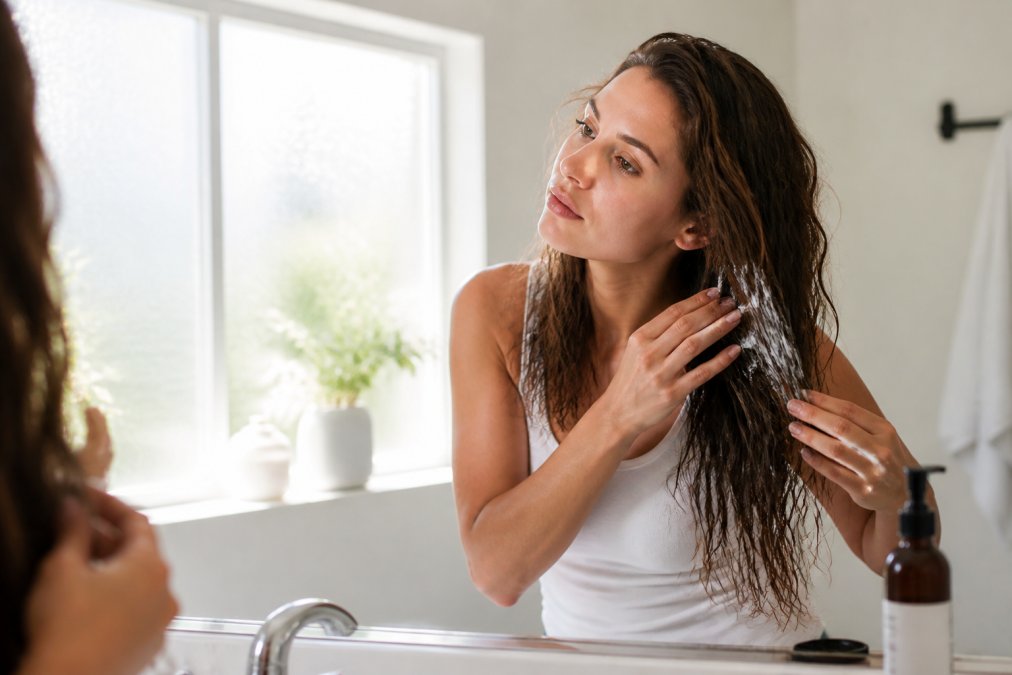
Frizz happens when the hair cuticle is raised and moisture from the air enters the hair shaft unevenly. A small amount of leave-in conditioner or lightweight hair oil applied to damp (not soaking wet) hair will smooth the cuticle and seal it fast. Dampen your hands, work the product through mid-lengths and ends, then scrunch gently.
For flyaways: a clean mascara wand with a tiny amount of hairspray tames individual strands, or run a dryer sheet lightly over the surface to neutralize static in seconds.
Braids, Updos, and Protective Styles That Work in Minutes
A three-minute braid is one of the most underrated tools for bad hair recovery. Protective styling hides texture problems, reduces frizz exposure, and looks deliberate.
Quick options that work on most hair textures:
- Low bun with a twist - Gather hair at the nape, twist twice, pin. Takes 90 seconds.
- Dutch braid - Works on second or third-day hair because the texture gives grip. Takes three minutes.
- Half-up knot - Pull the top section into a loose knot, leave the rest down. Takes 60 seconds.
- Slicked-back low ponytail - Apply gel to the hairline, smooth back, secure. Polished and fast.
Protective styles also reduce mechanical damage from repeated brushing and heat.
When Nothing Works: The Beanie Option
Some days, the hair just isn't cooperating, and that's a legitimate outcome. Covering up is not giving up. A well-made beanie, worn with intention, reads as a style choice rather than a concession. Crazy Beanies' 3D knit technology is designed specifically for this scenario: the structure holds its shape on the head without slipping, and the fit is snug enough to stay put without flattening hair underneath entirely.
How to Repair Damaged Hair at Home
Repairing damaged hair at home requires understanding what kind of damage you're dealing with before reaching for products. Thermal damage, chemical damage, and mechanical damage each respond differently to treatment.
Test Your Hair Porosity First
Hair porosity is the hair's ability to absorb and retain moisture. It determines which products will actually work for your hair type.
The float test is the simplest method: drop a clean strand of hair into a glass of water and wait two minutes.
- Floats: Low porosity. The cuticle is tightly closed. Hair resists moisture but also resists buildup.
- Sinks slowly: Medium porosity. The cuticle is balanced. Most products work well.
- Sinks fast: High porosity. The cuticle is open or damaged. Hair absorbs moisture quickly but loses it just as fast.
High porosity hair benefits from protein treatments and heavier sealants. Low porosity hair needs lighter products and heat to help open the cuticle during conditioning. According to American Academy of Dermatology guidance on hair care, understanding your hair's structure is the foundation of any effective repair routine.
Deep Conditioning and Bond-Repair Treatments
Deep conditioning is the core of any at-home hair repair protocol. A standard conditioner coats the hair shaft temporarily. A deep conditioner penetrates more deeply, restoring moisture balance and improving hair elasticity. For over-processed or chemically damaged hair, bond-repair treatments rebuild broken disulfide bonds caused by bleach, relaxers, or excessive heat.
A basic at-home repair routine:
- Apply deep conditioner to clean, damp hair
- Cover with a shower cap and apply gentle heat
- Leave for 20-30 minutes
- Rinse with cool water to close the cuticle
Repeat weekly for damaged hair, bi-weekly for maintenance.
Clarifying, Pre-Wash Oiling, and Scalp Health
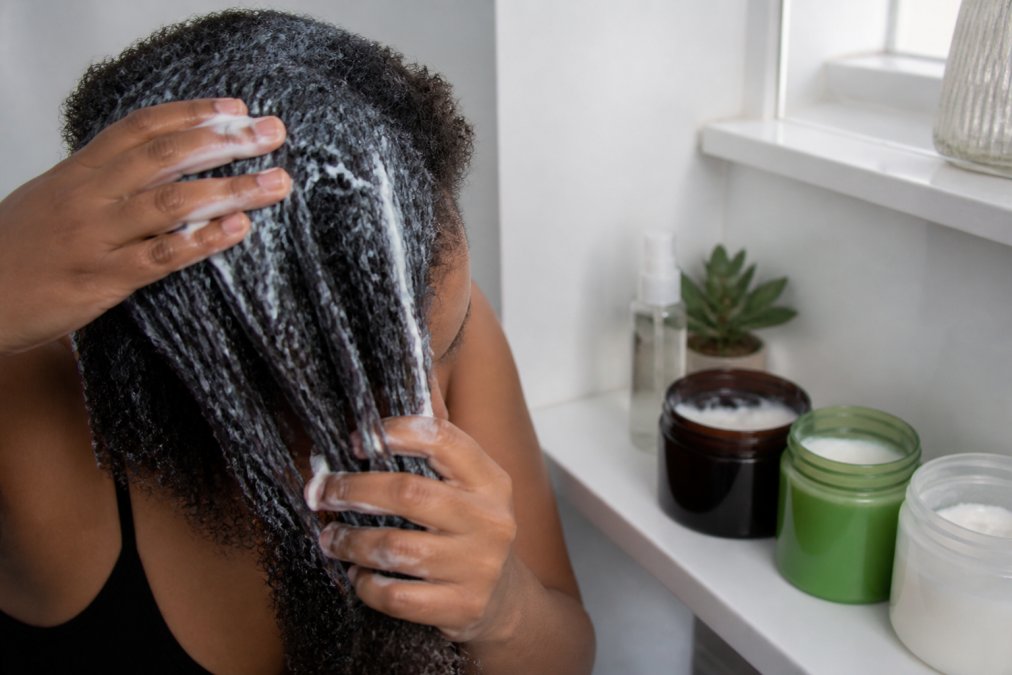
Product buildup is one of the most overlooked causes of dull, weighed-down hair. A clarifying shampoo, used once or twice a month, strips accumulated styling products, hard water minerals, and excess sebum from the hair shaft and scalp.
Pre-wash oiling involves applying oil to dry hair before shampooing. Oils like coconut, olive, or argan create a barrier that reduces protein loss during washing. According to research on coconut oil and hair protein loss, pre-wash oiling measurably reduces protein loss during the washing process.
Scalp health directly affects hair density and growth rate. Gentle scalp massage during washing increases circulation and helps clear follicle-blocking buildup.
At-Home Hair Color Correction: What Actually Works
At-home color correction is one of the riskier DIY hair projects. Done correctly, it saves money and time. Done incorrectly, it can cause breakage or chemical damage that takes months to reverse.
Fixing Brassiness with Toner and Gloss Treatments
Brassiness is the warm, orange or yellow tone that appears in bleached or lightened hair. Toner deposits cool pigment (usually blue or violet) to neutralize warm tones. A gloss treatment is a gentler alternative that adds shine and subtle color shift without the commitment of a full toner.
The process:
- Start with clean, towel-dried hair
- Apply toner or gloss evenly, section by section
- Process for the time specified (typically 10-20 minutes)
- Rinse thoroughly with cool water
- Follow with a deep conditioner immediately
For significant color correction, including fixing green tones from chlorine or correcting a color that came out far too dark, professional assessment becomes the smarter call.
Ingredient Safety Warnings for DIY Color Correction
Most at-home color and toner products are safe when used as directed. Risks increase with deviation from instructions or applying color to already heavily processed hair.
Ingredients to be aware of:
- Hydrogen peroxide (developer): Concentrations above 20 volume are rarely appropriate for at-home use and significantly increase the risk of scalp irritation and hair breakage
- Ammonia: Found in many permanent dyes, it opens the cuticle aggressively. Repeated use without adequate conditioning accelerates cuticle damage.
- PPD (para-phenylenediamine): A common allergen in dark permanent dyes. Always perform a patch test 48 hours before full application.
The FDA guidance on hair dye safety and allergic reactions recommends patch testing before every application, even if you have used the same product before.
How to Fix a Bad Haircut While It Grows Out
A bad haircut is temporary: hair grows roughly 6 millimeters per month on average, so most cuts grow out meaningfully within six to twelve weeks.
The most effective strategies while growing out a bad cut:
- Lean into texture: Wavy or curly styling hides blunt, uneven lines better than straight styles
- Use accessories deliberately: Clips, headbands, and scarves redirect attention and manage awkward lengths
- Get a shape-up, not a full cut: A skilled stylist can trim just enough to remove the worst of a bad cut without sacrificing length
- Avoid heat styling the shortest sections: Short pieces that are heat-damaged break off faster, extending the grow-out period
When to Skip DIY and Get Emergency Salon Help
Most bad hair situations are manageable at home. A few are not.
Go to a professional when:
- Hair is snapping off during normal combing or washing (active breakage)
- A color correction attempt has produced green, gray, or muddy tones that toners are not neutralizing
- A chemical relaxer or bleach has caused scalp burning or visible irritation
- A haircut has produced an uneven result that requires precision correction
- Hair elasticity is so compromised that strands stretch and do not spring back
A good stylist will sometimes tell you to do nothing for several weeks. Over-processed hair often needs rest more than additional chemical treatment.
How to Fix Bad Hair Long-Term: A Recovery Roadmap
Long-term hair repair is a process, not a product. The goal is to improve hair health from the scalp outward while protecting existing length from further damage.
| Phase | Timeframe | Focus | Key Actions |
|---|---|---|---|
| Stabilize | Weeks 1-2 | Stop active damage | Eliminate heat, switch to gentle shampoo, start deep conditioning |
| Repair | Weeks 3-8 | Rebuild moisture and bonds | Weekly deep conditioning, bi-weekly bond-repair treatment, pre-wash oiling |
| Maintain | Weeks 9-16 | Protect new growth | Protective styling, monthly clarifying, regular trims |
| Strengthen | Month 4+ | Optimize for hair type | Adjust routine based on porosity, introduce protein as needed |
Trim regularly. Split ends travel up the hair shaft if left untreated, causing breakage higher up. A small trim every eight to ten weeks prevents this.
Reduce thermal damage. Heat styling is the single most controllable source of ongoing damage. Dropping your styling tool temperature and using a heat protectant consistently makes a measurable difference over months.
Be patient with hair elasticity. Elasticity typically takes two to three months of consistent moisture-focused care before you notice meaningful improvement.
According to Harvard Health guidance on hair and scalp health, nutrition also plays a role in hair strength and growth rate. Deficiencies in iron, biotin, and protein are among the most common nutritional contributors to hair thinning and breakage.
For days when the recovery process is still in progress and hair simply isn't cooperating, protective styling and quality headwear remain the most practical bridge. Crazy Beanies' handcrafted beanies, built with 25 years of craft and 3D knit technology that holds its shape, are designed for exactly this kind of everyday use: covering a bad hair day without looking like you're hiding from one.
Frequently Asked Questions
Can you actually reverse hair damage at home?
You can reverse mild to moderate damage at home using consistent deep conditioning, bond-repair treatments, and protein treatments to restore hair elasticity and cuticle health. Severe chemical damage, especially from repeated bleaching or over-processed color, often needs professional intervention. The earlier you start a repair routine, the better your results. Protective styling and trimming split ends regularly also prevent further breakage while your hair recovers.
How long does it take to repair damaged hair?
Mild damage from thermal styling can show noticeable improvement within four to six weeks of consistent care. Chemical damage, including brassiness, breakage from bleach, or over-processed color, typically takes three to six months of targeted treatment to see real recovery. Full restoration depends on your hair density, porosity, and how consistently you follow a repair routine. Cutting off the most damaged sections speeds up the process significantly.
How do I quickly fix bad hair when I have no time?
The fastest fixes for bad hair are dry shampoo at the roots for volume and oil control, a slick bun or braid to hide texture problems, and a smoothing serum or lightweight oil to neutralize frizz and flyaways. If your hair simply will not cooperate, a well-fitted beanie or headwrap covers the problem completely while adding a deliberate style choice to your look rather than looking like damage control.
What does unhealthy hair actually look like?
Unhealthy hair typically shows as excessive frizz, visible split ends, dullness, and hair that snaps rather than stretches when pulled gently. Other signs include rough texture when you run your fingers along the strand, extreme tangles, and hair that absorbs water almost instantly, which indicates high porosity from cuticle damage. Brassiness in color-treated hair and a dry, flaky scalp often accompany overall hair health problems.
Bad hair, whether it's a rough morning or months of chemical damage, is a solvable problem. The challenge is knowing which solution fits which situation. Crazy Beanies exists at that intersection: when you need to look put-together while your hair is mid-recovery, our limited-edition headwear ships in 24 hours or less, fits without slipping, and looks like a deliberate style choice. Visit Crazy Beanies and find the piece that turns your worst hair day into your best accessory.
This article was written using GrandRanker


