

Table of Contents
- Why Beanies Cause Static in Winter (and Why It Gets Worse)
- How to Stop Hair from Sticking to Hat: 6 Fixes That Work
- Best Anti-Static Hair Products for Winter Hat Hair
- Brushing and Styling Techniques to Reduce Friction and Flyaways
- Home Humidity and Hair Hydration: A Room-by-Room Plan
- Post-Hat Styling Recovery: Fixing Hat Hair Without More Static
- Conclusion: Build a Static-Free Winter Routine
- Frequently Asked Questions
Last Updated: September 16, 2026
Why Beanies Cause Static in Winter (and Why It Gets Worse)
If you have ever pulled off a beanie and watched your hair leap toward the ceiling, you already know the problem. Learning how to prevent beanie hair static in winter starts with one fact: static is a charge imbalance, and cold weather stacks the deck against you. This guide from Crazy Beanies breaks down exactly what causes it and how to stop it.
The Science of Hair Static: Charge, Friction, and Dry Air
Beanie hair static is the buildup of electrical charge on the hair shaft, created when friction between hair and hat material transfers electrons that have nowhere to go. In winter, indoor humidity often drops well below the levels hair needs to stay calm, and dry air is a poor conductor. That trapped charge makes individual strands repel each other, which is why you get flyaways, frizz, and hair that clings to your face.
- Friction between your hair and the hat's interior
- Low moisture in the air and in the hair itself
- A hat fabric that holds a charge instead of dispersing it
How to Stop Hair from Sticking to Hat: 6 Fixes That Work
The fastest way to stop hair from sticking to a hat is to reduce friction at the contact point and keep hair hydrated before you go outside. The six fixes below are ordered from easiest to most involved, so you can start with the one that matches your routine.
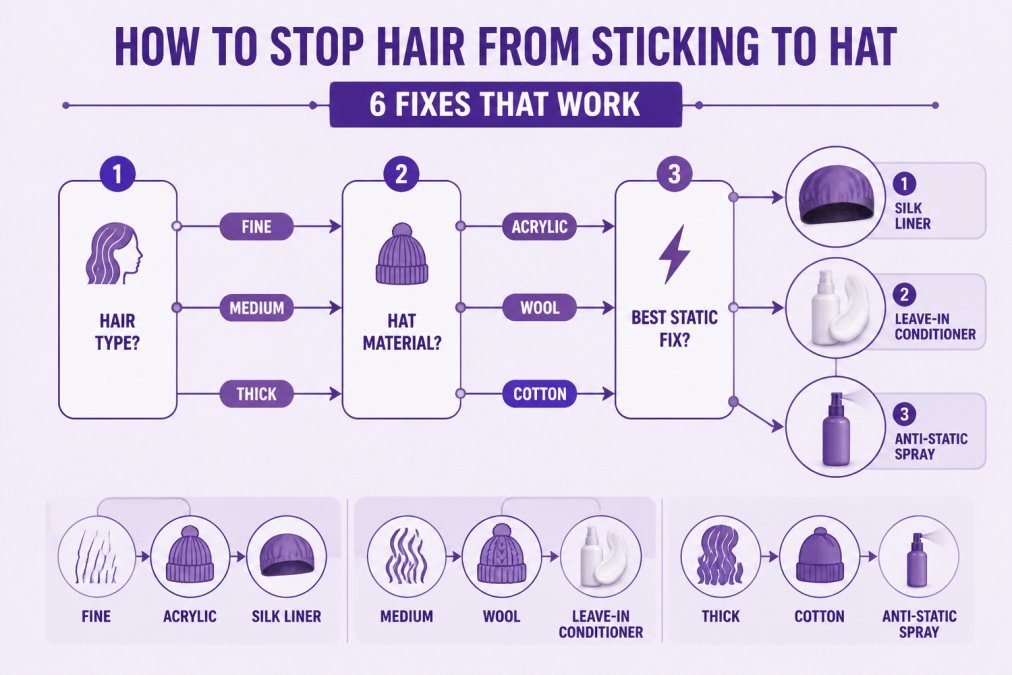
- Switch to a natural-fiber or silk-lined hat. Wool and cotton breathe and hold less charge than acrylic. Look for a merino or cashmere blend with a satin or charmeuse lining; a 100% acrylic beanie is the single biggest static trigger in most winter rotations.
- Apply a leave-in conditioner before you leave the house. A light layer coats the cuticle and slows moisture loss. A pea-sized amount for fine hair, a nickel-sized amount for thick hair, worked from mid-lengths to ends.
- Run a dryer sheet over the inside of the hat. The coating neutralizes surface charge in seconds. One pass over the interior band is enough; more leaves a residue that can transfer to hair.
- Brush with the right tool. A boar bristle brush distributes natural oils; a nylon brush adds friction and makes things worse. Boar bristle is best on dry hair; a wide-tooth comb is best on damp hair.
- Tie hair back loosely. Loose braids and low buns keep strands from rubbing against the fabric. A tight topknot presses hair against the hat band and concentrates friction in one spot.
- Add an anti-static accessory. Silk scrunchies and satin-lined headbands act as a buffer layer. Metal-free clips and silk-wrapped elastics also reduce charge transfer compared with standard rubber bands.
Fabric Choice: Natural Fibers vs. Synthetic Fibers
Natural fibers such as wool, cotton, and cashmere absorb moisture from the air and disperse charge, while synthetic fibers such as acrylic and polyester trap it. That single difference explains why the same head of hair behaves differently under two different beanies. If your winter rotation is mostly acrylic, that is likely your biggest culprit.
DIY Modifications: Silk Lining and Anti-Static Accessories
You can retrofit a hat you already own. Sew a strip of silk or satin along the inside band, or tuck a satin bonnet underneath the beanie as a barrier layer. Static-neutralizing accessories, including satin-lined headbands and silk scrunchies, work on the same principle: they put a low-friction material between your hair and the hat.
Best Anti-Static Hair Products for Winter Hat Hair
The best anti-static hair products for winter are the ones that add moisture without weighing hair down: leave-in conditioner, a lightweight hydrating oil, and a finishing anti-static spray. Match the product to your hair texture rather than buying the strongest option on the shelf.
- Fine hair: a water-based leave-in conditioner, applied sparingly
- Medium hair: a few drops of argan or jojoba oil worked through the ends
- Thick or coarse hair: a richer leave-in plus a light anti-static spray
- Any texture: keep a travel-size anti-static spray in your bag for touch-ups
Brushing and Styling Techniques to Reduce Friction and Flyaways
Brushing technique matters more than most people expect. A nylon brush generates friction and can make beanie hair static worse, while a boar bristle brush spreads natural oils down the shaft and smooths the cuticle. For frizz control, brush before you put the hat on, not after.
Three habits that cut static:
- Brush from the ends upward, never rip through tangles from the root
- Use a wide-tooth comb on wet hair, a boar bristle brush on dry hair
- Skip the ionic hair dryer on high heat; medium heat with the ion setting reduces charge
Home Humidity and Hair Hydration: A Room-by-Room Plan
Hair hydration starts with the air around you. When indoor humidity drops in winter, hair loses moisture to the environment and becomes a magnet for static. A room-by-room plan keeps humidity levels steadier:
| Room | Action | Why It Helps |
|---|---|---|
| Bedroom | Run a humidifier overnight | Hair rehydrates while you sleep |
| Bathroom | Shower with the door open | Steam raises local humidity |
| Living area | Keep a small humidifier near seating | Prevents all-day moisture loss |
| Entryway | Store hats away from radiators | Heat dries out hat fibers |
Post-Hat Styling Recovery: Fixing Hat Hair Without More Static
Fixing hat hair without creating more static comes down to rehydrating before you restyle. Most people reach for a brush first, which is exactly the wrong move: brushing dry, charged hair adds friction and makes the flyaways worse. This is the step most guides skip, and it is where a beanie-specific recovery routine beats generic winter hair advice.
Try this recovery sequence:
- Mist hair lightly with water or a leave-in spray. A fine mist, not a soak. You are softening the cuticle, not wetting the scalp.
- Wait thirty seconds for the cuticle to soften. This pause is what separates a reset from a re-frizz.
- Smooth with a boar bristle brush or your fingers. Start at the ends and work up. Do not rip through tangles.
- Apply a drop of hydrating oil to the ends only. Argan or jojoba for fine hair, a richer oil for thick hair. Roots stay untouched.
- Set the style with a light hold, not a heavy spray. Heavy product traps dryness underneath and the static returns within the hour.
Resetting Volume Without Re-Washing
The hardest part of hat hair is flattened roots. You do not need to re-wash to get volume back. Three techniques work without adding static:
- Finger-lift at the roots. Slide your fingers into the hair at the crown, lift upward, and hold for a few seconds while the misted hair dries. This is the gentlest volume reset and adds almost no friction.
- Cool-shot blow dry at the roots. If you have a dryer with a cool setting, aim it at the roots while lifting with a round brush. Cool air sets the lift without the heat damage that makes hair drier and more static-prone.
- Dry shampoo at the roots. A light dusting absorbs oil at the scalp that flattens hair under a beanie. Shake the can, spray from about six inches, wait a minute, then work it in with fingertips. Skip this step if your scalp is already dry, since dry shampoo can add to the static problem.
Texture-Specific Adjustments
Fine hair flattens fastest under a beanie and needs the lightest touch: a water mist and a cool-shot blow dry are usually enough, and oil should be limited to a single drop at the very ends. Medium hair tolerates a leave-in spray plus a few drops of oil and responds well to the finger-lift technique. Thick or coarse hair can handle a richer leave-in and a boar bristle brush through the mid-lengths, but it also holds static longer, so a finishing anti-static spray is worth keeping on hand.
What Not to Do
- Do not brush dry, charged hair before misting it. This is the single most common mistake and it doubles the flyaways.
- Do not apply oil at the roots. It flattens the scalp and does nothing for the mid-lengths and ends that actually rubbed against the hat.
- Do not reach for a heavy styling spray to force hair down. It traps dryness and the static returns within the hour.
- Do not re-wash just to reset hat hair. A mist, a cool shot, and a drop of oil solve most cases in under two minutes.
Conclusion: Build a Static-Free Winter Routine
The real fix for beanie hair static is not one product but a routine: hydrate your hair, choose a hat that fights friction, and keep the air in your home from drying out. That is where a well-made hat earns its place. Crazy Beanies builds limited-edition headwear with professional-grade 3D knit technology and a fake-proof fit, handcrafted in the USA with 25 years of real craft, and every piece ships in 24 hours or less.
Frequently Asked Questions
What hair type is most prone to static?
Fine hair is the most prone to static because each strand is lightweight and has less moisture retention. Dry, damaged hair and hair with split ends also build up electrical charge faster. If your hair texture is fine or chemically treated, you will notice flyaways and static buildup more quickly in winter weather. Using a leave-in conditioner and avoiding synthetic fibers against your hair helps the most.
Is static cling worse in winter?
Yes. Cold air holds less moisture, so indoor humidity levels drop and the dew point falls. Dry air lets electrical charge build up on your hair shaft instead of dissipating. Add friction from a beanie rubbing against your hair, and static gets worse. Running a humidifier to keep indoor humidity around 30-40% reduces static significantly during winter.
What can I spray on my hair to stop static?
An anti-static spray or a light mist of leave-in conditioner works fastest. You can also rub a dryer sheet lightly over your hair or hat lining, or mix a few drops of hydrating oil with water in a spray bottle. For the best anti-static hair products, look for formulas with glycerin or silicone that coat the hair cuticle and neutralize electrical charge without weighing hair down.
Does fabric choice affect beanie static?
Fabric choice is the single biggest factor. Synthetic fibers like acrylic and polyester generate and hold electrical charge, so hair sticks to them. Natural fibers like merino wool and cotton create less friction. A silk lining or satin bonnet underneath your beanie is the most effective barrier because silk does not conduct static. If you love a synthetic beanie, line it with silk or satin to stop hair from sticking to hat fabric.
Winter static is a friction problem, and friction is a materials problem. Crazy Beanies solves it at the source with 3D knit construction, cozy comfort, and stand-out designs that hold their shape without slipping. Get started with Crazy Beanies and build a winter wardrobe that looks as good as it feels.


