

Table of Contents
- 1. Choose the Right Fabric Weight and Material
- 2. Master Beanie Positioning and Head Placement
- 3. Best Beanie Styles for Different Hair Types
- 4. How to Fix Bad Hair With a Beanie
- 5. Beanie Fit Guide for Men and Women
- Cuffed vs. Slouchy: Which Style Works Without Bulk
- Common Mistakes That Make Beanies Look Bulky
- Frequently Asked Questions
Last Updated: September 23, 2026
1. Choose the Right Fabric Weight and Material
Learning 5 ways to wear a beanie without it looking bulky starts with the first mistake most people make: grabbing any beanie without checking the knit density. A heavy, tightly-knit beanie will bunch up on your head and create that bulky silhouette you're trying to avoid. Lightweight, breathable fabrics like acrylic blends or merino wool work better because they conform to your head shape without adding unnecessary volume.
Fabric weight matters more than material alone. A loosely-knit construction, even in thicker yarn, distributes more evenly across your head than a dense knit in thin yarn. Look for beanies labeled "lightweight" or "stretchy fabric" that flex with your head rather than fighting against it.
The Sleepy Beanie from Crazy Beanies uses ultra-soft acrylic knit that delivers comfort without bulk, making it a solid choice if you want a beanie that won't overwhelm your face or create a lopsided appearance. The stretchy construction adapts to your head shape instead of forcing a rigid silhouette.

2. Master Beanie Positioning and Head Placement
How you position a beanie on your head changes everything about how it looks. Most people pull it down too far, covering their hairline completely and creating a bulky crown. Instead, position the beanie slightly higher, let it sit about an inch above your natural hairline. This positioning reduces the visual weight at the top of your head.
The key is finding your personal "sweet spot" where the beanie covers your ears and keeps you warm without creating excess fabric bunching at the crown. Experiment by wearing it at different heights in front of a mirror. You'll notice that moving it back half an inch can completely transform the silhouette.
For a beanie fit guide for men and women, the rule is consistent: the brim should frame your face without overwhelming it. If you're seeing fabric puckering or creasing at the back of your head, you've positioned it too low. Adjust upward until those creases disappear.
3. Best Beanie Styles for Different Hair Types
Not all beanie styles work equally well for every hair type. Understanding your hair texture is essential to avoiding that dreaded bulky look.
Fine or thin hair: Cuffed beanies work best. The structured cuff adds definition without requiring volume underneath, and the tighter fit prevents your hair from creating extra bulk inside the hat. Avoid slouchy styles, they'll make your head look disproportionately small.
Thick or voluminous hair: Slouchy beanies are your friend. They accommodate your natural volume without forcing everything into a tight space. A high-top slouchy beanie distributes your hair more evenly, preventing the "mushroom head" effect that happens when thick hair gets compressed into a cuffed style.
Curly or coily hair: Loose-knit beanies with a relaxed fit prevent frizz and avoid compressing your curls into an unnatural shape. The fabric should give your curls room to breathe. Avoid tight cuffs that flatten your texture.
Straight hair: You have the most flexibility. Both cuffed and slouchy styles work, but pay attention to how the beanie sits on your head shape. A cuffed beanie emphasizes cheekbones, while a slouchy style softens angular features.
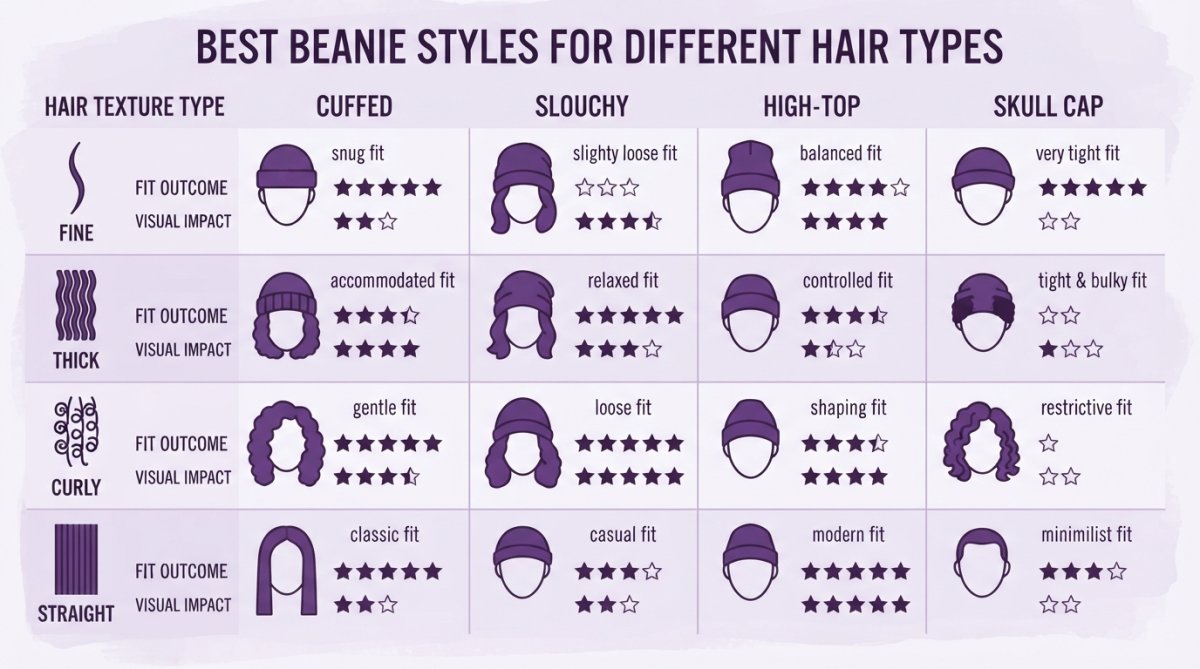
The Shooting Star Beanie from Crazy Beanies uses an acrylic-lycra blend that adapts to different hair types. Its balanced design works for most textures without requiring you to overthink the styling process.

4. How to Fix Bad Hair With a Beanie
This is where beanies become genuinely useful beyond just looking good. If you're dealing with hat hair, bedhead, or a day when you didn't have time to style, the right beanie strategy makes all the difference.
Start by understanding what's creating the bad hair day. Flat roots? Frizz? Awkward texture? Each problem has a beanie solution.
For flat, lifeless hair, create volume at the crown before putting on the beanie. Use a texturizing spray or dry shampoo at the roots, then flip your head upside down and fluff your hair. Put the beanie on while your hair is still lifted. When you remove it later, the texture holds better than if you'd started with flat hair.
For frizz or flyaways, apply a smoothing serum or light oil to your hair before wearing the beanie. The beanie creates a controlled environment that prevents moisture from making your hair expand. This works especially well with beanies made from softer fabrics that won't create additional friction.
For awkward texture or bedhead, the beanie becomes your reset button. Wear it for 30 minutes to an hour, then remove it. Your hair will have settled into a new shape, often looking better than it did before. This works because the beanie compresses your hair evenly, allowing it to relax into a smoother state.
5. Beanie Fit Guide for Men and Women
Fit is non-negotiable for avoiding the bulky look. A beanie that's too tight creates visible creases and bunching. One that's too loose slides around and looks sloppy. The sweet spot is a snug but comfortable fit that doesn't leave marks on your forehead.
For men, the fit guide starts with head circumference. Most beanies fit heads between 21-23 inches comfortably. If you're at either extreme, sizing matters. A beanie that's too small will bunch visibly; one that's too large will slide over your eyes.
For women, the same principle applies, though styling preferences often differ. Many women prefer a slouchy fit that allows for more hair volume, while others want a tighter, more structured look. The key is ensuring the beanie doesn't create tension points or visible creasing.
Test the fit by putting the beanie on and checking three points: Does it sit evenly around your head without tilting? Can you move it slightly without it sliding? Is there any uncomfortable pressure on your forehead or temples? If you answer yes to all three, the fit is right.
The stretchy fabric in quality beanies matters here. Crazy Beanies designs account for different head shapes through their 3D knit technology, which means the beanie adapts to you rather than forcing your head into a predetermined shape. This approach eliminates most fit issues without requiring multiple sizes.
Cuffed vs. Slouchy: Which Style Works Without Bulk
This is the question that determines your entire beanie strategy. Both styles can look great or terrible depending on your hair type and head shape, there's no universal winner.
Cuffed beanies fold up at the bottom, creating a structured, compact silhouette. They sit higher on your head, which makes them ideal if you're worried about bulk. The cuff adds visual interest without adding volume. They work best for people with fine hair, angular face shapes, or those who prefer a cleaner, more defined look.
The downside: cuffed beanies compress your hair at the nape of your neck, which can create uncomfortable pressure if you have thick or long hair. They also show every crease and imperfection in the knit, so fabric quality matters more.
Slouchy beanies hang lower and looser, accommodating more hair volume underneath.
Common Mistakes That Make Beanies Look Bulky
Understanding what NOT to do is just as important as knowing what to do. These are the patterns that consistently create the bulky appearance you're trying to avoid.
| Mistake | What It Creates | How to Fix It |
|---|---|---|
| Pulling beanie too low | Excess fabric at crown | Position 1 inch above hairline |
| Heavy knit without stretch | Visible bunching and creasing | Choose lightweight, stretchy fabric |
| Wrong style for hair type | Compression or excessive volume | Match cuffed/slouchy to hair texture |
| Poor fit (too tight or loose) | Uncomfortable pressure or slipping | Measure head circumference and test fit |
| Ignoring fabric weight | Bulky, oversized appearance | Check knit density before purchasing |
Frequently Asked Questions
How do you wear a beanie without it looking bulky?
The key is matching fabric weight to your hair volume and positioning the beanie correctly on your head. Lightweight, stretchy-knit beanies work better than heavy wool for most hair types. Position the beanie at your natural hairline rather than pushed far back, and use bobby pins to anchor flyaways. Cuffed styles sit higher and create less bulk than slouchy versions. Practice tucking hair strategically, pulling side sections back reduces crown volume.
What's the best beanie style for thick or voluminous hair?
Cuffed beanies work best for voluminous hair because they sit higher on the crown and don't compress as much fabric against your head. Avoid slouchy styles, which bunch excess fabric at the back. Lightweight, loose-knit beanies allow air circulation without adding perceived bulk. The Sleepy Beanie, made from ultra-soft acrylic knit, delivers comfort without heaviness. Pair cuffed styles with your hair pulled back slightly to minimize the silhouette.
How do you fix hat hair after wearing a beanie?
Hat hair happens when beanies compress hair strands and create creases. To fix it, lightly mist your hair with water and use your fingers to fluff the affected area, working against the direction of compression. For stubborn creases, blow-dry on low heat while gently separating strands. Prevention works better: wear your beanie slightly higher on your head and avoid keeping it on for extended periods without adjustment. Using a stretchy, well-fitting beanie reduces compression compared to tight or loose styles.
Does beanie fit matter for avoiding bulk?
Fit is critical. A beanie that's too tight compresses hair and creates visible bulges; one that's too loose slides down and bunches fabric at the back. Your beanie should sit snugly at your hairline with the crown sitting about one inch above your natural head shape. For men and women, proper fit means the beanie stays in place without slipping or requiring constant adjustment. Crazy Beanies' stretchy acrylic knit designs accommodate different head sizes while maintaining a clean silhouette without excess fabric.


