

Table of Contents
- Acrylic vs Cotton Beanies: Key Differences
- Warmth and Thermal Regulation
- Breathability and Moisture-Wicking Performance
- Durability, Pilling, and Shape Retention
- How to Wash Acrylic Beanies and Cotton Care
- Benefits of Cotton Beanies for Sensitive Skin
- Is Wool Beanie Worth It for Daily Wear
- Which Beanie Material Should You Choose
- Frequently Asked Questions
Last Updated: September 24, 2026
Acrylic vs Cotton Beanies: Key Differences
When choosing a beanie, the material matters. Acrylic and cotton represent two fundamentally different approaches to warmth, comfort, and durability.
Acrylic is a synthetic fiber engineered for insulation and color retention. Cotton is a natural fiber prized for breathability and softness. The choice between acrylic vs cotton beanies comes down to what you prioritize: maximum warmth and low maintenance, or breathability and natural feel.
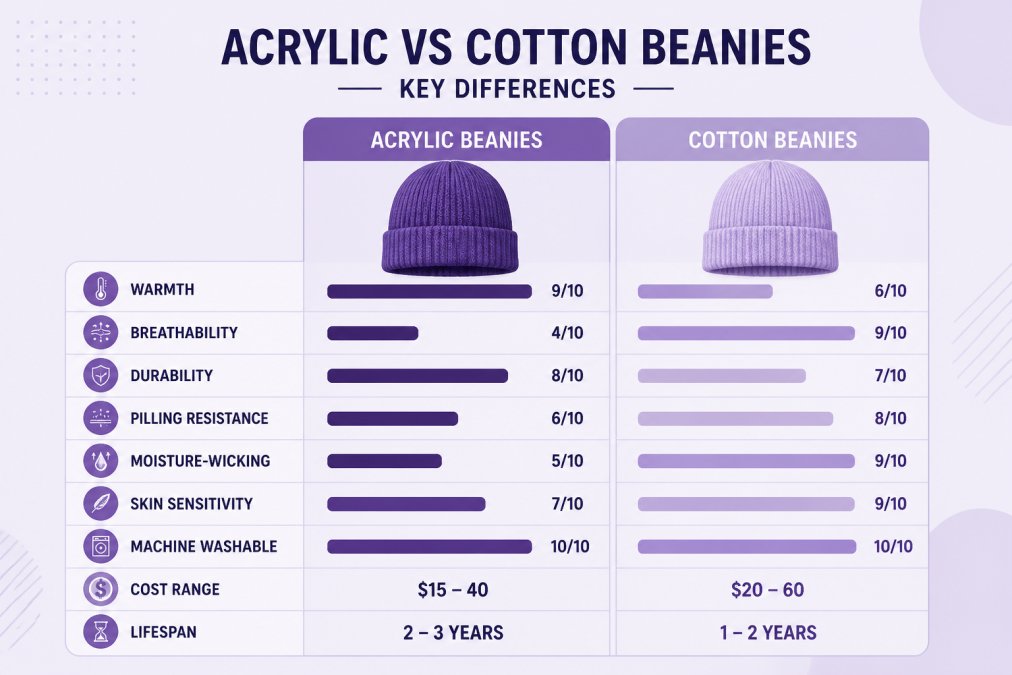
The real difference isn't which material is objectively better, it's which one matches your actual needs.
Acrylic beanies trap heat efficiently and resist fading. They're affordable and perform consistently in cold weather, though they don't wick moisture as effectively as natural fibers.
Cotton beanies excel at temperature regulation and feel softer against skin. They breathe better for layering or transitional seasons, though they pill more easily and may shrink if not cared for properly.
Warmth and Thermal Regulation
Acrylic's synthetic structure creates air pockets that trap warmth effectively for sustained cold exposure. Cotton provides moderate insulation but excels at regulating temperature rather than maximizing it.
Acrylic fibers are denser and less breathable, trapping heat close to your head. This makes acrylic beanies ideal for standing outside in winter or commuting in freezing conditions.
Cotton's natural fiber structure allows air circulation, preventing overheating during active wear. However, cotton won't insulate as aggressively as acrylic in extreme cold.
During seasonal transitions, a cotton beanie keeps you comfortable without overheating indoors, while acrylic might feel too warm moving between outside and heated spaces.
In dry, consistently cold climates, acrylic's superior heat retention is a genuine advantage. In humid or variable climates, cotton prevents the clammy feeling that develops under acrylic.
Breathability and Moisture-Wicking Performance
Cotton dominates in moisture-wicking: the natural fiber absorbs sweat and releases it into the air. Acrylic repels moisture, which can lead to sweat buildup under the beanie.
This matters if you exercise, commute by bike, or do physical work. Cotton's moisture-wicking prevents the clammy feeling that develops under synthetic materials.
Acrylic's moisture-repelling quality is an advantage when sitting still in freezing weather, preventing sweat evaporation. The trade-off is comfort during active wear.
Cotton feels lighter because air moves through it. Acrylic feels denser, which some find reassuring for warmth and others find uncomfortable.
High humidity reduces cotton's moisture-wicking advantage. In dry climates, cotton's breathability becomes more noticeable.
Durability, Pilling, and Shape Retention
Acrylic resists pilling better than many assume, especially in premium blends. Cotton pills more readily but maintains its shape better when properly cared for.
Acrylic's synthetic structure resists pilling, particularly in high-friction areas. Cotton's natural fibers are more prone to breaking under friction, developing fuzzy balls after weeks of daily wear.
Acrylic fibers stretch out over time with constant wear. Cotton maintains its form better because natural fibers have more elasticity.
Acrylic beanies lose their snug fit gradually after a season of regular wear. Our 3D knit technology maintains shape retention regardless of material choice.
Premium construction matters more than material choice for durability.
How to Wash Acrylic Beanies and Cotton Care
Acrylic and cotton require different washing approaches to maintain quality. Understanding these differences extends the life of your beanie and prevents premature damage.
Acrylic beanies tolerate machine washing in cold water on a gentle cycle. Use mild detergent and avoid fabric softener, which can leave residue that affects the beanie's texture. Acrylic handles regular washing without shrinking or losing shape, which is one reason it's popular for everyday wear.
Air dry acrylic beanies rather than using a dryer. Heat can damage synthetic fibers and cause permanent shape changes. Lay the beanie flat or drape it over a towel to dry. This takes 24 to 48 hours but preserves the fiber structure.
Cotton beanies need gentler handling. Wash in cool water on a delicate cycle to prevent pilling and shrinkage. Cotton can shrink 3 to 5 percent if exposed to hot water, which means a beanie that fit perfectly might become too tight after one hot wash.
Never wring out cotton beanies. Excess wringing breaks fibers and causes pilling. Instead, gently squeeze out water and lay flat to dry. This slower drying process prevents stress on the fibers.
Detergent choice matters for cotton more than acrylic. Use a gentle, pH-neutral detergent designed for delicate fabrics. Harsh detergents can weaken cotton fibers over time.
Storage affects longevity too. Store beanies in a cool, dry place away from direct sunlight. Acrylic can fade if exposed to prolonged UV light, though quality dyes resist this better. Cotton should be stored in breathable containers to prevent moisture buildup.
Benefits of Cotton Beanies for Sensitive Skin
Cotton's natural fiber composition makes it the superior choice for people with sensitive skin or scalp conditions. The fabric doesn't irritate like synthetic materials can, and it allows skin to breathe properly.
Acrylic can trigger itching and irritation in people with sensitive skin. The synthetic fibers don't absorb skin oils and moisture the way natural fibers do, which can create an uncomfortable environment against your scalp. Some people develop contact dermatitis from prolonged acrylic contact (Checking your browser).
Cotton's hypoallergenic properties come from its natural structure. The fiber doesn't contain chemical irritants and allows air circulation that prevents the buildup of sweat and bacteria. People with eczema, psoriasis, or general scalp sensitivity report significantly more comfort with cotton.
The softness factor matters beyond comfort. Cotton fibers are naturally smoother than acrylic, which means less friction and irritation. A cotton beanie won't cause the itching that sometimes develops from the texture of synthetic fibers rubbing against skin.
Chemical sensitivity is another consideration. Acrylic production involves synthetic dyes and finishing chemicals that can remain in the fabric. Cotton typically uses fewer harsh chemicals, though the specific dyes and treatments vary by manufacturer.
For people with severe sensitivities, organic cotton beanies offer an even safer option. Organic cotton is grown without synthetic pesticides and processed without harsh chemicals, reducing the risk of irritation.
The breathability of cotton also prevents the moisture-trapping environment that encourages bacterial growth. This reduces odor and keeps your scalp healthier during extended wear.
Is Wool Beanie Worth It for Daily Wear
Wool represents a third option worth considering alongside acrylic vs cotton beanies. Understanding wool's place in this comparison helps clarify whether it's worth the premium price.
Wool is a natural fiber that outperforms both acrylic and cotton in pure insulation. A quality wool beanie provides exceptional warmth without the bulk of acrylic. Wool also wicks moisture better than acrylic, though not quite as effectively as cotton.
The main drawback is itchiness. Wool fibers are coarser than cotton, and many people find traditional wool uncomfortable against their scalp. Merino wool, a finer variety, addresses this issue but costs significantly more than standard wool or acrylic.
Wool requires careful washing. It's prone to felting if exposed to hot water and agitation, which can permanently damage the beanie. Hand washing in cool water is necessary, making wool higher maintenance than acrylic.
Cost is another factor. For daily wear, the premium price may not justify the performance gains unless you live in a consistently cold climate.
Durability varies by wool quality. Premium wool lasts longer than acrylic but can pill if not handled carefully. The fiber is more fragile than acrylic despite its reputation for toughness.
For most people doing daily wear, acrylic or cotton serves better than wool. Wool shines in specific scenarios: extreme cold environments, outdoor enthusiasts who prioritize performance over convenience, or people willing to pay for premium comfort.
Our handcrafted construction ensures durability and comfort regardless of material choice.
Which Beanie Material Should You Choose
The right choice depends on your specific situation, not on which material is objectively superior. Here's how to decide between acrylic vs cotton beanies based on your actual needs.
Choose acrylic if you live in a cold climate, prefer low-maintenance care, want maximum warmth, or are on a budget.
Frequently Asked Questions
Is cotton or acrylic better for beanies?
It depends on your priorities. Acrylic beanies offer superior warmth and durability with excellent shape retention and resistance to pilling, making them ideal for daily winter wear. Cotton beanies excel at breathability and work better for sensitive skin, though they provide less insulation and may stretch over time. For cold-weather daily wear, acrylic typically wins; for mild seasons or skin sensitivity, cotton is the better choice.
How do I wash acrylic beanies to keep them in good condition?
Hand wash acrylic beanies in cool water with mild detergent, or use the gentle cycle on your washing machine. Avoid hot water, which can damage synthetic fibers. Never use a dryer; instead, lay flat or hang to air dry. This preserves the fiber's elasticity and prevents shrinkage. For stubborn stains, soak briefly in cool water before washing. Proper care extends the lifespan and maintains the beanie's shape and color.
Are acrylic beanies any good for everyday use?
Yes. Acrylic beanies are excellent for daily wear because they retain warmth in cold weather, resist pilling better than natural fibers, and maintain their shape after repeated washing. They're also hypoallergenic, making them suitable for most wearers. The main trade-off is breathability, acrylic doesn't wick moisture as effectively as cotton or wool, so they can feel less comfortable during active movement or in warmer conditions.
Do cotton beanies work well for people with sensitive skin?
Cotton beanies are one of the best choices for sensitive skin because the natural fiber is hypoallergenic and doesn't trigger itching or irritation like synthetic materials can. Cotton is soft against the skin and breathes better than acrylic, reducing sweat buildup and discomfort. However, pure cotton beanies offer less warmth and durability than acrylic blends, so look for quality construction to ensure they hold their shape through regular wear and washing.


