

Table of Contents
- Why Most Beanies Flatten Fine Hair
- Best Beanie Materials for Fine Hair
- How to Prevent Hat Hair
- How to Fix a Bad Hair Day With a Beanie
- Fit and Construction: What Keeps Volume Intact
- Caring for Beanies So They Keep Their Shape
- Conclusion
- Frequently Asked Questions
Last Updated: September 16, 2026
Why Most Beanies Flatten Fine Hair
The best beanies for fine hair volume solve a physics problem: they reduce friction at the hair cuticle while holding a shape that doesn't compress your roots. Standard acrylic knits create static that makes thin hair cling and collapse, and a tight, flat-knit crown presses every strand against your scalp within minutes. This guide from Crazy Beanies breaks down which materials, fits, and styling moves actually preserve volume.
Fine hair has fewer strands per square inch, so each carries more of the visual load, flatten a few and the whole style reads limp. That's why material choice matters more here than for thick hair, and why "just size up" misses the real culprit.
Best Beanie Materials for Fine Hair
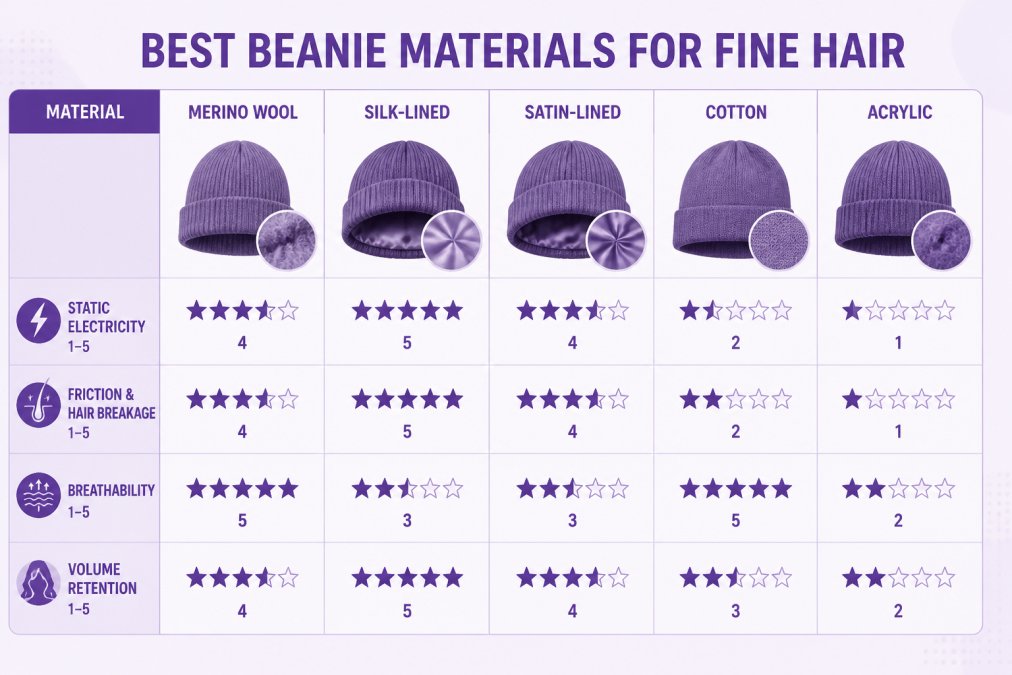
Merino wool and silk or satin linings are the best beanie materials for fine hair because they minimize friction and static while regulating temperature. Acrylic and other synthetic fibers are the worst offenders: they generate static electricity, which lifts the hair cuticle and leaves thin hair frizzy and flat. If you want volume retention, prioritize natural fibers or a lined interior over a soft-touch synthetic blend.
Here's how the common options stack up:
| Material | Static Electricity | Friction / Breakage | Breathability | Volume Retention |
|---|---|---|---|---|
| Merino wool | Low | Low | High | High |
| Silk-lined | Very low | Very low | Moderate | High |
| Satin-lined | Very low | Very low | Moderate | High |
| Cotton | Moderate | Moderate | High | Moderate |
| Acrylic | High | High | Low | Low |
Merino wool's fine, crimped fibers trap air for thermal regulation without the bulk of coarser wool, and they're breathable, so your scalp doesn't overheat and sweat, a hidden cause of collapsed roots. Silk and satin linings create a smooth, low-friction barrier so strands slide instead of catching and snapping.
Breathability vs. Static Electricity
Breathability and static are two sides of the same problem. A breathable fabric lets moisture and heat escape, keeping roots from going limp, while a fabric that traps heat creates the dry, charged environment where static thrives, and static makes fine hair stand up, tangle, and lose its shape.
Match the fabric to the conditions. In cold, dry winter air, merino wool or a lined beanie insulates without sealing in moisture, and natural fibers don't build the charge synthetics do. In milder weather, a lighter cotton or lined knit prevents overheating. If you're static-prone, a dryer sheet pass or a light mist of leave-in conditioner before putting the hat on neutralizes the charge.
How to Prevent Hat Hair
You prevent hat hair by defeating three forces: friction at the cuticle, compression at the roots, and static charge. Most guides stop at "wear a silk lining and don't pull it down tight," which ignores static, the force that does the most damage to fine hair. Fine hair carries less mass per strand, so a small charge lifts the cuticle, creates frizz, and pulls strands toward the knit.
Here is the mechanism, broken down:
- Friction roughens the outer cuticle layer. Once the cuticle is raised, strands catch on each other and on the knit, which reads as frizz and tangling.
- Compression presses the root section flat against the scalp. Fine hair has fewer strands per square inch, so flattening even a small section removes a disproportionate share of your visible volume.
- Static builds when a dry, insulating fabric rubs against dry hair. Synthetics like acrylic are the worst offenders because they hold a charge; natural fibers and smooth linings dissipate it.
A few habits make the biggest difference:
- Choose a silk-lined or satin-lined interior to cut friction at the cuticle
- Pick a slouchy fit over a tight skull cap so the crown doesn't press on your roots
- Avoid pulling the beanie down over your forehead, which flattens the front section
- Let hair cool completely after styling before putting the hat on
- Neutralize static before it starts, a light mist of leave-in conditioner or a quick pass with a dryer sheet along the inside of the hat
That cooling point matters: hair set with heat holds its shape best once cooled. Put a beanie on warm hair and you're pressing the style flat while it's still pliable.
Root-Lifting Techniques Before You Put It On
Root lifting happens before the beanie ever touches your head. Build structure at the base so the beanie sits on top of it rather than crushing it, fine hair loses volume fastest at the root, so the payoff is largest there.
Apply volumizing mousse or root-lifting spray at the scalp, not the ends, and work it in with fingertips.
A quick sequence that works for most fine-hair routines:
- Mist root-lifting spray at the scalp and massage in
- Blow-dry roots upward with a round brush or upside down
- Hit roots with cool air to set the lift
- Add dry shampoo at the crown for grit if hair is slippery
- Let everything cool fully before the beanie goes on
How to Fix a Bad Hair Day With a Beanie
A beanie is one of the fastest fixes for a bad hair day, but only if you style around it instead of hiding under it. Give the hat a job: let it frame a style rather than squash one. Pulling every strand under the knit flattens fine hair instantly, while leaving some hair out or adding texture turns a bad hair day into a deliberate look.
Hat-Friendly Hairstyles for Fine Hair
The styles that work under a beanie share three traits: low tension at the root, volume left at the crown, and ends protected from friction. Anything slicked tight against the scalp fails all three.
| Style | Root Tension | Crown Volume | End Protection |
|---|---|---|---|
| Low loose braid | Low | High | High |
| Low bun or twist | Low | Moderate | High |
| Side-swept, hat pushed back | Very low | High | Moderate |
| Low ponytail + face-framing | Low | Moderate | Moderate |
| Half-up, loose top | Low | High | Moderate |
Fit and Construction: What Keeps Volume Intact
Fit and construction decide whether a beanie preserves volume or destroys it. A stretchable design with a non-slip interior band holds the hat in place without clamping down, and a slouchy crown leaves room for hair to keep its shape. Knit density matters too: dense knits block wind but feel heavy and flattening, while looser knits breathe better but offer less structure.
A fake-proof fit comes down to three things:
- A stretchable band that grips without squeezing
- A crown deep enough to leave space above your roots
- A non-slip interior so you're not constantly adjusting and adding friction
Caring for Beanies So They Keep Their Shape
Care determines how long a beanie keeps the shape that protects your volume. Hand-wash wool and lined beanies in cool water with gentle detergent, then lay flat to dry. Never wring or hang them wet, both distort the knit and stretch the crown, and a beanie that has lost its shape sits flatter on your head.
Conclusion
Fine hair doesn't have to mean flat hair under a winter hat. Match the material to the conditions, choose a fit that leaves room for your roots, and lift your roots before the beanie goes on, and you keep the volume you styled. The hats that do this best are built, not just knitted: a stretchable, non-slip fit, a crown that holds its silhouette, and low-friction materials that protect the cuticle.
Frequently Asked Questions
What hair type is most prone to static?
Fine hair and thin hair are the most prone to static electricity because individual strands are lightweight and carry less moisture, so they react quickly to friction from synthetic fibers. Dry winter air makes it worse. Choosing a beanie with natural fibers or a silk-lined or satin-lined interior reduces the friction that builds up static, which helps protect the hair cuticle and keeps frizz reduction under control.
How do you keep volume in your hair while wearing a hat?
Start with dry, product-free roots, then use a root-lifting technique like flipping your head upside down or using a volumizing spray before putting on the beanie. Choose a slouchy fit or a cuff beanie that sits above the hairline rather than pressing flat against the scalp.
What materials are best for beanies to prevent hair breakage?
Silk-lined and satin-lined beanies are the top choice because the smooth surface reduces friction against the hair cuticle. Merino wool is a strong natural fiber option when it is soft and breathable. Avoid rough acrylic or coarse synthetic fibers that grab and snap fine strands. Knit density also matters: a tighter, smoother knit creates less friction than a loose, fuzzy one, which helps prevent hair breakage and frizz reduction throughout the day.
Is static cling worse in winter?
Yes. Cold outdoor air holds less moisture, and indoor heating dries it out further, so hair loses moisture retention and becomes a magnet for static electricity. Wearing a beanie made from synthetic fibers in these conditions increases friction and makes static worse. Natural fibers or a silk-lined interior, plus a light leave-in conditioner or anti-static spray, keeps fine hair calmer and reduces hat hair and flat roots.


