


News
5 Phases to Transition to a Healthy Hair Routine
Last Updated: October 25, 2026
Quick Summary
A transition to healthy hair routine starts by assessing your current hair type, scalp condition, and products, then gradually extending time between washes and swapping products slowly to let your hair adapt. This phased approach typically shows better results than sudden changes over several weeks.
- Week 1-2, wash every 2-3 days instead of daily to begin extending time between washes.
- Week 3-4, increase to washing every 3-4 days as your scalp adjusts.
- By week 5 and beyond, most people find their natural rhythm of 2-3 times per week.
- Avoid tight hairstyles during transition to prevent hair breakage and scalp damage.
- Gradually swap products rather than overhauling your entire routine at once.
Table of Contents
- Phase 1: Assess Your Current Hair and Scalp Needs
- Phase 2: How Often to Wash Hair During Your Transition
- Phase 3: Gradually Swap Products Without Overhauling Everything
- Hair Routine for Beginners: Building Your Core System
- How to Transition to Natural Hair: Addressing Common Challenges
- Hair Breakage Prevention: Protecting Your Hair During Change
- Troubleshooting and Realistic Timelines for Results
- Protect Your Hair While You Transition: Crazy Beanies Has You Covered
- Frequently Asked Questions
Phase 1: Assess Your Current Hair and Scalp Needs
Before you begin your transition to healthy hair routine, understand what you're working with. Your hair type, scalp condition, and current routine all matter.
Start by asking yourself these questions:
- What's your hair texture? Is it straight, wavy, curly, or coily?
- How does your scalp feel? Dry, oily, flaky, or balanced?
- What products are you using now? Check the labels for sulfates, silicones, and parabens.
- How often do you wash? Daily, a few times a week, or less?
- Do you use heat styling tools regularly?
Write down your answers. This becomes your baseline. You'll compare it to how your hair responds as you transition to a healthy hair routine.
Check your scalp health next. If you see flaking, redness, or itching, that's important information.
Document this assessment. Take photos if you can. You'll want to track changes over the next few weeks and months as you transition to a healthy hair routine.
Phase 2: How Often to Wash Hair During Your Transition
How often to wash hair depends on your scalp type and current routine.
Start by gradually extending the time between washes:
- Week 1-2: Wash every 2-3 days instead of daily
- Week 3-4: Wash every 3-4 days
- Week 5+: Find your natural rhythm (usually 2-3 times per week)
Gradually extend the time between washes to help your hair adapt during transition.
| Timeline | Washing Frequency |
|---|---|
| Week 1-2 | Every 2-3 days |
| Week 3-4 | Every 3-4 days |
| Week 5+ | 2-3 times per week |
Phase 3: Gradually Swap Products Without Overhauling Everything
This gradual approach lets your hair adapt. You'll notice improvements without shocking your system. Many people see better results with this phased transition to a healthy hair routine than they do with sudden changes.
Hair Routine for Beginners: Building Your Core System
- A gentle shampoo for your hair type, selected with guidance on beanie sizing for women with thick hair
- A conditioner for your hair lengths and ends
- A leave-in conditioner (optional but recommended)
- A heat protectant if you use heat styling
How to Transition to Natural Hair: Addressing Common Challenges
Some people choose a big chop, cutting off all treated hair at once. Others prefer gradual trimming. Both approaches work. Choose based on what feels right for your style and comfort level.
Hair Breakage Prevention: Protecting Your Hair During Change
Avoid tight hairstyles. Learn how to prevent hair breakage from daily styling. Tension on your hair roots causes breakage and can damage your scalp (the American Academy of Dermatology). Wear your hair loose or in loose styles most of the time. Save tight styles for occasional use.
Troubleshooting and Realistic Timelines for Results
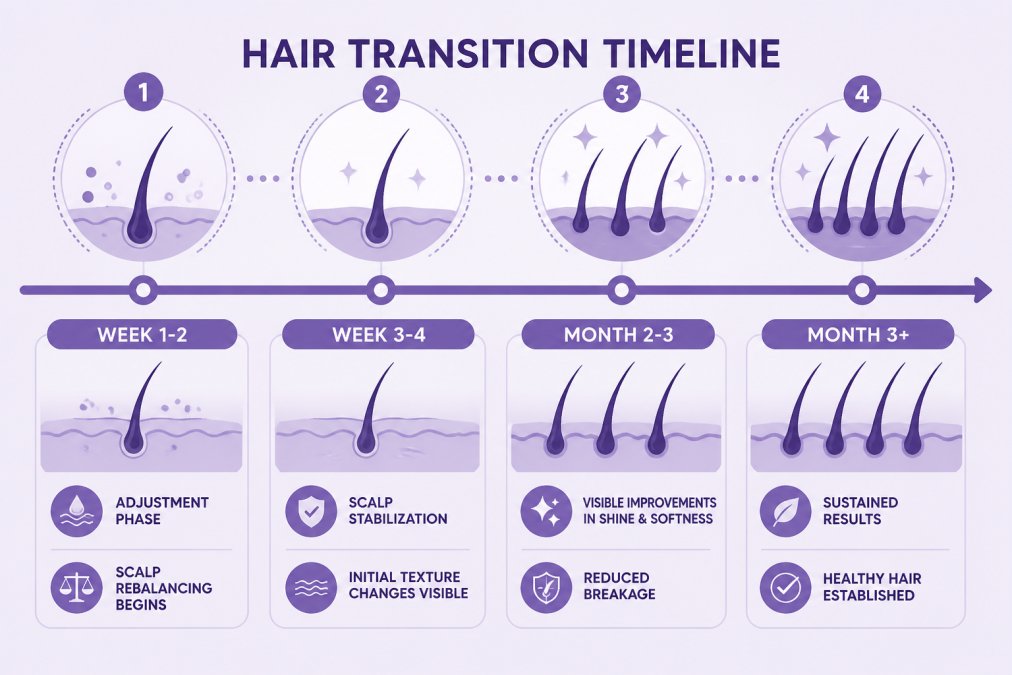
Problem: Greasy hair during the first few weeks
Problem: Your hair feels dry or brittle
Problem: Increased breakage
Problem: No visible improvement after 4 weeks
Protect Your Hair While You Transition: Crazy Beanies Has You Covered
Our handcrafted beanies ship in 24 hours or less. Discover why colorful beanies will change the way you handle bad hair days.
Frequently Asked Questions
How long does it take to see results from a healthy hair routine transition?
Most people notice initial changes within 2-4 weeks as their scalp adjusts and product buildup clears. Visible improvements in shine, strength, and texture typically appear between 6-12 weeks. Hair growth and reduced breakage take longer to assess, track progress with photos every 4 weeks. Results depend on your starting point, hair type, and consistency with the new routine.
How often should you wash your hair during a transition to healthy hair?
Start by washing 2-3 times per week, then adjust based on your scalp's response. If your scalp feels greasy, you may be washing too frequently; if it feels dry and flaky, increase frequency slightly. Most people find their optimal wash schedule within 4-6 weeks. Scalp health improves when you wash less often, but individual needs vary by hair texture and lifestyle.
What should I do if my hair gets worse before it gets better during the transition?
A temporary adjustment period is normal, your scalp may overproduce oil or your hair may feel drier as it rebalances. This usually resolves within 2-3 weeks. If frizz, breakage, or flaking persists beyond 4 weeks, reassess your products for compatibility with your hair type. Consider switching one product at a time rather than changing your entire routine at once, and ensure you're using heat protectant when styling.
Do I need to buy all new hair products at once to transition to a healthy routine?
No, gradually replace products as your current ones run out. Start with a sulfate-free shampoo and a conditioner matched to your hair type, then add a leave-in conditioner or hair oil once you see how your hair responds. This phased approach prevents waste, saves money, and helps you identify which products work best for your hair. Track what you're using in a simple hair journal to spot patterns.
