

Table of Contents
- Why Beanie Sizing Matters for Thick Hair
- Measuring Head Circumference for Hats
- Understanding Ease and Negative Ease
- Best Beanie Styles for Thick Hair
- How to Keep a Beanie on Thick Hair
- Adjusting Knitting Patterns for Larger Sizes
- Material Selection for Hair Health
- Common Mistakes to Avoid
- Frequently Asked Questions
Last Updated: September 29, 2026
Why Beanie Sizing Matters for Thick Hair
Finding the right beanie sizing for women with thick hair is more than just grabbing whatever fits. Thick hair takes up real space. A beanie that works for fine hair will slip down, bunch awkwardly, or create uncomfortable pressure points. The wrong fit turns a cozy accessory into a frustration you'll pull off within an hour.
Most sizing guides ignore hair volume entirely, measuring only head circumference. For women with thick hair, that's just the starting point.
A proper beanie for thick hair requires three things: accurate measurement that accounts for volume, understanding how ease affects fit, and choosing styles that work WITH your hair instead of against it. Get these right, and you'll have a beanie that stays put, feels comfortable, and actually looks good.
Measuring Head Circumference for Hats
Proper beanie sizing starts with measuring your head circumference, the distance around your head at its fullest point. Most people measure incorrectly by pulling too tight or measuring at the wrong spot.
Tools You'll Need
Gather a soft measuring tape (or string), mirror, pen, and comb. If using string, measure it against a ruler afterward.
Step-by-Step Measurement Process
Follow these steps to get an accurate head circumference measurement:
Step 1: Prepare Your Hair Comb your hair into your normal style, not slicked down or artificially fluffed. Your styling adds volume that affects beanie fit.
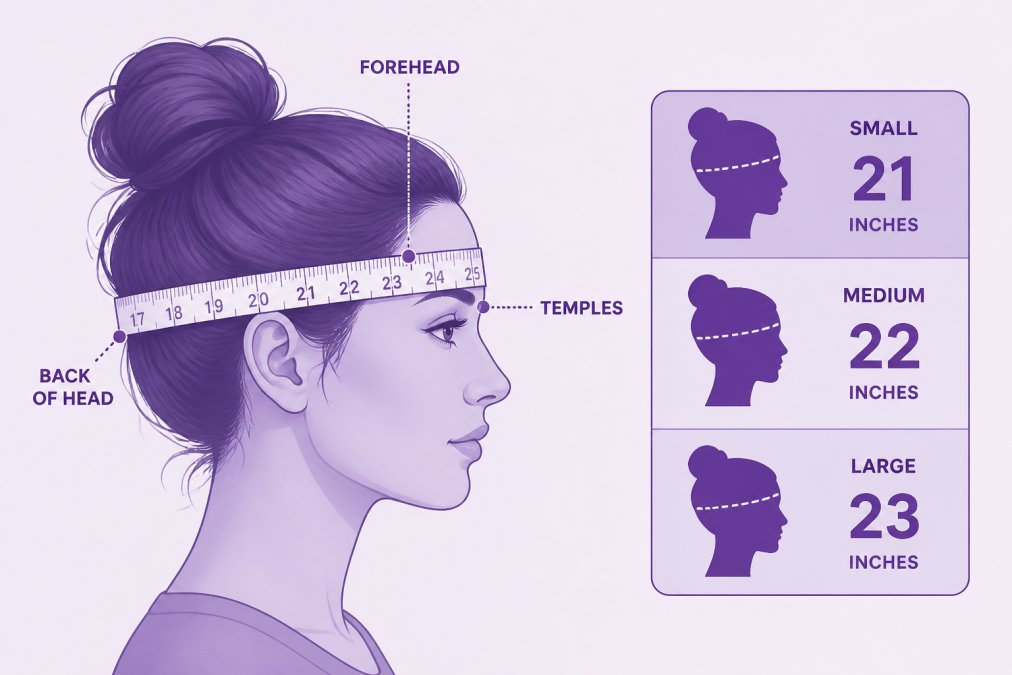
Step 2: Find the Fullest Point Place the tape about half an inch above your eyebrows, across your temples, and around the back of your head at its widest point.
Step 3: Wrap and Measure Wrap the tape snugly around your head at the fullest point, snug enough that you can slide one finger underneath. A tight tape gives a smaller measurement that won't fit your actual head and hair.
Step 4: Record Your Measurement Write down the measurement in inches. Most women's head circumferences range from 21 to 23 inches.
Expected Result: You now have your baseline head circumference measurement.
Accounting for Hair Volume in Your Measurement
Beanie sizing for women with thick hair requires accounting for hair volume separately from head circumference. Thick hair occupies space that a beanie compresses, causing discomfort and slipping. Add 0.5 to 1 inch to your baseline measurement to account for actual hair volume. If your measured circumference is 22 inches, target 22.5 to 23 inches for sizing.
Understanding Ease and Negative Ease
Ease is the difference between your head measurement and the beanie's finished circumference. Positive ease (beanie larger than your head) creates a loose fit; too much causes sliding. Negative ease (beanie smaller than your head) creates a tight fit and requires yarn with significant stretch factor.
For beanie sizing for women with thick hair, aim for 0.5 to 1.5 inches of positive ease, enough room for hair volume without excessive slouch. Standard recommendations of 2 to 3 inches are too much; the extra space causes the beanie to sit lower and slip.
If you're knitting your own beanie, this means your cast-on edge should be 0.5 to 1.5 inches larger than your head circumference. If you're buying a finished beanie, check the product description for the finished circumference and compare it to your measurement plus your desired ease.
Best Beanie Styles for Thick Hair
Not all beanie styles work equally well with thick hair. Some styles fight against your hair volume. Others work with it. Choosing the right style makes a dramatic difference in comfort and appearance.
Slouchy Beanies for Maximum Volume
Slouchy beanies accommodate thick hair naturally with 2 to 3 inches of positive ease, preventing low placement and creating visual interest. They require more yarn and cost more than fitted versions, but the comfort justifies the investment for thick hair.
Fitted Hats With Stretch Factor
Fitted hats with stretch factor work for thick hair if made from merino blends, high-recovery acrylic, or spandex-blended materials. Aim for 0 to 0.5 inches of positive ease, relying on yarn stretch to accommodate your head and hair. Test stretch before buying; without elasticity, fitted hats feel too tight.
Adjustable Fit Options
Adjustable beanies with drawstrings or toggles let you customize fit for your specific head circumference and hair volume. They work well for varying hair volume and gift-giving, though adjustable features may look less polished and feel uncomfortable for some.
How to Keep a Beanie on Thick Hair
Even with perfect sizing, beanies can slip on thick hair due to insufficient friction. You may need additional grip solutions.
Non-Slip Linings and Materials
Interior material affects grip: smooth acrylic slides easily, while textured cotton or fleece grabs hair. Silk-lined beanies are gentle but slippery; choose textured interiors for grip. Non-slip rubber or silicone dots on the interior band provide effective grip without discomfort.
Test the interior material before buying. Run your hand along the inside of the beanie. Does it feel smooth or textured? Smooth materials slip. Textured materials grip. For thick hair, textured interiors are your friend. ::: While a textured beanie provides the necessary friction to stay in place, incorporating a silk layer remains the gold standard for protecting long hair from breakage and friction damage.
Hairstyle Adjustments for Grip
Textured, slightly tousled hairstyles provide more grip than smooth, slicked-back styles. High ponytails or crown buns anchor beanies effectively. Experiment with different hairstyles to find what works with your beanie and head shape.
Adjusting Knitting Patterns for Larger Sizes
If you're knitting your own beanie for thick hair, you'll likely need to adjust standard patterns. Most beanie patterns are designed for average head circumferences and don't account for larger sizes or significant hair volume.
Modifying Stitch Count and Gauge
The foundation of any knitting pattern is the gauge swatch. Your gauge tells you how many stitches and rows equal one inch of finished fabric. If you knit at a different gauge than the pattern specifies, your beanie will be a different size.
To adjust a pattern for a larger head circumference, you need to increase your stitch count. Calculate the increase like this:
Measure your desired finished circumference. Multiply that by your gauge (stitches per inch). That's your new cast-on number.
Example: Your desired finished circumference is 23 inches. Your gauge is 5 stitches per inch. Your cast-on should be 115 stitches (23 × 5 = 115).
This simple math works for any head circumference. The tension and yarn weight stay the same. Only the stitch count changes.
Crown Shaping for Volume
Standard beanie patterns decrease stitches evenly as they approach the crown. This creates a cone shape that works fine for average hair. For thick hair, you need a flatter crown that doesn't come to a point.
Modify the crown shaping by decreasing fewer stitches per round in the early decreases.
Material Selection for Hair Health
What your beanie is made from matters for more than just comfort. The material affects your hair health. Rough materials cause breakage and frizz. Soft materials protect your hair.
Yarn Weight Considerations
Yarn weight determines how thick and warm your beanie is. Thicker yarn (bulky or super bulky) creates a beanie quickly but can feel heavy on your head. Thinner yarn (sport or DK weight) creates a lighter beanie that works better for moderate temperatures.
Silk-Lined Options for Frizz Prevention
A silk-lined beanie protects your hair from friction damage. Silk is smooth and creates minimal friction compared to cotton or acrylic. Less friction means less frizz and breakage.
Common Mistakes to Avoid
Most people make predictable mistakes when sizing beanies for thick hair. Knowing what to avoid saves you time and frustration.
Frequently Asked Questions
How do I know my beanie size if I have thick hair?
Measure your head circumference with a soft tape measure placed at your forehead, temples, and the fullest part of the back of your head. Write down the measurement in inches. Then add 0.5 to 1 inch to account for your hair volume and the stretch the beanie needs. For example, if your head circumference is 22 inches, aim for a beanie sized 22.5 to 23 inches. Check the beanie sizing chart to find your size category.
Does hair volume affect the hat size I should buy?
Yes, significantly. Thick hair takes up space inside the beanie, so you need a larger size than someone with fine hair and the same head circumference. A standard sizing chart doesn't account for volume. Add 0.5 to 1.5 inches to your base head measurement depending on how thick your hair is. If you typically wear beanies that slide down, you likely need a size up to accommodate your volume.
How can I prevent my beanie from sliding off thick hair?
Choose beanies with non-slip linings or textured interiors that grip hair. Silk-lined or rubberized inner bands create friction that keeps the hat in place. You can also style your hair before wearing: a low bun or braids create a flatter base than loose waves. Fitted beanies with good elasticity work better than loose slouchy styles if slipping is your main issue. Ensure the beanie sits at your hairline, not floating on top of your hair.
What materials are best for beanies worn over thick hair?
Look for yarn weights between worsted and bulky that offer elasticity without being too heavy. Merino wool and acrylic blends provide stretch and durability. Avoid pure cotton, which can cause frizz and breakage. Silk or satin linings protect your hair from friction and reduce frizz. If you knit your own, choose yarn with good recovery so the beanie holds its shape after being stretched over thick hair multiple times.


