


News
How Can You Prevent Hair Breakage From Daily Styling?
Last Updated: October 24, 2026
Quick Summary
To prevent hair breakage from daily styling, use a wide-tooth comb on wet hair, apply heat protectant spray before heat tools, wear loose hairstyles with silk scrunchies, and sleep on a silk pillowcase. Avoid tight ponytails, aggressive brushing, and daily heat styling to protect your strands from snapping mid-shaft.
- Detangle wet hair with a wide-tooth comb starting from the ends, using gentle short strokes to avoid snapping strands.
- Use heat protectant spray on damp hair before blow-drying and limit heat styling to two or three times per week.
- Wear loose protective styles like braids and buns secured with silk scrunchies instead of elastic bands.
- Sleep on a silk or satin pillowcase to reduce friction, or wear a silk bonnet to protect your hair overnight.
- Avoid tight ponytails daily, as constant tension at the roots causes breakage and can lead to traction alopecia.
Table of Contents
- Understand the Difference Between Hair Breakage and Shedding
- Daily Hair Styling Without Damage: A Texture-Specific Routine
- How to Brush Hair Without Breakage
- Heat Styling Hair Without Damage: Settings and Technique
- Hairstyles to Reduce Hair Damage: Protective Styles That Work
- Common Mistakes That Cause Breakage and How to Avoid Them
- Protecting Your Hair During Workouts and Sleep
- Frequently Asked Questions
Understand the Difference Between Hair Breakage and Shedding
Hair breakage and shedding are not the same thing, but many people confuse them. Understanding the difference changes how you approach hair care and helps you prevent hair breakage.
Shedding is the natural loss of hair strands. Your scalp sheds 50 to 100 hairs per day (the American Academy of Dermatology). This is normal.
Hair breakage is different. Breakage happens when the hair shaft snaps mid-strand due to stress, tension, or damage. The hair breaks somewhere along its length, not at the root. You won't see that white bulb.
Why does this matter? Shedding is unavoidable. Breakage is preventable. When you see short, wispy hairs or notice your hair getting shorter even after trims, that's breakage.
The most common causes of breakage are heat damage, tight hairstyles, rough handling when wet, and friction from accessories.
Daily Hair Styling Without Damage: A Texture-Specific Routine
How you style your hair matters less than matching your routine to your hair type. Fine hair needs different care than coily hair. Straight hair has different vulnerabilities than textured hair.
For Fine or Thin Hair
Fine hair breaks easily because each strand is delicate. Your routine should minimize tension and reduce heat exposure.
Start with a leave-in conditioner or lightweight serum. Apply it to damp hair to reduce friction during styling. Fine hair dries quickly, so work fast.
When detangling, use a wide-tooth comb on soaking-wet hair. Never brush fine hair when it's damp but not fully wet. That's when it snaps most easily.
Air-dry whenever possible. If you must blow-dry, use the lowest heat setting and a concentrator nozzle. Keep the dryer moving. Never hold it in one spot.
For styling, skip tight updos. Loose braids, low buns, and soft waves work better. Secure with silk scrunchies, not elastic bands. Elastic cuts into fine strands and causes breakage at the base.
At night, sleep on a silk or satin pillowcase. Cotton pillowcases create friction that snaps fine hair while you sleep.
For Textured or Coily Hair
Textured hair is naturally drier and more prone to breakage. Your routine should focus on moisture and gentle handling.
Deep condition twice a week. Apply conditioner to damp hair, cover with a shower cap, and leave it for 20 to 30 minutes.
Detangle only on wet hair with plenty of conditioner. Use your fingers first to separate large sections. Then use a wide-tooth comb. Never detangle dry coily hair.
Protective styles are your best friend. Braids, twists, and buns keep the ends tucked away from friction and environmental stress.
When styling, avoid rubber bands and tight clips. Use hair clips with smooth edges or silk scrunchies. Tension at the roots and edges causes breakage and can lead to traction alopecia over time.
Sleep in a bonnet or on a silk pillowcase. This protects your curl pattern and reduces friction breakage.
For Straight or Wavy Hair
Straight and wavy hair breaks when you use too much heat or pull too tight. Balance is key.
Use a heat protectant spray before any heat styling. This creates a barrier between your hair and the tool. Apply it to damp hair before blow-drying.
When blow-drying, use medium heat and keep the dryer moving. Rough, fast drying causes breakage. Aim for 80 percent dry, then air-dry the rest.
For styling, loose waves and soft curls are safer than tight braids or sleek ponytails. If you do wear a ponytail, keep it low and not too tight. You should be able to fit a finger under the hair tie.
Brush your hair before it fully dries. Wet hair is strongest. Fully dry hair is more brittle.
How to Brush Hair Without Breakage
Brushing is one of the biggest causes of breakage. Most people brush wrong. The technique matters more than the tool.
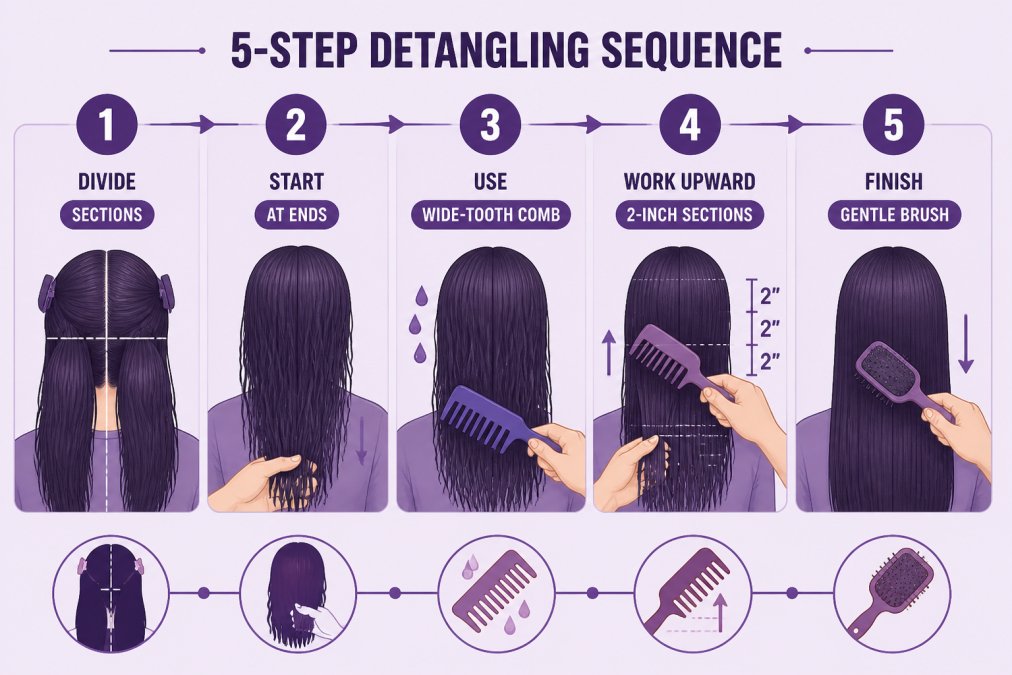
Start with a wide-tooth comb or detangling brush on wet or damp hair. Never use a fine-tooth comb on wet hair. The teeth catch and snap strands.
Divide your hair into four to six sections. Work on one section at a time. This prevents tangling and reduces the force needed to detangle.
Begin at the ends. Gently comb through the bottom two inches. Don't yank. Use short, gentle strokes.
Once your hair is fully detangled, use a regular paddle brush or round brush if needed.
Brush before your hair fully dries. Wet hair is elastic and flexible. Dry hair is brittle and snaps.
Never brush aggressively. Aggressive brushing causes breakage, especially at the ends. Slow, gentle strokes protect your strands.
Heat Styling Hair Without Damage: Settings and Technique
Heat is a major cause of breakage. You don't have to stop using heat tools, but you need to use them correctly.
Always apply a heat protectant spray or serum to damp hair before using any heat tool. This creates a moisture barrier and reduces damage.
For blow-dryers, use medium heat, not high. High heat dries hair too fast and causes breakage. Aim for medium heat with medium speed.
For flat irons and curling irons, use the lowest setting that works for your hair type. Fine hair needs 300 to 350 degrees Fahrenheit.
Apply heat tools to dry hair, not damp hair. Damp hair sizzles and breaks when you apply direct heat.
Limit heat styling to two or three times per week. Daily heat styling accelerates breakage. Give your hair heat-free days to recover.
Use a heat protectant product every single time. This is non-negotiable.
Hairstyles to Reduce Hair Damage: Protective Styles That Work
Protective styles keep your hair safe by reducing daily manipulation and friction. They also give your hair a break from heat styling.
Braids are one of the best protective styles. Box braids, cornrows, and three-strand braids all work. They tuck the ends away and reduce friction.
Twists are similar to braids but easier to do at home. Two-strand twists and flat twists both protect your hair. They're also faster to install than braids.
Buns and updos work if they're loose. A low bun with a silk scrunchie is protective. A tight, high bun pulled at the roots causes breakage.
Bantu knots are small, twisted knots that protect coily hair. They also create a beautiful wave pattern when you unravel them.
Wear protective styles for one to two weeks at a time. This gives your hair a break from daily manipulation. Then take the style down, deep condition, and give your hair a few days before installing a new style.
Don't sleep in tight styles. Sleep in a bonnet or on a silk pillowcase instead. Sleeping in a tight bun or braid causes breakage at the roots.
Common Mistakes That Cause Breakage and How to Avoid Them
Most breakage comes from habits people don't realize are damaging. Here are the biggest mistakes.
Brushing wet hair with a fine-tooth comb. Wet hair is fragile. A fine-tooth comb catches and snaps strands.
Wearing tight ponytails every day. Constant tension at the roots causes breakage and can lead to traction alopecia (Traction alopecia: the root of the problem).
Using regular hair ties instead of silk scrunchies. Elastic hair ties create friction and catch strands.
Applying heat to damp hair. Damp hair sizzles and breaks when you use a flat iron or curling iron.
Skipping heat protectant. This is the easiest mistake to fix. Use a heat protectant spray or serum every time.
Brushing aggressively when detangling. Yanking and pulling causes breakage. Use gentle, short strokes. Work from the ends up.
Sleeping on a cotton pillowcase. Cotton creates friction. Silk and satin pillowcases are smoother.
Washing and styling every day. Daily manipulation causes breakage. Wash your hair two or three times per week.
Watch out: Tight hairstyles worn daily can cause permanent hair loss.
These everyday habits damage hair without you realizing it.
| Mistake | Cause | Fix |
|---|---|---|
| Brushing wet hair with fine-tooth comb | Wet hair is fragile; comb catches strands | Use wide-tooth comb on wet hair |
| Wearing tight ponytails daily | Constant tension at roots | Vary hairstyles; alternate loose and protective styles |
| Using regular hair ties | Elastic creates friction and catches strands | Switch to silk scrunchies |
| Applying heat to damp hair | Damp hair sizzles and breaks | Blow-dry completely before heat tools |
| Skipping heat protectant | Direct heat causes damage | Use spray or serum every time |
| Brushing aggressively | Yanking and pulling causes breakage | Use gentle strokes from ends up |
| Sleeping on cotton pillowcase | Cotton creates friction | Switch to silk or satin pillowcase |
| Washing and styling daily | Daily manipulation causes breakage | Wash two or three times per week |
Protecting Your Hair During Workouts and Sleep
Workouts and sleep are high-risk times for breakage. Sweat, friction, and tension all cause damage.
During workouts, sweat weakens your hair and makes it more prone to breakage.
After working out, rinse your hair or at least rinse the sweat out. Dried sweat makes hair brittle.
At night, friction from your pillowcase causes breakage. Switch to a silk or satin pillowcase. These materials are smooth.
If you sleep in a hairstyle, make sure it's loose. A tight bun or braid worn all night causes breakage at the roots.
A silk bonnet or sleep cap is another option. It protects your hair from friction and keeps your style intact.
If you have long hair, consider braiding it loosely before bed. This reduces tangling and friction. Use a silk scrunchie to secure it.
For more targeted solutions, explore hair masks for split ends and breakage to repair existing damage. You can also learn how to prevent beanie static without flat hair for winter protection. When choosing winter accessories, compare beanies versus headbands for flyaway hair to find the best option for your hair type.
Protecting your hair from daily styling damage takes awareness and small habit changes.
Frequently Asked Questions
What are some tips for preventing hair breakage?
Start by minimizing tension and friction: use silk scrunchies instead of elastic bands, avoid tight ponytails and braids, and detangle gently when hair is damp. Apply heat protectant before styling, keep heat settings below 350°F, and condition deeply twice weekly. Wear protective styles like loose buns and twists to reduce daily manipulation. During workouts, secure hair loosely or use a silk cap to prevent sweat-related damage. These combined practices significantly reduce breakage over time.
How can I style my hair every day without causing damage?
Rotate between low-manipulation styles: loose braids, soft buns, and twists require less daily brushing and heat. When you do style, always detangle with a wet brush on damp hair before applying heat. Use a heat protectant spray, set tools to the lowest effective temperature, and limit heat styling to 2-3 times weekly. Deep condition after every wash and use leave-in conditioner on damp hair before styling. Alternate between styled days and air-dry days to give your hair recovery time.
Does heat styling cause hair breakage?
Yes, frequent or improper heat styling is a major cause of breakage. High temperatures weaken the protein structure in hair, making it more prone to snapping. However, you can style safely by using a heat protectant product, setting tools to 300-350°F for most hair types, and never applying heat to soaking-wet hair. Allow hair to air-dry to 70-80% moisture first. Limit heat styling to 2-3 times per week and alternate with air-dry or protective styles to minimize cumulative damage.
Which hairstyles help reduce hair damage?
Protective styles like loose braids, twists, buns, and updos reduce friction and daily manipulation. The key is keeping them loose enough that you don't feel tension on your scalp or edges. Avoid tight ponytails, high-tension braids, and styles that pull hair constantly. Silk or satin-lined beanies and caps also protect hair during sleep and workouts by reducing friction. Rotate between protective styles and air-dry days to prevent overuse of any single style and give hair time to recover.
