

Table of Contents
- Why Flyaway Hair Matters: More Than Just Aesthetics
- Beanies vs Headbands: Core Differences for Hair Health
- Satin-Lined Beanies for Hair Health
- Non-Slip Headbands for Fine Hair
- Activity-Specific Recommendations
- Hair Type Suitability and Texture Considerations
- Styling Techniques for Maximum Protection
- Maintenance and Long-Term Hair Health
- Frequently Asked Questions
Last Updated: September 28, 2026
Why Flyaway Hair Matters: More Than Just Aesthetics
Flyaway hair signals underlying hair health issues, broken or moisture-starved strands stand away from your scalp, creating frizz and an unkempt appearance.
Most people treat flyaways as a styling problem when they're actually a protection problem. Your hair needs physical barriers from friction, tension, and environmental stress. This is where beanies vs headbands for flyaway hair becomes a critical choice, the right accessory transforms not just how your hair looks, but how healthy it actually becomes.
The difference comes down to material, fit, and tension management. Understanding these mechanics helps you pick the right tool for your specific hair type and lifestyle.
Beanies vs Headbands: Core Differences for Hair Health
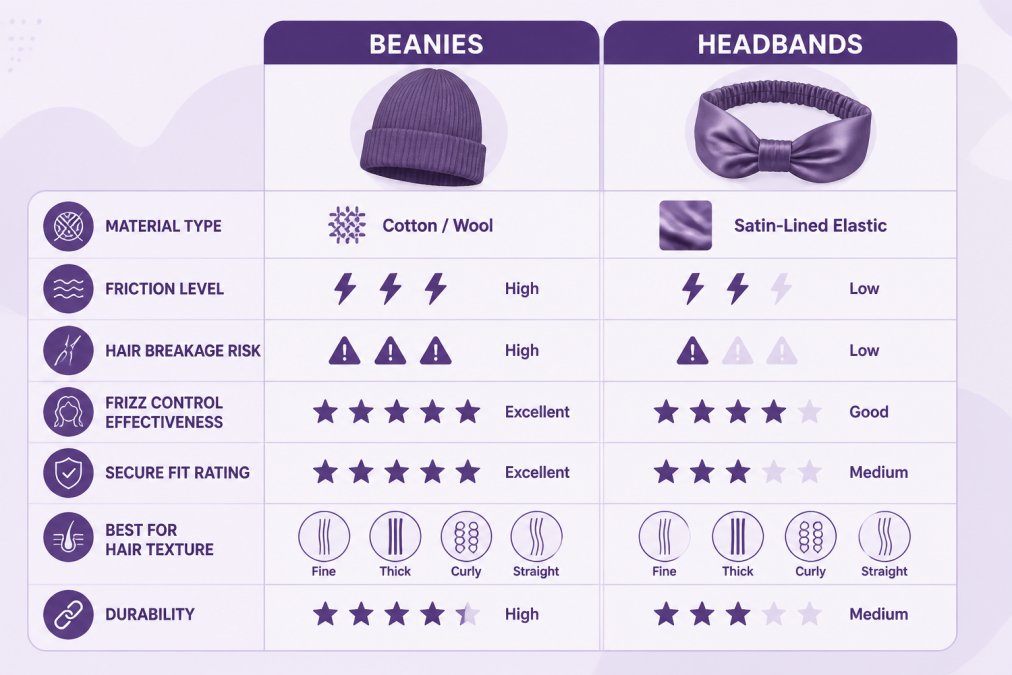
Beanies provide full-head coverage and enclosure, while headbands sit on top of or around specific areas like your hairline and crown.
Different hair types respond differently to coverage and tension management. A beanie that works for thick, coarse hair might create excessive tension on fine hair, while a headband that secures baby hairs could leave longer hair prone to frizz if the fabric creates friction.
Material Impact on Hair Breakage
Cotton and standard knit materials create friction that causes strands to snap, especially when damp or during movement. Satin-lined beanies and satin or silk headbands minimize friction by allowing hair to glide rather than catch.
Wool beanies offer excellent insulation but can be harsh on delicate hair without a satin lining. Satin-lined construction actively reduces hair breakage over time rather than just containing flyaways temporarily.
Secure Fit and Tension Management
Headbands create concentrated pressure that can lead to tension-related hair loss if worn too tightly or for extended periods. Beanies distribute pressure more evenly across the entire head, reducing localized stress.
Non-slip grip matters for fine hair. A headband that slides forces constant adjustment and additional friction, while beanies maintain position without requiring adjustment.
Satin-Lined Beanies for Hair Health
Satin-lined beanies protect hair during sleep, winter activities, and daily wear by creating a smooth surface that reduces friction dramatically, meaning less breakage, less frizz, and better elasticity retention.
Satin-lined beanies maintain your hair's moisture balance because the smooth surface doesn't strip away natural oils the way cotton does, making a measurable difference in frizz control and styling longevity.
Crazy Beanies uses 3D knit technology to maintain shape and secure fit without excessive tightness, preventing tension issues while delivering hair protection.
Non-Slip Headbands for Fine Hair
Non-slip headbands keep fine hair secure without creating tension damage. Headbands with silicone grips or textured undersides stay in place through movement without tightening around your scalp.
For fine hair, a well-designed non-slip headband pulls loose strands back smoothly without digging into your scalp. This works well for workouts and high-movement settings where you need secure fit without full-head coverage.
Headbands excel at edge protection and hairline coverage but leave the rest of your hair exposed to environmental stress. For fine hair, this limited coverage often suffices because fine hair benefits more from avoiding tension than from full enclosure.
Activity-Specific Recommendations
Different activities create different stressors on your hair, so matching the accessory to the activity prevents damage from using the wrong tool.
Winter Wear and Daily Use
Winter conditions dry out strands and cause static frizz. Beanies provide superior protection by covering your entire head and maintaining a humid microclimate around your hair, reducing moisture loss significantly.
If you're commuting, running errands, or spending extended time outdoors in cold weather, a beanie makes more sense than a headband. The full coverage protects not just your hairline but all your hair from winter's drying effects. A satin-lined beanie is essential here because the satin prevents the friction that standard wool or cotton beanies create when you're moving in and out of cars, buildings, and cold air. The enclosed environment reduces moisture loss and prevents static buildup, two of the primary causes of winter flyaways.
For fine hair in winter, a satin-lined beanie prevents the tension-related breakage that fine strands experience under pressure. For curly or coily hair, the enclosed environment maintains curl pattern definition by keeping humidity consistent around each curl. Thick, coarse hair tolerates standard beanies better but still benefits from satin lining because it reduces the friction this hair type experiences during movement.
Workouts and High-Movement Settings
During workouts, your hair experiences constant movement and friction against your neck, shoulders, and the beanie or headband itself. Additionally, sweat creates moisture that can weaken hair temporarily and increase friction if the accessory doesn't wick moisture away. Headbands excel here because they keep baby hairs and flyaways off your face and neck without the heat retention that beanies create during exercise.
For high-intensity workouts, a lightweight headband with moisture-wicking properties works better than a beanie. Look for headbands made from polyester-nylon blends or moisture-wicking synthetics, these materials pull sweat away from your hair and scalp, preventing the moisture accumulation that weakens hair during physical activity. A non-slip headband with silicone grips stays secure through sweat and movement without requiring constant adjustment, which reduces friction from repeated repositioning.
The temperature trade-off is critical: beanies trap heat during exercise, which increases sweat production and can weaken hair temporarily. A headband allows airflow to your scalp while still managing flyaways, making it the better choice for cardio, running, or any activity where you'll be sweating. For low-intensity activities like yoga or walking, a lightweight beanie with moisture-wicking properties can work if you prefer full coverage, but most people find headbands more comfortable during movement. Consistent routines remain essential for managing frizzy hair, especially when transitioning between different headwear options throughout the seasons.
For curly or coily hair during workouts, a satin-lined headband prevents the friction that disrupts curl pattern and causes frizz. For fine hair, a non-slip headband reduces the tension that comes from hair being pulled back during movement. For thick, coarse hair, either option works, but a moisture-wicking headband prevents the sweat accumulation that can lead to product buildup and scalp irritation.
Professional and Workplace Settings
In professional environments, you need an accessory that manages flyaways and baby hairs while remaining discreet and polished. A thin, satin-lined headband in a neutral color (black, brown, or nude) manages edge control without drawing attention. Headbands are superior to beanies in professional settings because they're less casual and allow you to style your hair while still securing flyaways.
For all-day wear in an office or professional setting, choose a headband that distributes pressure evenly and doesn't create visible creases in your hair. Position it slightly back from your hairline rather than directly on it to reduce pressure on fragile strands. A satin or silk headband prevents the friction that would otherwise accumulate throughout an 8-10 hour workday.
Beanies are generally not appropriate for professional daytime wear, though a beanie can work for commuting to and from work if you remove it upon arrival. If you're wearing a beanie during your commute, use the styling techniques described in the 'Styling Techniques for Maximum Protection' section to prevent the creases and tension damage that would otherwise show in your hair when you remove it.
Sleep and Overnight Wear
Sleep is when your hair experiences the most friction because you're moving without conscious control and your hair is in contact with your pillow for 6-8 hours. A satin-lined beanie is the optimal choice for overnight wear because it protects your entire head and prevents the friction that a pillowcase creates. Satin pillowcases are an alternative, but a satin-lined beanie provides additional benefits: it keeps your hair contained, prevents tangling, and maintains consistent moisture around your strands.
For overnight wear, a satin-lined beanie should be loose enough that you can fit a finger underneath comfortably, tight beanies create tension that can lead to traction alopecia (hair loss from prolonged tension) over months and years.
Hair Type Suitability and Texture Considerations
Your hair texture determines which accessory minimizes damage versus which one creates problems. Curly and coily hair benefits from full-head coverage that a beanie provides because it reduces frizz and maintains curl pattern definition. The enclosed environment keeps moisture in and prevents the friction that disrupts curl formation.
Styling Techniques for Maximum Protection
How you wear your beanie or headband matters as much as which one you choose. Improper placement creates tension damage that defeats the purpose of wearing protective styling.
Maintenance and Long-Term Hair Health
How you care for your beanies and headbands directly affects how well they protect your hair over time. Satin-lined beanies require gentle washing to preserve the satin interior. Hand wash in cool water with mild detergent, then lay flat to dry. Machine washing can damage the satin lining and reduce its friction-reducing benefits.
Frequently Asked Questions
What headband is best for keeping flyaways in place?
Non-slip headbands with elastic backing and padded inner surfaces work best for flyaways. Look for designs with friction-reducing materials like satin or silk interiors that won't catch loose strands. The key is a secure fit without excessive tension, headbands that grip too tightly can actually increase breakage. For fine hair, choose headbands with wider bands that distribute pressure evenly across the hairline.
Do beanies cause more frizz than headbands?
Beanies can increase frizz if made from rough materials like standard wool or cotton, which create friction against hair. However, satin-lined beanies significantly reduce this problem by minimizing friction and reducing moisture loss from the hair shaft. Headbands typically cause less frizz overall because they cover less hair surface, but poorly fitted headbands can create tension-related frizz at the hairline. The material matters more than the accessory type.
Can wearing a beanie all day damage your hair?
Wearing a beanie continuously can cause damage if it creates excessive tension or friction. Standard materials increase breakage risk, especially for fine or textured hair. Satin-lined beanies for hair health minimize this risk by reducing friction and allowing hair to retain moisture. To prevent damage, ensure your beanie fits properly without pulling, take breaks to let your scalp breathe, and choose breathable materials that don't trap moisture or heat.
What is the best way to secure flyaways without using hairspray?
Physical barriers like non-slip headbands for fine hair and satin-lined beanies are effective alternatives to hairspray. Protective styling techniques, such as securing baby hairs with a lightweight gel before applying your accessory, work well. Ensure your chosen accessory has a non-slip grip and fits securely without excessive tension. Combining a well-fitted accessory with proper hair maintenance (regular conditioning and minimal heat styling) addresses flyaways at the source rather than just masking them.


