

Table of Contents
- Beanie vs Baseball Cap for Bad Hair Days: Quick Comparison
- Why Baseball Caps Make Greasy Hair Look Worse
- How to Prevent Hat Hair Without Skipping the Hat
- Is a Wool Beanie Worth It for Daily Wear?
- Style and Versatility: Which One Works Harder?
- How to Pick a Beanie That Hides Bad Hair Days
- The Verdict: Beanie or Baseball Cap?
- Frequently Asked Questions
Last Updated: September 14, 2026
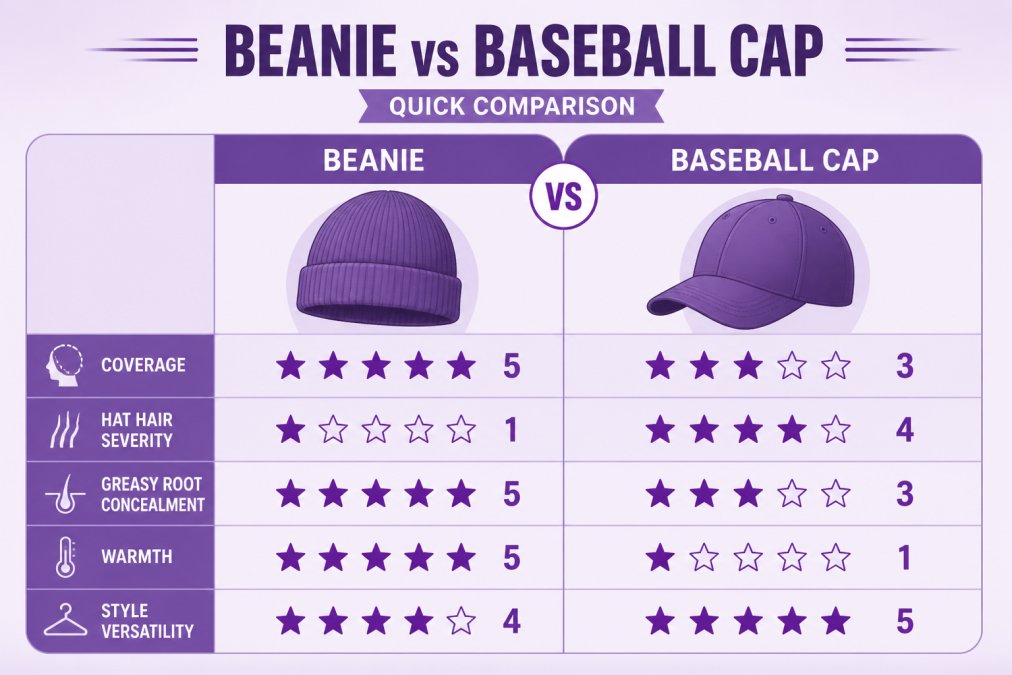
Beanie vs Baseball Cap for Bad Hair Days: Quick Comparison
The beanie vs baseball cap for bad hair days debate comes down to one thing: a baseball cap holds hair flat against the scalp, which traps oil and flattens roots, while a knit beanie lifts hair away from the head and covers greasy roots entirely. This comparison from Crazy Beanies breaks down coverage, hat hair severity, warmth, and style across both options so you can pick the right one before you walk out the door.
Here's the short version: if your hair is greasy at the roots, a beanie wins. If you're dealing with flat, lifeless hair that needs volume, a baseball cap can sometimes work, but it comes with trade-offs. Below, we'll show you exactly where each option wins, where it fails, and how to prevent hat hair no matter which one you grab.
| Factor | Beanie | Baseball Cap | Winner |
|---|---|---|---|
| Root coverage | Full scalp | Crown only | Beanie |
| Hat hair severity | Low (lifts hair) | High (flattens roots) | Beanie |
| Greasy root concealment | Complete | Partial | Beanie |
| Warmth | High | Minimal | Beanie |
| Style versatility | Streetwear, casual, outdoor | Sporty, casual | Beanie |
| Breathability | Moderate | High | Baseball Cap |
| Best for bad hair days | Greasy roots, flat hair | Short hair, minimal oil | Beanie |
Why Baseball Caps Make Greasy Hair Look Worse
A baseball cap is the worst option for greasy roots because the structured crown presses hair flat against the scalp, and that pressure spreads oil along the hair shaft while trapping heat underneath (pubmed.ncbi.nlm.nih.gov). The result is visible separation, stringy sections, and a flattened crown that makes thin hair look thinner.
What most guides miss is that the problem isn't just the hat, it's the friction. The sweatband sits directly on your forehead and hairline, and every adjustment pushes oil further down the strands. By the time you take the cap off, the damage is done.
There's also the shape problem. Baseball caps have a fixed curve and a rigid front panel, so they sit at one angle and one height. If your hair is fine or thinning, that rigid structure highlights the scalp instead of hiding it. A beanie, by contrast, stretches over the whole head and creates a soft silhouette that doesn't expose the hairline. This adaptability makes the beanie a far more forgiving choice when you are focused on hiding thinning hair while maintaining a natural appearance throughout the day.
How to Prevent Hat Hair Without Skipping the Hat
You can prevent hat hair by prepping your hair before the hat goes on, choosing the right fabric, and resetting your roots after you take it off. Skipping the hat isn't the answer, especially in cold weather or on a genuinely bad hair day.
Here's a simple routine that works for both styles:
- Apply dry shampoo to your roots before putting on any hat (pubmed.ncbi.nlm.nih.gov). It absorbs oil and adds grip so hair doesn't collapse.
- Choose a knit that's soft and breathable rather than a tight, heavy weave that traps moisture.
- Avoid pulling the hat down too low across your forehead. Sitting it slightly back keeps the hairline from getting crushed.
- Take the hat off every couple of hours in a warm room to let your scalp breathe.
- Carry a small comb or use your fingers to lift roots at the crown once the hat comes off.
The fabric matters more than most people think. Acrylic and wool blends hold their shape and don't mat down hair the way tight cotton caps do. A lightweight knit beanie gives you warmth without the suffocating pressure that causes flat, oily roots.
Is a Wool Beanie Worth It for Daily Wear?
A wool beanie is worth it for daily wear if you want warmth, durability, and a fabric that resists odor, but it isn't the best choice for everyone. Wool insulates well and holds its shape, which makes it a strong pick for cold commutes and outdoor events (pubmed.ncbi.nlm.nih.gov). The trade-off is that some wool blends feel scratchy against the forehead and can irritate sensitive skin.
For daily wear, many people find acrylic and soft knit blends more comfortable because they're lightweight and machine-washable. That's the approach Crazy Beanies takes with its knit beanies, using constructions that stay cozy.
Here's how to decide:
- Choose wool if you need maximum warmth and don't mind a slightly heavier feel.
- Choose acrylic or soft blends if you wear your beanie daily and want easy care.
- Choose a lined beanie if you have sensitive skin or are prone to forehead irritation.
The real difference between wool and acrylic comes down to warmth versus comfort. For a beanie you'll wear every day, comfort usually wins.
Style and Versatility: Which One Works Harder?
A beanie works harder than a baseball cap for most outfits because it pairs with streetwear, casual layers, and winter gear, while a cap leans sporty and casual. That versatility matters when you're building a wardrobe around a few pieces that do a lot.
Baseball caps have their place. They read as athletic or laid-back, and they work well with tees, hoodies, and shorts. But they struggle with anything dressier, and they don't transition into cold-weather layering the way a knit does.
A well-made beanie slides into more looks. Pair it with an oversized tee and denim jacket, a hoodie and joggers, or a winter coat and boots. The right design can carry a whole outfit, which is why limited-edition pieces with real personality tend to get worn far more often than a plain cap.
That's the gap Crazy Beanies fills. Every design is handcrafted in small batches, and the 3D knit technology holds a clean shape that stays put without slipping, so the hat looks intentional rather than thrown on. With 25 years of craft behind the brand and designs that ship in 24 hours or less, it's a practical pick for anyone who wants a beanie that actually elevates the look.
How to Pick a Beanie That Hides Bad Hair Days
Picking the right beanie for bad hair days comes down to fit, fabric, and coverage. A beanie that covers the hairline fully and sits soft against the scalp will hide greasy roots better than any cap, but only if it fits properly.
Use this checklist before you buy:
- The beanie covers your full hairline, including the sides, not just the crown
- The fabric is soft and stretchy, so it doesn't press hard against your roots
- The fit is snug but not tight, so it stays on without leaving deep marks
- The color and design work with at least three outfits you already own
- The knit holds its shape after washing, so it doesn't sag over time
Design matters too. A beanie with a bold graphic or a distinctive silhouette draws the eye away from your hair and toward the hat itself. If you're hiding a bad hair day, you want people looking at the design, not the roots.
For a soft, everyday option, the Sleepy beanie pairs a pale-blue knit with an offset sleepy-eyed design that's playful without being loud. If you'd rather make a statement, the CrazyOG beanie wraps a graffiti-style logo around a black knit for a streetwear look that works with almost anything. And for something genuinely different, the Classified beanie turns Cold War paperwork into a wearable design with redactions and cryptic numbers that get people leaning in for a closer look.


The Verdict: Beanie or Baseball Cap?
A beanie wins for bad hair days, especially when greasy roots or flat hair are the problem. It covers the full hairline, lifts hair away from the scalp instead of pressing it flat, and adds warmth and style that a baseball cap can't match. A baseball cap only wins if your hair is short and mostly oil-free, and even then it flattens the crown and traps heat.
If you want one hat that handles bad hair days, cold weather, and everyday style without a second thought, a well-made knit beanie is the better buy. Crazy Beanies builds limited-edition designs with 3D knit technology, handcrafted in the USA, that stay put and cover the roots properly. Browse the Rainbow beanie or the Vintage Rainbow beanie to see how a bold knit can solve a bad hair day and carry an outfit at the same time.
Frequently Asked Questions
Which hat is better for hiding greasy hair?
A beanie usually wins for hiding greasy hair. Its full crown coverage wraps the whole head, so oily roots and flat spots stay out of sight. A baseball cap leaves the sides and back exposed and presses the front of your hair flat against your forehead, which can make grease more obvious. If you need a quick fix for a bad hair day, a slouchy knit beanie gives you more coverage and a softer, more forgiving silhouette.
Do baseball caps cause more hair breakage than beanies?
Baseball caps can cause more breakage because the structured crown and adjustable strap create friction at the hairline and nape. The rigid front panel also rubs against the same spot repeatedly. A soft knit beanie moves with your head and distributes pressure more evenly. Either way, a snug fit is the real problem. Choose a hat that sits comfortably without pinching, and avoid wearing any hat so tight that it leaves marks on your forehead.
How do you prevent hat hair when wearing a beanie?
Start with dry hair and apply a light mist of dry shampoo at the roots before you put the beanie on. Flip your hair in the opposite direction of your part, then slide the beanie on. When you take it off, shake your roots with your fingers and flip your part the other way. A beanie with a bit of stretch, like a 3D knit style, puts less pressure on the crown, so your hair has a better chance of bouncing back.
Are beanies or baseball caps more versatile for different outfits?
Baseball caps lean sporty and casual, which limits them to athleisure, jeans, and tees. Beanies work with streetwear, winter coats, flannels, and layered looks. A clean knit beanie can read as cozy, edgy, or polished depending on the color and design. For bad hair days in colder months, a beanie also doubles as warmth. That combination of coverage and styling range makes a beanie the more versatile pick for most outfits.
Is a wool beanie worth it for daily wear?
A wool beanie is worth it if you need serious warmth and don't mind hand washing. Wool regulates temperature well and resists odors, which helps on back-to-back wear days. But some wool blends feel itchy against the forehead, and they can shrink if you machine dry them. For daily wear, a soft knit beanie holds its shape, stays comfortable, and costs less. Crazy Beanies knit beanies start at $27.95 and are built for all-day wear.
Bad hair days don't have to mean a bad outfit. Crazy Beanies offers bold, limited-edition knit beanies with 3D knit technology, handcrafted in small batches, and a fit that stays put without slipping. With designs that ship in 24 hours or less, you can grab a beanie that hides greasy roots and elevates your look at the same time. Get started with Crazy Beanies and turn your next bad hair day into your best accessory moment.


