

Table of Contents
- How to Style Hair Under a Beanie for Full Root Coverage
- Prep Your Hairline Before You Pull the Beanie On
- Position the Beanie So the Fold Sits Right
- Choosing Beanie Fabrics That Stay Put and Breathe
- How to Style a Beanie to Cover Roots Without Slipping
- How to Hide Gray Roots with Hats: Color and Fit Tricks
- Best Beanie Styles for Bad Hair Days
- Frame Styles and Face Shapes That Work with Beanies
- Common Mistakes to Avoid When Covering Roots
- Frequently Asked Questions
Last Updated: September 12, 2026
How to Style Hair Under a Beanie for Full Root Coverage
Learning how to style a beanie to cover roots comes down to three things: prepping your hairline before the hat goes on, positioning the fold so it lands where thinning or regrowth is visible, and choosing a fabric that grips instead of slides. This guide from Crazy Beanies breaks down each step, plus the frame and fogging fixes most styling advice skips entirely.
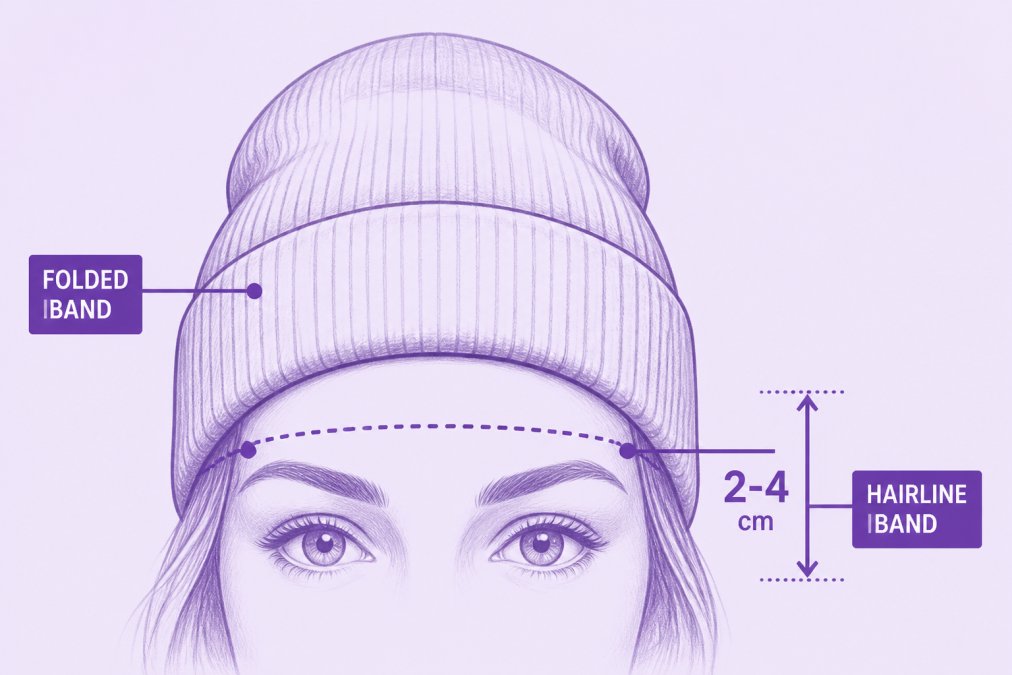
Here's the core problem. A beanie doesn't hide roots by magic; it hides them by covering a specific band of your hairline, roughly the first 2 to 4 centimeters above your forehead and along your temples. If the hat sits too high or too loose, that band stays exposed no matter how good the rest of your outfit looks.
Most guides treat this like a fashion question. It's closer to a fit question.
Below, we'll walk through the full process: hairline prep, fold placement, fabric selection, and the adjustments that keep everything in place for hours.
Prep Your Hairline Before You Pull the Beanie On
Hairline prep is the step almost everyone skips, and it's the one that determines whether the beanie actually covers your roots or just sits on top of them.
Start with dry or mostly dry hair. Wet hair clumps and separates, which exposes more scalp than you want. If you're working with thinning edges, a light dusting of tinted root spray or colored dry shampoo along the part line adds visual density before the hat goes anywhere near your head.
Next, brush your hair back and slightly upward, away from the forehead. This does two things: it lifts the roots so they sit higher under the fabric, and it prevents the front section from flattening into a visible part once the beanie is on.
- Dry hair, not damp
- Root spray or tinted powder on visible thinning
- Brush back and up, not forward
- Smooth flyaways along the temples with a light hold product
A common mistake is loading up on heavy pomade before wearing a knit hat. It transfers to the fabric, and once the beanie is on, the product does nothing for coverage anyway.
Position the Beanie So the Fold Sits Right
The fold is your coverage tool. Where it lands matters more than how the crown looks.
Pull the beanie down so the folded band sits just above your eyebrows, covering the first inch or so of your hairline. This is lower than most people wear a knit hat, and that's intentional. The extra depth is what hides roots along the front and temples.
For a slouchier look, push the excess fabric backward rather than pulling the whole hat up. You get the relaxed silhouette without giving up the coverage band across your forehead.
Choosing Beanie Fabrics That Stay Put and Breathe
Fabric choice determines whether your beanie stays where you put it. Smooth, slippery materials slide up your forehead within minutes. Textured knits hold their position.
Wool and wool blends offer the best natural grip because the fibers have a slight roughness that catches hair and skin. Cotton knits breathe well but stretch out faster over a long day. Acrylic holds its shape and costs less, though it can feel less breathable against a warm scalp.
If you run hot or wear a beanie indoors, look for a knit with visible texture rather than a flat, tight weave. Texture equals friction, and friction is what keeps the fold sitting on your hairline instead of creeping upward.
Acetate, Wool, and 3D Knit: How Each Material Affects Grip
Acetate isn't a beanie fabric; it's a frame material, and it matters here because acetate temple arms slide against knit fabric more than metal ones do. If you wear acetate frames, expect slightly more movement at the temples and plan for the adjustments below.
Wool provides the strongest grip of the common beanie fibers. It also regulates temperature well, which reduces the sweat that causes both slippage and fogging.
3D knit technology, the kind used in Crazy Beanies' limited-edition headwear, creates a seamless, structured fit rather than a flat tube of fabric. That structure holds the fold in place and distributes pressure evenly across the forehead instead of creating one tight band.
| Fabric | Grip | Breathability | Best For |
|---|---|---|---|
| Wool | High | Medium | Cold weather, all-day wear |
| Cotton | Medium | High | Mild temperatures, indoor wear |
| Acrylic | Medium | Low | Budget picks, shape retention |
| 3D knit | High | Medium-High | Structured fit, glasses wearers |
How to Style a Beanie to Cover Roots Without Slipping
A beanie that slips defeats the entire purpose. The fix combines fabric choice, fold depth, and, if you wear glasses, a few adjustments to your frames.
Work through these five steps in order:
- Prep your hairline (dry hair, brushed back, root coverage applied)
- Choose a textured or 3D-knit fabric with real friction
- Position the fold just above the eyebrows
- Adjust your glasses' temple arms so they sit over the fabric, not under it
- Check for cold air gaps at the sides and back
Temple Arm Adjustments for Glasses Wearers
Glasses and beanies fight each other at the temple arms. The arms press against the knit, create pressure points above the ears, and push the hat upward as you move.
The fix is to route the temple arms over the beanie fabric rather than underneath it. Slide the arms down along the outside of the fold, letting the knit sit between your skin and the frame. This keeps the hat anchored and removes the upward push.
If your frames have adjustable temple tips, bend them slightly downward so they hook behind your ears more securely. This is a two-minute adjustment at any optical shop, and it solves most of the slipping complaints glasses wearers have with knit hats.
Troubleshooting Lens Fogging and Cold Air Gaps
Fogging happens when warm, moist air from your breath and scalp gets trapped between your face and the lenses. A beanie pulled low across the forehead makes this worse because it seals the gap where air would normally escape.
Three fixes work reliably:
- Pull the beanie's front edge up just enough to leave a small vent above your brow, keeping the sides low for root coverage
- Use an anti-fog lens cloth or spray before heading outside
- Choose a breathable knit so moisture escapes through the fabric instead of condensing on your lenses
Cold air gaps are the opposite problem. If you feel wind hitting your temples or the back of your neck, the beanie is sitting too high or the cuff isn't snug enough. Pull the back edge down and fold the cuff once more to close the gap.
How to Hide Gray Roots with Hats: Color and Fit Tricks
Hiding gray roots with hats is mostly a color-matching exercise, and it works better than most people expect.
Match the beanie's color to your natural or dyed hair color, not to your outfit. A charcoal beanie over dark hair blends the hairline transition; a cream beanie over gray or silver hair does the same. High-contrast combinations, like a black hat over light hair, draw attention straight to the hairline you're trying to disguise.
Fit matters just as much. A beanie that sits low and covers the first inch of hairline hides more gray than one perched higher on the head. If you're between two sizes, size up and fold the cuff an extra time; the added fabric depth gives you more coverage without squeezing your head.
For anyone dealing with a receding hairline or thinning at the temples, a slightly slouchy silhouette works better than a tight skullcap. The extra fabric at the back lets you pull the front lower without distorting the shape.
Best Beanie Styles for Bad Hair Days
The best beanie styles for bad hair days share one trait: they cover more of the hairline than a standard cuff. Cuffed beanies, slouchy beanies, and fisherman-style rolls all give you a deeper coverage band across the forehead and temples.
Cuffed beanies are the most versatile. The fold is adjustable, so you can pull it lower on days when roots need more coverage and roll it up when they don't.
Slouchy beanies work well if you want volume at the back and a low front edge. They suit longer hair that needs somewhere to go.
Fisherman beanies, with their shorter, rolled cuff, sit closer to the skull. They're a good pick for shorter hair and for anyone who finds standard cuffs too bulky.
Crazy Beanies builds its limited-edition lineup around structured 3D knit silhouettes, which hold their shape through repeated wear instead of stretching into a shapeless tube. That structure is what keeps the coverage band sitting where you placed it.
Frame Styles and Face Shapes That Work with Beanies
Frame and face shape compatibility comes down to proportion. A beanie adds visual weight to the top of your head, so your glasses need to balance that weight rather than compete with it.
Round faces benefit from angular frames, like square or rectangular shapes, because the straight lines offset the beanie's soft curve. Angular faces do better with round or oval frames for the same reason in reverse.
Frame width should roughly match the widest part of your face. Frames that are too narrow look pinched under a beanie; frames that extend past your temples get pushed around by the knit fabric.
Transparent frames and thin metal frames sit more discreetly under a low-pulled beanie, which keeps the focus on your face rather than the hardware. Bold acetate frames work better with a higher, slouchier hat position where the temples aren't buried in fabric.
Common Mistakes to Avoid When Covering Roots
The most common mistake is pulling the beanie up to show more of the crown. That lifts the fold off your hairline and exposes exactly what you were trying to cover.
Other frequent errors:
- Wearing a smooth, slippery fabric that slides up within an hour
- Skipping hairline prep and relying on the hat alone
- Choosing a high-contrast hat color that highlights the hairline
- Tucking glasses' temple arms under the fabric, which pushes the beanie upward
- Ignoring cold air gaps at the sides and back
- Over-tightening the cuff, which creates pressure points and headaches
A snug fit is not the same as a tight fit. You want enough friction to hold position without compressing your head. If you can feel your pulse in your temples after ten minutes, the beanie is too tight.
Covering roots with a beanie is a fit problem before it's a fashion problem, and the difference between a hat that works and one that doesn't comes down to fabric grip, fold placement, and a few frame adjustments. Crazy Beanies makes this easier with 3D knit technology that holds its structured shape, handcrafted construction built over 25 years of real craft, and limited-edition designs that ship in 24 hours or less. Get started with Crazy Beanies and find a beanie that stays exactly where you put it.
Frequently Asked Questions
How do you position a beanie to hide roots effectively?
Pull the beanie down so the front fold sits just above your eyebrows, then gently push the fabric back about half an inch. This creates a slight overhang that covers your hairline and any regrowth. A snug fit around your head circumference keeps it from shifting. If you wear glasses, slide the temple arms over the beanie fabric rather than underneath to avoid pressure points.
What are the best hairstyles to pair with a beanie for root coverage?
Loose waves or a low bun work well because they add volume near the roots without creating bumps. For short hair, try a side part and tuck the front sections behind your ears before putting on the beanie. Avoid tight ponytails at the crown, as they can create gaps. A little dry shampoo at the roots adds texture and helps the beanie grip without slippage.
Can you wear a beanie with bangs to cover roots?
Yes. Sweep your bangs to one side and let them fall naturally over your forehead, then place the beanie slightly back so the front fold rests behind the bangs. This keeps the bangs visible while the hat covers the hairline. Choose a beanie with a bit of stretch so it does not flatten the bangs. A breathable fabric like 3D knit reduces lens fogging if you wear glasses.
How do you keep a beanie from slipping while covering your hairline?
Start with a beanie that matches your head circumference. Look for fabrics with natural friction, such as wool blends or textured knits. Adjust the fold so it sits snugly but not tight. If you have glasses, thread the temple arms over the fabric to anchor the beanie. A beanie with a snug fit and breathable material stays in place without causing pressure points.


