

Table of Contents
- Why Hats Slip: Understanding Friction and Fit
- Method 1: Secure Your Hat With Bobby Pins
- Method 2: How to Fix a Loose Beanie With Size Adjustments
- Method 3: Best Hat Liners for Grip and Stability
- Method 4: How to Wear a Beanie With Slippery Hair
- Method 5: Use Elastic Bands and Hair Accessories
- Method 6: DIY Modifications and Material-Specific Solutions
- Method 7: Maintenance and Washing to Preserve Elasticity
Last Updated: August 21, 2026
Why Hats Slip: Understanding Friction and Fit
Hats slip because of friction loss between the hat material and your hair or scalp. When a beanie doesn't grip properly, it rides up and slides off. The problem comes down to physics: insufficient contact between the hat's inner surface and your head, combined with gravity and movement.
Hat circumference is the primary culprit, if it's too large, no amount of adjustment creates adequate grip. Hair texture matters significantly. Fine, slippery hair provides less friction than coarse or textured hair (peer-reviewed research). Hair volume and length also play roles, as do bald individuals who lack natural texture for grip.
The crown and brim are the two critical friction zones. The crown relies on downward pressure to stay secure, while the brim rests on your ears and forehead, preventing backward sliding. Wind resistance compounds the problem by pushing against the hat's outer surface.
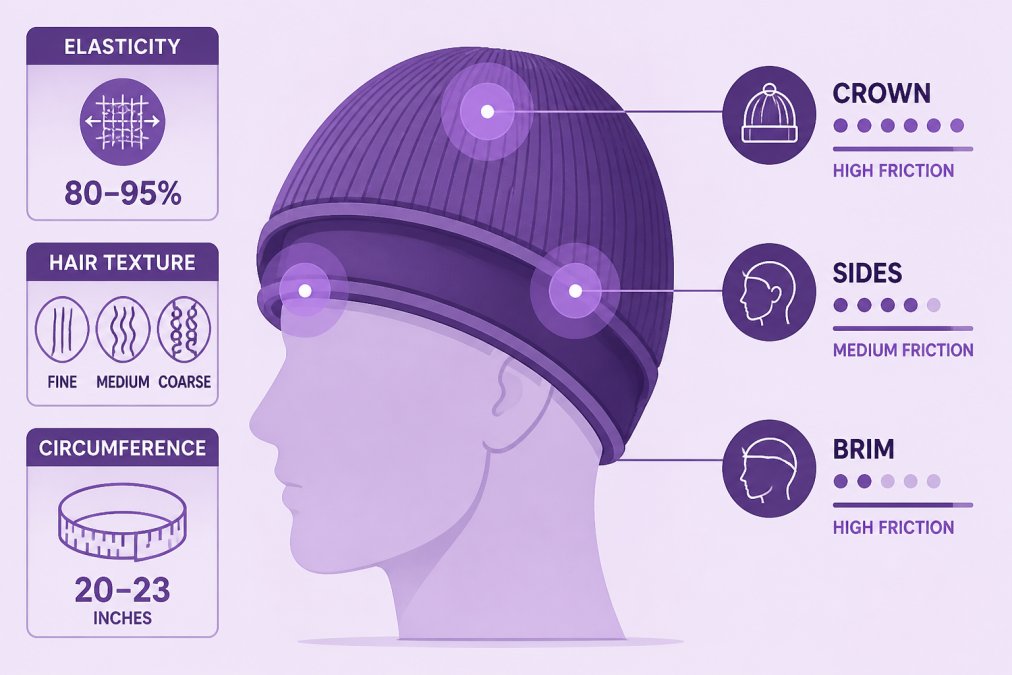
Material elasticity determines how tightly a hat conforms to your head shape. Quality knitted hats maintain elasticity through proper yarn construction and stitching. Crazy Beanies uses professional-grade 3D knit technology to ensure their hats maintain grip throughout the day without stretching out.
Understanding these friction principles helps you choose the right solution. Some methods increase contact surface area; others increase grip force itself. The best approach depends on your hair type, hat material, and how you wear it.
Method 1: Secure Your Hat With Bobby Pins
Bobby pins provide direct mechanical grip by anchoring the hat to your hair, creating a secure connection that resists slipping.
Insert bobby pins horizontally through the hat's inner band and into your hair at the sides where the brim meets your ears. Use at least two pins, one on each side, for balanced support. Slide the pin through the hat's fabric into a thick section of hair, then close fully. The friction between the closed pin and your hair shaft prevents upward movement.
This method works best with medium to thick hair. Fine or thin hair may not grip the pin securely enough. Position pins where they won't be visible, typically hidden under the hat's brim or tucked into the crown area. Use heavier-duty bobby pins rather than thin ones for maximum holding power.
Method 2: How to Fix a Loose Beanie With Size Adjustments
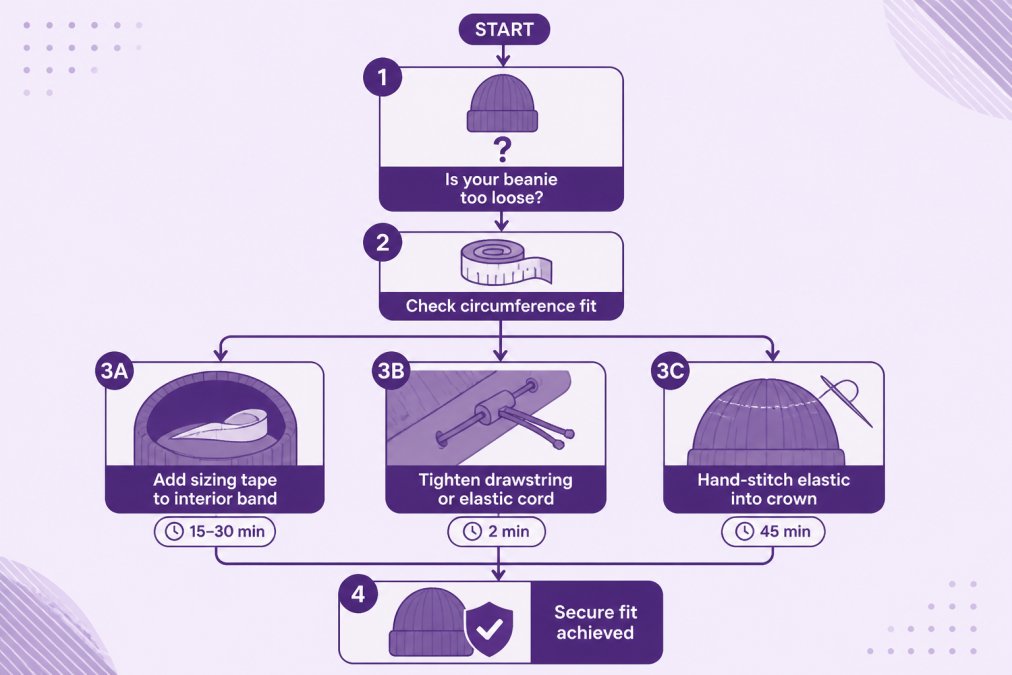
A loose beanie is the easiest problem to solve through mechanical adjustment. Size reduction increases contact pressure and friction across all contact zones.
Tightening the Crown and Circumference
If your beanie has a drawstring or elastic cord, tighten it gradually until the hat sits snugly without causing discomfort. For beanies without drawstrings, apply sizing tape to the interior, a thin, flexible adhesive strip that reduces circumference by a quarter to half inch. Apply it along the inside band where it contacts your scalp, typically at the back and sides.
Alternatively, hand-stitch elastic into the interior band. Sew a half-inch-wide elastic into the back of the hat's interior, leaving enough slack to stretch slightly when pulling the hat on. The elastic will contract after wearing, creating tighter contact around the back of your head.
Pulling the Hat Over Your Ears
Position the hat so it fully covers your ears, with the brim just above your eyebrows. This creates three contact zones, crown, sides (over ears), and front (across forehead), anchoring the hat in place. This method works best with beanies that have sufficient depth and material.
Method 3: Best Hat Liners for Grip and Stability
Hat liners are interior fabric layers designed to increase friction between the hat and your hair or scalp. Quality liners feature textured materials like fleece, terry cloth, or brushed cotton that grip better than standard knit interiors.
Install a hat liner by sewing it into the hat's interior or using adhesive liner sheets. Adhesive liners are faster; sewn liners are more durable and removable for washing. For optimal grip, the liner should cover the entire interior surface, particularly the crown and sides.
The best liners have slightly rough texture. Test by running your finger across it, it should feel raised, not slick. Crazy Beanies integrates superior interior materials into their construction, using professional-grade fabrics that maintain grip throughout extended wear.
Method 4: How to Wear a Beanie With Slippery Hair
Slippery hair requires different strategies than other hair types. Fine, straight, or oily hair provides minimal friction, making hat stability challenging.
Hair Texture and Volume Solutions
Add texture to your hair before wearing the hat. A light texturizing spray or dry shampoo adds grit to your crown and contact areas, increasing friction significantly (peer-reviewed research). Braiding or twisting your hair also increases friction, braids create a thicker, more textured surface that resists slipping.
Choose hats with textured interiors rather than smooth ones. Knitted hats with raised interior surfaces grip better than those with flat linings. Material density also affects grip; denser knits create more contact pressure than loose, airy knits.
Solutions for Bald or Short-Haired Individuals
Bald or very short-haired individuals must rely entirely on contact pressure against the scalp. The hat's circumference must be precise, neither too loose nor too tight. Size adjustment methods like sizing tape become essential.
Consider wearing a thin headband or bandana under the hat. The headband creates an additional contact layer and adds friction between your scalp and the hat. Hats with deeper crowns and more substantial construction work better for bald individuals because they create more contact pressure across the scalp.
Method 5: Use Elastic Bands and Hair Accessories
Elastic bands and hair accessories provide external anchoring that prevents the hat from moving.
Wear an elastic headband under the hat, positioned just above your eyebrows. Pull the hat down over it, the headband prevents backward sliding while remaining invisible. Alternatively, use a ribbon or scarf tied loosely around the hat and under your chin, creating an anchor point that resists wind.
Hair clips or combs inserted through the hat's interior and into your hair also provide stability. For longer hair, pull your hair into a ponytail or bun, then wear the hat over the gathered hair. The accumulated volume increases contact pressure and friction significantly.
Method 6: DIY Modifications and Material-Specific Solutions
DIY modifications allow you to customize your hat for your specific needs.
The simplest modification is adding non-slip grip tape to the interior. Cut strips of grip tape and apply them to the interior band where the hat contacts your head. This method is inexpensive, removable, and immediately effective.
For knitted hats, add a layer of rubberized material to the interior. Flexible rubber sheets or neoprene can be sewn or glued in, creating a surface that resists slipping without affecting exterior appearance.
Stretching the hat's elastic band restores lost tension. Carefully pull gently and repeatedly to restore elasticity, but avoid overstrretching. For hats with drawstrings, ensure the drawstring is functional and properly tightened.
Method 7: Maintenance and Washing to Preserve Elasticity
How you care for your hat directly affects its staying power.
Wash your beanie in cool water with gentle detergent. Hot water damages elastic fibers and causes permanent tension loss (the FDA). Avoid the dryer entirely; instead, lay the hat flat or hang it to air dry. This preserves yarn structure and maintains shape and fit.
Wash only when necessary, spot-clean visible stains when possible. Don't store beanies in compressed spaces; store them flat or on a hat rack to maintain shape. Over time, all hats lose elasticity. Quality beanies like those from Crazy Beanies maintain elasticity longer because of superior yarn construction and professional 3D knit technology.
Hats that slip are frustrating, but the problem is always solvable. Whether you choose bobby pins, size adjustments, hat liners, or DIY modifications, you have options for your specific hair type and hat material. The key is understanding that slipping results from insufficient friction or poor fit, both are fixable with the right approach. For a hat that combines superior grip with bold style, Crazy Beanies' professional-grade 3D knit technology delivers a secure fit that stays in place throughout your day.
Frequently Asked Questions
Why do hats keep slipping off my head?
Hats slip when there's insufficient friction between the hat material and your hair or scalp. This happens with loose-fitting hats, smooth or slippery hair textures, insufficient hair volume, and materials with low grip. Hat circumference that's too large, combined with wind resistance or movement, makes slipping worse. The solution depends on your hair type, hat size, and the material's elasticity, that's why we cover multiple methods in this guide.
How do bobby pins help stop a hat from slipping?
Bobby pins anchor your hat to your hair by creating a mechanical lock. Insert two to four pins through the hat's interior band into your hair at different angles around the crown. This works best with medium to thick hair and prevents the hat from riding up or shifting. For shorter hair or fine textures, combine bobby pins with other methods like sizing tape or hat liners for better staying power.
What's the best way to wear a beanie with slippery hair?
Slippery hair (fine, straight, or smooth textures) requires extra grip. Start by using a hat liner or headband to increase friction. Secure the beanie lower on your head, pulling it over your ears for added stability. Add a hair comb or clip inside the hat's band to grip your hair. If your beanie has elasticity, consider sizing tape on the interior band. Combining two or three methods, like a liner plus bobby pins, gives the most reliable hold.
Do hat liners really make a difference in preventing slipping?
Yes. Quality hat liners increase friction between the hat's interior and your hair or scalp. They add grip, reduce riding up, and improve overall staying power. Liners work especially well for slippery hair textures and help distribute pressure evenly around the circumference. Choose liners with textured surfaces (not smooth) and ensure they fit snugly inside the hat band without bunching. This is one of the most effective non-DIY solutions for a secure fit.
This article was written using GrandRanker


