

Table of Contents
- Why Beanies Matter for Sensitive Scalps and Hair Loss
- Best Beanie Materials for Sensitive Skin
- Key Features to Look For in Beanies for Hair Loss
- Top Beanie Picks for Sensitive Scalps
- How to Prevent Hat Hair and Scalp Damage
- How to Wash Beanies for Sensitive Scalps
- Do Beanies Cause Hair Loss? What the Evidence Shows
- Frequently Asked Questions
Last Updated: September 19, 2026
Why Beanies Matter for Sensitive Scalps and Hair Loss
A beanie designed for sensitive scalps and hair loss is more than a fashion accessory, it's a protective barrier that either supports scalp health or compromises it. The right headwear makes a measurable difference in comfort and scalp irritation management for people dealing with thinning hair, alopecia, or post-treatment sensitivity.
The challenge is finding a beanie that won't irritate, slip, cause friction, or create pressure points on compromised hair follicles. Wrong fabric, poor construction, or improper fit can turn a simple accessory into a daily source of discomfort.
This guide breaks down what matters when choosing best beanies for sensitive scalps and hair loss, from fabric science to fit engineering, and shows you how to evaluate materials, identify construction quality, and select a beanie that works with your scalp instead of against it.
Best Beanie Materials for Sensitive Skin
The fabric you choose directly impacts scalp health. Not all materials are created equal when it comes to friction reduction, breathability, and hypoallergenic properties.
Acrylic knit is the most common choice for sensitive scalps: soft-touch, lightweight, non-irritating, and resistant to moisture trapping and static buildup. Quality acrylic withstands regular washing without pilling. Lower-quality acrylic can feel scratchy, so thread count and knit density matter.
Acrylic-lycra blends offer stretch without sacrificing comfort. The lycra adds elasticity so the beanie conforms to your head shape without excessive pressure, reducing pressure points and allowing better airflow. The blend also resists shedding fibers.
Bamboo viscose is increasingly popular for moisture-wicking and hypoallergenic properties. Bamboo fibers are smoother than synthetics, reducing friction and regulating scalp temperature. Trade-off: less durable than acrylic and requires gentler washing.
Organic cotton works for mild sensitivity but falls short for serious scalp conditions. Cotton absorbs moisture rather than wicking it, worsening irritation. It's also prone to pilling and shedding. Reserve it for mild cases or layering.
Avoid synthetic blends heavy in polyester, nylon, or cheap acrylic, they trap heat, create static, and shed irritating fibers. Skip wool entirely, including merino, which can trigger irritation in compromised scalps.
Key Features to Look For in Beanies for Hair Loss
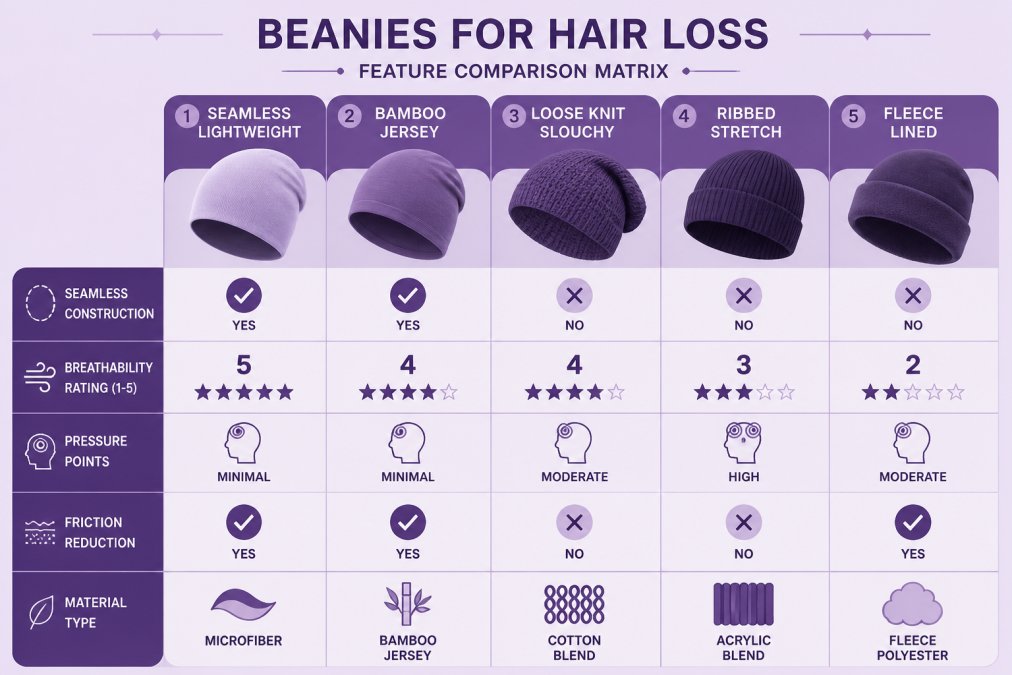
Beyond material, specific construction features determine whether a beanie supports or stresses your scalp.
Seamless Construction and Friction Reduction
Seams create pressure points and friction zones. A seamless beanie distributes pressure evenly, eliminating hot spots where friction causes irritation. Professional-grade 3D knit technology engineers the fabric to hold its shape.
Friction reduction depends on the knit's surface texture. A smooth, tightly-knit surface slides against hair without catching. Looser knits or textured patterns snag fine or thinning hair. The interior should feel uniformly smooth, not bumpy.
Breathability and Thermal Regulation
Overheated scalps become inflamed. Excessive moisture and warmth create irritation and accelerated shedding. Breathable beanies allow air circulation while maintaining warmth. Look for lightweight materials and open-knit patterns.
Quality beanies wick moisture away from the scalp rather than absorbing it, preventing the sweat-and-chill cycle that irritates sensitive skin.
Comfort-Fit Design Without Pressure Points
A beanie that's too tight creates constant pressure on hair follicles; too loose creates friction. The ideal fit is snug but not restrictive, staying in place without squeezing.
Look for stretch-engineered designs that accommodate different head sizes. The cuff should sit comfortably without creating a visible pressure line. A red mark on your forehead after removal means the beanie is too tight and will damage hair follicles. Prioritizing such gentle physical contact minimizes irritation, a practice that works in tandem with the soothing properties of organic hair care to maintain a healthy scalp environment.
Top Beanie Picks for Sensitive Scalps
Sleepy: Lightweight and Ultra-Soft Everyday Wear
The Sleepy Beanie ($28.95) is handcrafted from lightweight, ultra-soft acrylic knit. The stretchy fit works for most head sizes with a playful design that doesn't announce itself.

What works: Ultra-soft acrylic prevents heat buildup and pressure points. Customers report it feels gentle even after hours of wear.
What to know: Subtle design, less insulating than thicker beanies, better for mild winter or indoor wear.
Best for: People who prioritize comfort over statement style, anyone with mild to moderate scalp sensitivity, everyday winter wear.
Axolotl: Stretchy Acrylic-Lycra Blend for All-Day Comfort
The Axolotl Beanie ($28.95) combines soft acrylic with lycra for a stretch-engineered fit that adapts to your head shape without squeezing. The 3D gill accents are light enough to avoid scalp pressure.
What works: The acrylic-lycra blend is soft, stretchy, and durable. Unisex fit works across head sizes. Customers report supportive comfort without restriction.
What to know: The 3D elements add visual interest but are feather-light. This isn't a minimalist beanie, it has personality. If you prefer something completely plain, look elsewhere.
Best for: All-day wearers who want comfort and personality, people with variable head sizes, anyone seeking an acrylic-lycra blend specifically.
Good Kitty: Soft Acrylic Knit with Quality Construction
The Good Kitty Beanie ($29.95) features soft acrylic knit with quality construction engineered for extended wear. The oversized fluffy pom and embroidered kitty expression add visual appeal.
What works: Soft, non-shedding acrylic with no loose threads or rough seams. Stretchy fit accommodates different head sizes without pressure points.
What to know: This is a statement beanie. The pink-purple-black palette and cat design make it eye-catching. If you prefer subtle, this won't be your pick. The quality construction does mean a slightly higher price point than basic beanies.
Best for: People who want personality with their comfort, cat lovers, anyone seeking quality acrylic construction, social media users who want a distinctive look.
Cute Panda: Ultra-Soft Acrylic for Everyday Wearability
The Cute Panda Beanie ($29.95) delivers ultra-soft acrylic knit in a clean black-and-white design. Construction emphasizes comfort for daily wearability.
What works: Ultra-soft acrylic is genuinely gentle with extended wear. Embroidered face adds personality without bulk. Customers report wearing it daily because it's so comfortable.
What to know: The black-and-white design is more understated than some other Crazy Beanies options, but it's still a character beanie. If you want completely plain, this isn't it. The simplicity of the design, however, makes it versatile across different outfits.
Unicorn: Premium Soft Acrylic for Extended Wear
The Unicorn Beanie ($32.99) is the premium option. Soft acrylic knit with shimmering horn, colorful mane, and embroidered flower make it a statement piece for people who want to stand out.
| Beanie | Price | Material | Best For | Key Feature |
|---|---|---|---|---|
| Sleepy | $28.95 | Ultra-soft acrylic | Everyday comfort | Lightweight, subtle design |
| Axolotl | $28.95 | Acrylic-lycra blend | All-day wear | Stretch fit, no pressure points |
| Good Kitty | $29.95 | Soft acrylic knit | Quality + personality | Oversized pom, cat design |
| Cute Panda | $29.95 | Ultra-soft acrylic | Daily wearability | Black-and-white simplicity |
| Unicorn | $32.99 | Premium soft acrylic | Statement style | Horn, mane, embroidered flower |
How to Prevent Hat Hair and Scalp Damage
Wearing a beanie correctly matters as much as choosing the right one.
How to Wash Beanies for Sensitive Scalps
Proper washing extends the life of your beanie and prevents scalp irritation from accumulated buildup.
Do Beanies Cause Hair Loss? What the Evidence Shows
The direct answer: a well-fitting, breathable beanie made from non-irritating material does not cause hair loss. A poorly-fitting, low-quality beanie can accelerate shedding in people with compromised scalp health.
Frequently Asked Questions
Are beanies bad for thinning hair?
Beanies aren't inherently bad for thinning hair, the material and fit matter most. Tight beanies with rough seams can increase friction and scalp irritation, worsening hair breakage. Beanies for sensitive scalps should feature seamless construction, breathable materials like acrylic-lycra blends, and a stretchy fit that doesn't create pressure points. Properly fitted beanies with soft, lightweight fabrics actually protect thinning hair by reducing environmental stress and friction.
What type of beanie material is best for sensitive scalps?
Soft acrylic knit and acrylic-lycra blends are ideal for sensitive scalps. These materials are hypoallergenic, lightweight, and moisture-wicking, reducing scalp irritation and friction. Avoid rough synthetics or materials with tight weaves that trap heat and moisture. Look for ultra-soft, breathable fabrics that maintain thermal regulation without causing sweat buildup. Organic cotton blends are also excellent if you prefer natural fibers, though quality acrylic knits often outperform in terms of durability and comfort-fit design.
How can I prevent hat-related hair breakage?
Choose beanies with seamless construction and a stretchy, comfort-fit design to minimize friction. Avoid tight beanies that create pressure points on your scalp. Wear your beanie loosely enough that you can slide a finger under the cuff. Use a silk or satin-lined beanie or place a soft cloth between your hair and the beanie to reduce friction. Wash your beanie regularly to prevent buildup of oils and sweat that increase irritation. Keep your hair moisturized and use a leave-in conditioner to strengthen hair against breakage from repeated friction.
What should I look for when choosing a beanie for hair loss?
Prioritize seamless construction, lightweight materials, and a stretchy fit without pressure points. Look for breathable fabrics that regulate temperature and wick moisture away from your scalp. Avoid beanies with rough inner seams, thick linings, or tight elastic bands. Consider beanies with soft embroidered details rather than heavy appliqués that add weight and pressure. Unisex, one-size-fits-most designs often work better because they distribute fit evenly across the head without concentrating pressure in specific areas.
How do I wash a beanie to keep it safe for sensitive scalps?
Hand wash your beanie in cool water with a gentle, fragrance-free detergent designed for delicate fabrics. Avoid hot water, which can damage fibers and irritate residual oils on the beanie. Rinse thoroughly until all soap is gone, residue can trigger scalp irritation. Gently squeeze out excess water without wringing. Air dry flat on a clean towel away from direct heat or sunlight. Never use a dryer, bleach, or fabric softener, which can leave irritating residues and damage the knit structure. Wash every 2-3 weeks if worn daily.


