

Table of Contents
- What Makes 3D Knit Beanies Different from Traditional Headwear
- How 3D Knitting Works: The Technology Behind the Fit
- 3D Knit Beanie Fit: Why It Stays Put and Feels Right
- Best Material for a Beanie: Wool, Merino, and Beyond
- How to Care for a Knit Beanie: Maintenance That Preserves Quality
- Why 3D Knit Beanies Justify Their Cost
- Frequently Asked Questions
Last Updated: October 6, 2026
What Makes 3D Knit Beanies Different from Traditional Headwear
3D knit beanies are constructed as a single, seamless piece of fabric using advanced knitting technology, rather than being assembled from multiple panels stitched together like conventional headwear. This fundamental difference in manufacturing creates a beanie that moves with your head instead of against it.
The distinction matters more than most people realize. Traditional beanies rely on seams to hold their shape, which means friction points where fabric rubs against your skin. Over time, those seams can stretch, fray, or create uncomfortable pressure points.
At Crazy Beanies, we've spent 25 years perfecting how 3D knitting works for headwear. The technology creates a garment that doesn't just fit better, it performs better. The fabric maintains its shape through stretch recovery and breathes in ways flat-knit alternatives simply cannot match.
What separates a quality 3D knit beanie from cheaper alternatives comes down to precision. The knitting machine must maintain consistent tension across every stitch, every row, every pass. One inconsistency and the whole structure fails. This is why handcrafted 3D knit beanies command a premium: the precision required is genuinely difficult to achieve at scale.
How 3D Knitting Works: The Technology Behind the Fit
Three-dimensional knitting creates fabric with intentional shaping built into the knit structure itself. Unlike flat knitting, which produces a two-dimensional textile that requires seaming and assembly, 3D knit technology shapes the garment as it's being made. The knitting machine increases or decreases stitch counts in specific areas to create curves, contours, and a tailored fit.
The process sounds simple. In practice, it requires precise control of stitch gauge, yarn tension, and machine timing across dozens of passes. A single miscalibration and the entire piece is ruined. This is why 3D knit beanies take longer to produce than mass-market alternatives, the technology demands accuracy that cannot be rushed.
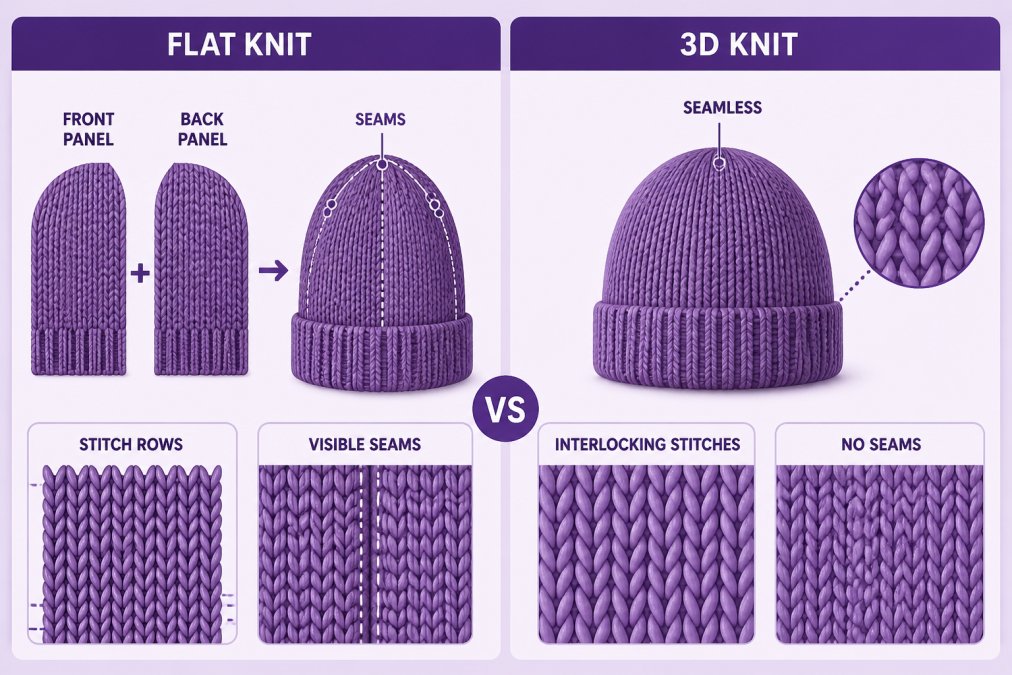
Seamless Construction and What It Means for Comfort
Seamless construction eliminates the friction points that plague traditional beanies. When you wear a flat-knit beanie, seams create ridges that press against your forehead, ears, and the back of your neck. After an hour of wear, those pressure points become uncomfortable. After a full day, they can leave marks.
A 3D knit beanie has no seams because it's knitted as one continuous piece. The fabric flows smoothly from the crown to the brim without any interruption. This means zero friction, zero pressure points, and zero marks when you remove it. The comfort difference is immediate and noticeable, most people feel it within the first five minutes of wearing a quality 3D knit beanie.
The seamless approach also improves durability. Seams are weak points in any garment. They're the first place a beanie will fray, tear, or unravel under stress. Remove the seams entirely, and you remove the primary failure point.
Precision Knit Structure and Shape Retention
The knit structure of a 3D beanie is engineered to hold its shape through repeated wear and washing. The rib-knit pattern, those vertical lines you see on a quality beanie, isn't decorative. It's structural. The ribs create channels that reinforce the fabric and prevent stretching.
A flat-knit beanie loses its shape gradually. After a few weeks of wear, the crown sags, the brim stretches, and the whole garment looks loose and tired. This happens because flat-knit fabric has no inherent structure. It relies on the seams and assembly to hold its form, and those connections weaken over time.
3D knit technology builds shape retention into the fabric itself. The interlocking stitches create a fabric that resists stretching and maintains its original silhouette wash after wash.
3D Knit Beanie Fit: Why It Stays Put and Feels Right
A beanie that slips, slides, or shifts throughout the day is worse than useless, it's actively frustrating. This is where 3D knit technology delivers a real advantage. The precision fit engineered into the knit structure means the beanie stays exactly where you put it.
The fit works because the fabric is shaped to match the contours of your head. The crown has enough structure to hold its shape without being too tight. The brim sits at the right angle without rolling or bunching. The sides conform to your head without creating pressure points. This isn't luck, it's engineering.
Crazy Beanies designs each 3D knit beanie with a "fake-proof fit" that works across many head sizes. The stretch recovery of the fabric means a single size can accommodate different head shapes without looking sloppy or feeling restrictive. This is why our customers tell us they can share a beanie with a friend and it fits both of them comfortably.
Stretch Recovery and Durability Across Head Sizes
Stretch recovery is the fabric's ability to return to its original shape after being stretched. A quality 3D knit beanie will stretch slightly when you pull it on, then snap back to its engineered shape once it's seated on your head. This creates a secure, comfortable fit that doesn't require constant adjustment.
The stretch recovery comes from the yarn and the knit structure working together. Merino wool and similar natural fibers have inherent elasticity. When combined with a precisely engineered knit pattern, that elasticity creates a fabric that adapts to your head rather than forcing your head to adapt to the beanie.
Durability across repeated stretching is where many beanies fail. A flat-knit beanie stretched repeatedly will eventually lose its shape permanently. The fibers fatigue, the seams weaken, and the whole garment becomes loose and baggy.
Best Material for a Beanie: Wool, Merino, and Beyond
The material matters as much as the construction.
Wool is the gold standard for beanie material because it offers warmth, breathability, and durability in one package. Merino wool is even better, it's softer against the skin, resists odor, and regulates temperature more effectively than standard wool.
Acrylic is cheaper and easier to care for, but it doesn't breathe as well, doesn't regulate temperature as effectively, and tends to pill and degrade faster than natural fibers.
Thermal Regulation and Breathability
A beanie's job is to keep your head warm without overheating. This requires a material that insulates while still allowing some air circulation. Wool and merino excel at this balance because their fiber structure naturally traps air while remaining porous enough to breathe.
Merino wool is particularly good at thermal regulation because it can absorb up to 30% of its weight in moisture without feeling wet. This means if you're active, hiking, running, or just moving around on a cold day, your merino beanie will wick sweat away from your skin and keep you warm even as you perspire.
The breathability of wool also prevents the "sauna effect" that happens with cheap synthetics. When you're wearing a synthetic beanie indoors or during mild activity, heat and moisture can build up under the fabric, making you feel hot and uncomfortable.
Moisture Management and Year-Round Wear
A quality 3D knit beanie should work across seasons, not just winter. This requires a material that manages moisture effectively. Merino wool is the best choice for year-round wear because it regulates temperature and moisture independently. This natural fiber versatility extends beyond daily accessories, highlighting why enthusiasts prioritize wool for winter clothing when selecting gear for high-altitude activities.
In cold weather, merino keeps you warm by trapping air in its fiber structure. In mild weather or during activity, merino wicks moisture away from your skin and allows evaporative cooling.
Standard wool is good for winter but can feel too warm and heavy during transitional seasons. Acrylic synthetics don't regulate temperature well in any season and don't manage moisture effectively.
How to Care for a Knit Beanie: Maintenance That Preserves Quality
A 3D knit beanie will last for years if you care for it properly. The maintenance is straightforward, but there are specific steps that protect the fabric and preserve the fit.
Hand wash your beanie in cool water with a gentle detergent designed for wool or merino. Machine washing, even on delicate cycle, can damage the precise knit structure and cause stretching or pilling.
Never wring or twist a wet beanie. Instead, gently squeeze out excess water, then lay it flat on a clean towel to dry. If you need to speed up drying, you can roll it in the towel to absorb more moisture, but never use heat. A dryer will damage the fabric and ruin the fit.
Store your beanie in a cool, dry place away from direct sunlight. Sunlight fades color and can weaken natural fibers over time. A drawer or shelf works fine. Don't store it in a plastic bag, which can trap moisture and encourage mildew.
Pilling is normal with wool and merino, especially in the first few wears. Use a fabric comb or gentle brush to remove pills, or use a pilling stone designed for knitwear.
Why 3D Knit Beanies Justify Their Cost
A quality 3D knit beanie costs more than a mass-market alternative. This price difference reflects real differences in materials, manufacturing, and durability.
The knitting machines required for 3D knit production are expensive and require skilled operators. A single mistake during production means the entire piece is wasted. There's no way to cut corners or rush the process. This labor-intensive approach means higher production costs compared to flat-knit beanies made on simpler machines by less-skilled workers.
The materials matter too. Merino wool costs significantly more than acrylic. A beanie made from quality merino will be noticeably more expensive than one made from synthetic fiber. But merino lasts longer, performs better, and feels better against your skin.
Durability is the final factor. A 3D knit beanie from Crazy Beanies will last with proper care. A cheap flat-knit beanie might last one season before it starts looking worn out.
The real value of a 3D knit beanie is that it solves problems that cheaper alternatives create. No slipping. No pressure points. No sagging. No pilling. No constant replacement. These aren't luxury features, they're the difference between a beanie that works and one that frustrates you every time you wear it.
Choosing a beanie seems simple until you actually wear one that doesn't fit right or falls apart after a few weeks. A quality 3D knit beanie solves the real problems that plague traditional headwear: slipping, uncomfortable seams, poor fit, and short lifespan. The technology behind 3D knitting isn't marketing, it's a fundamental engineering approach that creates a better garment.
Frequently Asked Questions
How is a 3D knit beanie different from a traditional beanie?
3D knit beanies are constructed seamlessly using specialized knitting machines that create the entire hat in one continuous piece, eliminating the seams found in traditional beanies. This seamless construction reduces friction against your head, improves fit consistency, and enhances stretch recovery. Traditional beanies are typically made from flat panels sewn together, which can create pressure points and wear out faster at the seams. The 3D knit structure also allows for precision shaping that conforms to different head sizes more naturally.
Do 3D knit beanies fit different head shapes?
Yes. The seamless, three-dimensional fabric structure of 3D knit beanies adapts to various head shapes and sizes more effectively than flat-knit alternatives. The stretch and shape retention properties allow the beanie to conform to your head's contours without slipping or creating uncomfortable pressure points. Many manufacturers, including those using professional-grade 3D knit technology, design their beanies with this versatility in mind, making them suitable for a wider range of head sizes and shapes without requiring multiple size options.
What material should I choose for a beanie?
Merino wool and premium wool blends are top choices for beanies because they provide excellent thermal regulation, breathability, and moisture management. Merino wool is softer than standard wool and naturally resists odor, making it ideal for active use and everyday wear.
How should you care for a 3D knit beanie?
Hand wash your 3D knit beanie in cool water with mild detergent to preserve the fabric's structure and color. Avoid hot water and machine washing, which can damage the seamless knit construction and cause stretching. After washing, gently squeeze out excess water and lay flat to dry. Never wring or hang the beanie, as this can distort the shape. Proper care extends the life of the stretch recovery and shape retention properties that make 3D knit beanies superior to traditional options.


