

Table of Contents
- Understanding Made in USA Standards for Headwear
- How to Spot Fake American Made Products in Headwear
- Step-by-Step Verification Checklist for Headwear
- Best American Made Winter Hats: What to Look For
- Common Pitfalls in Supply Chain Transparency
- Regulatory Compliance and Consumer Protection
- Conclusion
Last Updated: August 29, 2026
Understanding Made in USA Standards for Headwear
The Federal Trade Commission defines "Made in USA" as products that are entirely or almost entirely made in the United States (the FTC). For headwear, this means substantial transformation must occur domestically, raw materials may come from anywhere, but the final product's creation happens here.
The FTC's enforcement guidelines are clear: companies cannot label a hat "Made in USA" simply because final assembly happens domestically if the fabric, construction, and primary value come from overseas. At Crazy Beanies, we've built 25 years of expertise in true domestic manufacturing. Our 3D knit technology creates the entire garment structure in-house, meaning substantial transformation happens at our facility from start to finish.
What FTC Made in USA labeling requirements actually mean
The FTC requires that any product labeled "Made in USA" must have all significant processing and manufacturing performed domestically (the FTC). For headwear, this includes knitting, dyeing, finishing, and assembly. If any of these steps occur abroad, the product cannot claim full domestic origin without specific disclaimers like "Made in USA from imported materials."
The key phrase is "substantial transformation", the product must undergo a transformation so significant that it emerges as a new and different article of commerce. A simple sewing operation doesn't qualify. Actual knitting, weaving, or construction of the hat's structure does. Many brands exploit gray areas by importing pre-knitted fabric blanks and sewing them domestically, then claiming "Made in USA." The FTC has cracked down on these misleading practices repeatedly, issuing warnings and fines (the FTC).
Substantial transformation and domestic assembly explained
Substantial transformation is the legal threshold separating legitimate "Made in USA" claims from false advertising. For a winter hat, this means the actual creation of the hat's structure, not just assembling pre-made pieces.
A company that imports a finished knit cap shell and adds a label domestically has not substantially transformed anything. A company that knits the entire cap from yarn, dyes it, shapes it, and finishes it domestically has achieved substantial transformation. Domestic assembly alone is insufficient, you can assemble 100 imported components in the United States, but if those components represent the bulk of value and labor, the product isn't substantially transformed. For knit headwear, substantial transformation happens during the knitting process itself, where yarn becomes a structured garment.
How to Spot Fake American Made Products in Headwear
The headwear market is flooded with deceptive claims. The most common deception is the imported-fabric-with-domestic-assembly scheme: companies source pre-knitted fabric blanks from overseas, sew them into finished hats domestically, and claim full domestic origin. The label says "Made in USA," but the actual manufacturing, the knitting that creates the hat's structure, happened abroad.
Red flags in labeling and country of origin claims
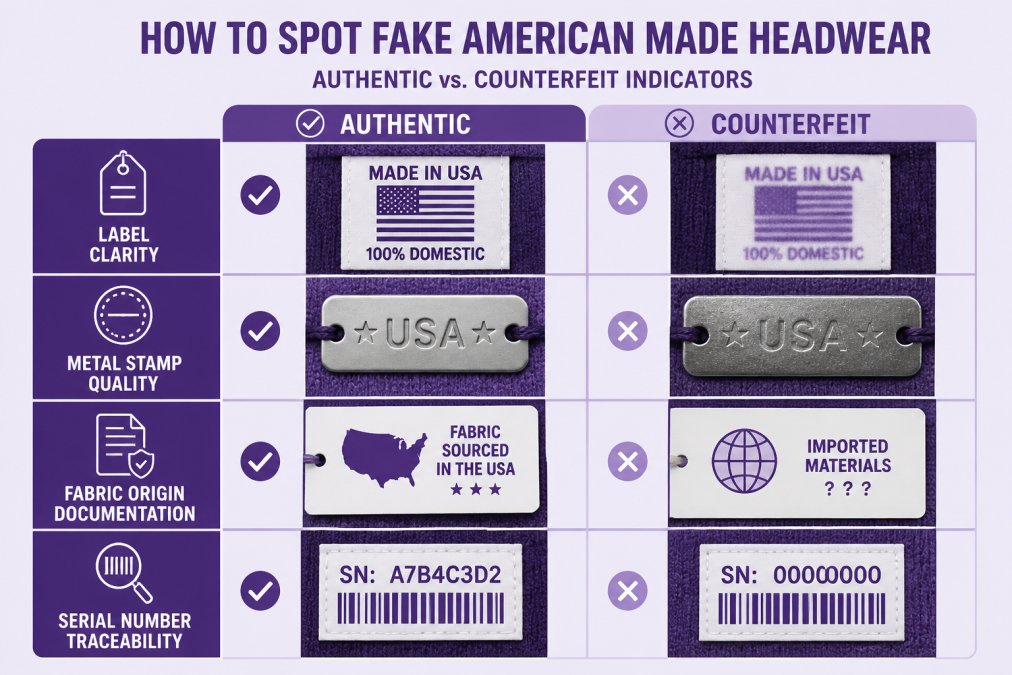
Authentic "Made in USA" labels are clear, specific, and traceable. A legitimate label will state the country of origin directly and include a manufacturer name and address. If you see "Made in USA" with no company information, no facility address, or generic text, that's a red flag. Crazy Beanies includes our facility information on every product because we stand behind our domestic manufacturing.
Look for inconsistencies. If a tag says "Made in USA" but also lists an overseas manufacturing facility, something's wrong. Vague language is another tell, phrases like "Assembled in USA," "Finished in USA," or "Product of USA" indicate incomplete domestic manufacturing. The word "assembled" specifically signals that components were made elsewhere and put together here.
Missing or obscured serial numbers and internal stamps are warning signs. Legitimate manufacturers mark their products with traceable identifiers. Counterfeit products often have worn, blurry, or generic stamps that don't correspond to any actual manufacturing facility.
Imported fabric versus domestic assembly
Both scenarios are legal, but only one is honest about it. A product made from imported fabric with domestic assembly can legitimately claim "Made in USA" only if the fabric undergoes substantial transformation during assembly. If you're simply sewing pre-cut imported fabric pieces together, that's not substantial transformation. If you're knitting imported yarn into a new structure, that is.
Imported fabric that's merely cut and sewn is still primarily foreign-made, even if final assembly happens domestically. Imported yarn that's knitted into a new garment structure represents genuine domestic manufacturing. To verify this yourself, examine the fabric's origin. Quality headwear manufacturers will disclose whether fabric is domestically sourced or imported. Crazy Beanies uses domestic sourcing where possible and is transparent about material origins.
Step-by-Step Verification Checklist for Headwear
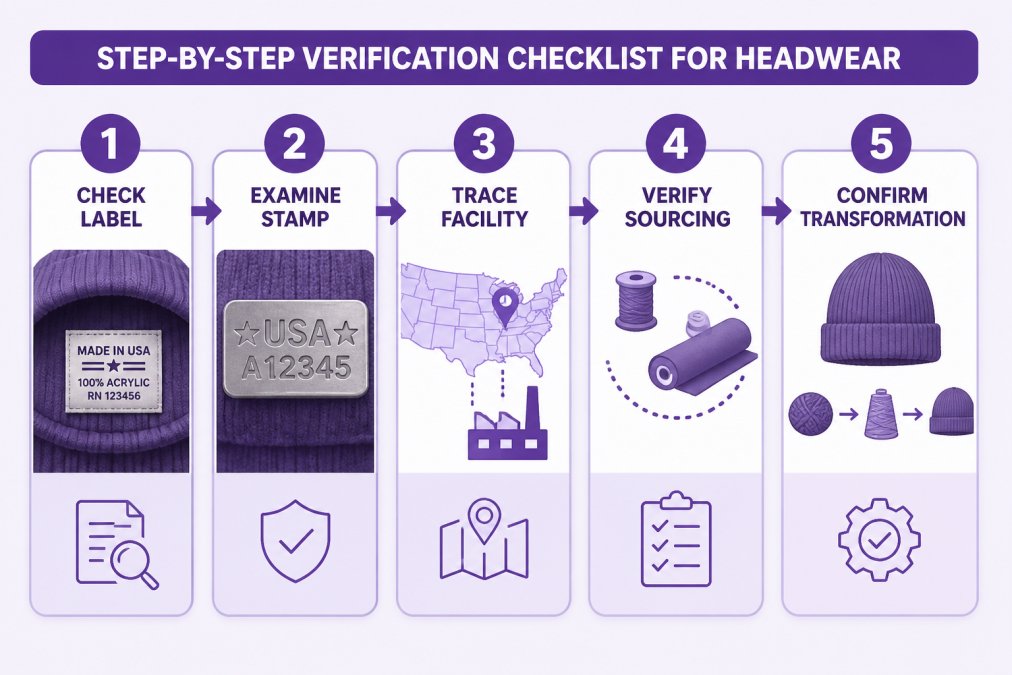
You don't need to be an expert to verify authenticity. Follow this systematic approach and you'll catch most fakes immediately.
Examining internal labels and metal stamps
Start with the internal label. Remove the beanie and look inside at the care tag and origin statement. A legitimate "Made in USA" label will include the manufacturer's name, address, and contact information. Search online for that company, if the address doesn't exist or the company has no web presence, that's suspicious.
Next, examine the metal stamp or embossed marking. Check whether it's crisp and deeply embossed or shallow and worn. Counterfeit products often have stamps that look carelessly applied or nearly illegible. Run your finger over it, a real stamp should have distinct depth and precision. The label and stamp should match in branding and information.
Tracing the supply chain and manufacturing facility
Take the manufacturer's address from the label and verify it exists. Search the address on Google Maps and call the company directly to ask about the specific product. Legitimate manufacturers can tell you about their production process.
Check whether the company maintains transparency about their supply chain. Reputable domestic manufacturers are proud of their process and document it. Look for third-party verification or certification marks that add credibility.
Verifying serial numbers and authenticity markers
Quality headwear often includes serial numbers or batch codes that should be traceable to a specific production run. If you contact the manufacturer with a serial number, they should be able to tell you when and where that product was made. Real manufacturing facilities use systematic numbering that corresponds to production dates and facility codes.
Look for additional authenticity markers like holographic labels, QR codes that link to verification pages, or unique design elements that are difficult to counterfeit. Crazy Beanies uses multiple verification methods because we want customers to feel confident in their purchase.
Best American Made Winter Hats: What to Look For
When shopping for genuinely American-made winter headwear, certain construction methods and quality indicators separate authentic domestic manufacturing from imports masquerading as American.
Quality control and domestic sourcing indicators
Authentic American-made headwear shows consistent quality throughout. Stitching should be even and tight, seams should lie flat, and fabric should feel substantial. Domestic sourcing of materials is a strong indicator, if a company sources yarn, dyes, and finishing materials domestically, they're making a significant investment in keeping production here.
Look for companies that disclose their manufacturing process openly. Brands that hide their supply chain usually have something to hide. The price point matters too, genuine American manufacturing costs more than overseas production. If a "Made in USA" hat is suspiciously cheap, the claim is likely false.
Construction methods that signal authentic domestic manufacturing
Hand-finished details indicate genuine manufacturing care. Look for hand-stitched labels, hand-sewn reinforcements, or hand-finished seams. Advanced construction techniques like 3D knitting represent genuine domestic manufacturing innovation. This technology creates the entire hat structure in one process, eliminating the need for multiple imported components to be assembled later. Crazy Beanies uses 3D knit technology specifically because it enables true domestic manufacturing, the entire product is created in-house, not assembled from imported parts.
Check whether the construction method creates a unique fit or structure. Products made through sophisticated domestic processes often have distinctive characteristics that mass-produced imports lack. Limited production runs signal that a company is investing in design innovation and domestic craftsmanship, the opposite of mass-production overseas.
Common Pitfalls in Supply Chain Transparency
Many brands claim transparency while revealing nothing meaningful. The biggest pitfall is incomplete disclosure, a company might tell you where final assembly happens but stay silent about material sourcing, creating a misleading impression of domestic origin.
Another pitfall is outdated information. Brands sometimes list manufacturing facilities that no longer operate or have moved. Some companies use vague terminology deliberately: "Proudly made in America" sounds patriotic but means nothing legally. "American-inspired design" means the design was created here, not that manufacturing was. These phrases are red flags because they avoid making specific, verifiable claims.
The absence of traceability is a major warning sign. If you can't trace a specific product back to a specific manufacturing facility, the supply chain isn't transparent. Legitimate manufacturers use batch codes, serial numbers, and facility identifiers that allow verification.
Regulatory Compliance and Consumer Protection
The FTC enforces Made in USA standards under the Guides for the Use of the "Made in USA" Claim. These guidelines are the legal foundation for how brands can market their products. Companies that make false domestic origin claims face enforcement action, fines, and mandatory corrective advertising.
The standard applies to all aspects of the product. If a company claims "Made in USA," it means the product was manufactured in the United States, with all significant processing and parts sourced domestically. Partial claims require specific language like "Made in USA from imported materials."
Consumer protection agencies at the state level also monitor these claims. If you encounter a product you believe falsely claims domestic origin, you can report it to your state's attorney general or the FTC directly. Documentation matters in regulatory compliance, legitimate manufacturers maintain records showing where materials come from, which facilities performed which processes, and when production occurred.
The best protection is buying from companies with verifiable track records. Crazy Beanies has 25 years of domestic manufacturing experience and maintains full traceability for every product. We're transparent about our process because we believe genuine American craftsmanship is worth supporting.
Verifying authentic American-made headwear requires attention to detail, but the effort protects both your investment and your values. When you know what to look for, clear labeling, traceable serial numbers, transparent supply chains, and quality construction methods, you can confidently distinguish genuine domestic manufacturing from clever counterfeits.
The brands worth supporting are those that make verification easy. They provide complete information, maintain transparent supply chains, and stand behind their manufacturing claims. Crazy Beanies delivers exactly this: bold, limited-edition headwear handcrafted in the USA with 3D knit technology that creates authentic domestic manufacturing at every step. Our USA Beanie ($29.95) showcases this commitment, every element, from the knitting process to the final finish, happens right here. Experience the difference genuine American craftsmanship makes, with shipping in 24 hours or less.

Frequently Asked Questions
Q: What does the FTC require for a product to be labeled 'Made in USA'?
A: The FTC requires that all significant processing and manufacturing of a product occur in the United States. For headwear, this means substantial transformation must occur domestically. If any significant portion is imported or assembled overseas, the claim must be qualified (such as 'Assembled in USA'). Manufacturers must have documentation proving domestic production throughout the supply chain.
Q: How can I tell if a hat is truly manufactured in the USA?
A: Check for multiple verification points: examine the internal label for clear 'Made in USA' text with no qualifiers like 'Assembled' or 'Product of'; look for metal stamps or serial numbers that trace to a specific domestic manufacturer; research the brand's website for supply chain transparency and manufacturing facility information; and ask the seller directly for documentation of domestic production. Authentic domestic manufacturers typically provide detailed information about where and how their products are made.
Q: What's the difference between 'Assembled in USA' and 'Made in USA'?
A: These terms have distinct legal meanings under FTC guidelines. 'Made in USA' means substantially all significant processing and manufacturing are performed domestically. 'Assembled in USA' means only the final assembly occurred in the United States, but components or materials may be imported. If you're seeking truly domestic products, look for unqualified 'Made in USA' claims backed by verifiable supply chain documentation.
Q: Why is it difficult to verify if a hat is made in the USA?
A: Supply chain transparency remains a challenge because many brands don't publicly disclose their manufacturing sources, and imported components can be mixed with domestic assembly. Some manufacturers deliberately obscure origins to avoid higher production costs. Additionally, there's no centralized certification system for American-made apparel like there is for some other industries. Consumers must rely on label reading, direct manufacturer communication, and independent research. False advertising also complicates verification, some brands make unsubstantiated domestic claims without proper documentation or regulatory oversight.
This article was written using GrandRanker


