

Table of Contents
- Why Limited Edition Beanie Releases Sell Out Fast
- Build a Beanie Release Calendar That Works
- Set Up Official Newsletter and Email Alerts
- Monitor Social Media for Drop Announcements
- How to Join Beanie Collector Forums for Early Intel
- Limited Edition Beanie Authentication: Spot Fakes Before You Buy
- Use Secondary Market Tools to Catch Missed Drops
- Common Mistakes That Cost You the Drop
- Frequently Asked Questions
Last Updated: September 13, 2026
Why Limited Edition Beanie Releases Sell Out Fast
Limited edition beanie releases sell out fast because production runs are deliberately small, demand is concentrated into a single drop window, and resellers buy in bulk the moment a link goes live. Crazy Beanies has watched this pattern play out for 25 years in headwear, and the fix is almost never "check the site more often." It's building a notification system that fires before the crowd arrives.
Most shoppers lose the drop for one boring reason: they find out too late. By the time a post hits your feed, the run is often gone.
That's the whole game. Below, we'll show you exactly how to get notified of limited edition beanie releases using five layered channels, so you're never relying on a single alert that can fail.
Federal Trade Commission guidance on online shopping and drop sales
Build a Beanie Release Calendar That Works
A beanie release calendar is a single document or app view where you log every brand's expected drop window, seasonal cycle, and confirmed release date in one place. It turns scattered announcements into a schedule you can act on.
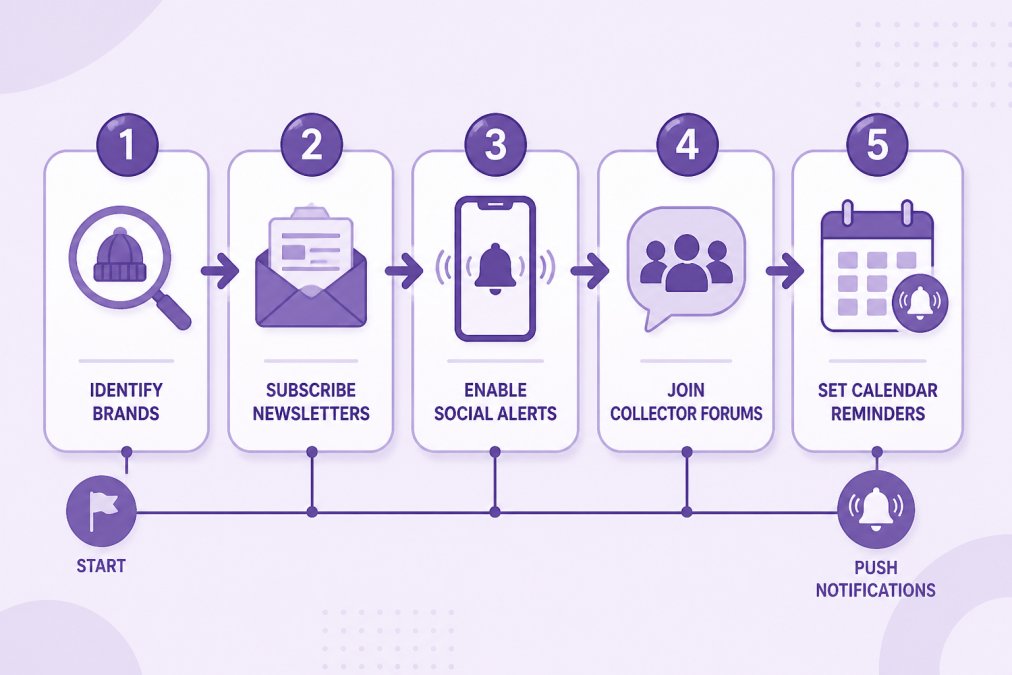
Track Brand Drop Schedules and Seasonal Cycles
Most headwear brands follow predictable rhythms. Fall and winter drops cluster around back-to-school and holiday windows. Spring brings lighter colorways. Limited edition runs often land on the same weekday each cycle, which makes them easier to anticipate once you've logged a few.
Start a simple table. Brand, typical drop month, channel where they announce, and whether it sold out last time.
Set Up Automated Calendar Alerts
Manual checking fails. Automated calendar alerts don't. Add recurring reminders for each brand's known drop window, then set a push notification 24 hours before and again 15 minutes before the expected launch. A release date you've logged becomes a beanie release calendar entry that pings you automatically.
Set Up Official Newsletter and Email Alerts
Official newsletter and email alerts are the most reliable notification channel because brands control them directly and send them before public announcements. The problem is volume: once you subscribe to 20 or 30 headwear brands, drop emails get buried under receipts, shipping notices, and promotional blasts. The fix is not willpower, it's infrastructure.
Build a Dedicated Drop Inbox
Create a separate email address used only for release notifications. A free webmail account works fine. Every brand newsletter, waitlist confirmation, and restock alert goes there, and nothing else does. That single move eliminates the most common failure mode: a drop email arriving at 9:04 a.m. and getting scrolled past by 9:06 a.m.
If you'd rather not manage a second inbox, use filter rules inside your primary account instead. In Gmail, go to Settings → Filters and Blocked Addresses → Create a new filter. In Outlook, use Rules → Add new rule. Either way, the logic is the same:
-
Match on sender: add each brand's newsletter address (for example, the
news@orhello@address shown at the bottom of their signup confirmation). -
Match on subject keywords:
drop,release,[limited edition](/blogs/news/limited-edition-winter-hats-buy),restock,early access,waitlist,launch. -
Apply actions: skip the inbox, apply a label or folder named
DROPS, and mark as important. - Turn on notifications: in Gmail, enable mobile push for the label under Settings → Notifications → Email notifications → Label notifications. In Outlook, set a mobile alert on the rule.
A common pattern is to combine both: a dedicated address for brands that email frequently, and a filter rule for the handful that only email a few times a year.
Aggregate Every Brand List in One Place
Signing up is a one-time task, but it's easy to forget which lists you're on. Keep a simple tracking sheet with four columns:
| Brand | Signup date | List type (newsletter / waitlist / SMS) | Early-access perk? |
|---|
Then work through it systematically:
- Newsletter signup, usually a footer form on the brand's homepage. Confirm the double opt-in email so you're actually on the list.
- Waitlist / notify-me forms, product pages for sold-out limited runs often have a "Notify me when available" button. These fire before the general newsletter, so sign up even for items you don't want yet.
- SMS / text alerts, many brands offer a text list with a shorter lead time than email. Standard message rates apply; check the opt-in terms.
- Account-level alerts, if the brand has a customer account, enable "back in stock" and "new release" notifications in account settings.
Actually Open the Emails, and Act on the Early Window
Many brands give email subscribers an early access window before the general public, often 24 to 48 hours, sometimes with a private link or code (the FTC). That window is the whole point of subscribing. Two habits make it count:
- Check the DROPS folder at a fixed time each morning and again in the evening. Drop emails rarely arrive at convenient moments.
- Pre-load payment and shipping details in the brand's account so checkout takes seconds, not minutes, once the window opens.
Federal Trade Commission guidance on email marketing and commercial messages
Monitor Social Media for Drop Announcements
Social media is where most drop announcements break first, and where they vanish fastest. Instagram Stories, TikTok posts, and X threads often carry the earliest signal, sometimes hours before an official email.
Turn on notifications for the specific accounts you care about, not just follow them. Following an account does nothing when the algorithm decides not to show you the post. Post notifications and Story alerts do.
Two habits that help:
- Check the brand's Stories in the morning and evening, since Stories expire
- Watch for teaser posts, which usually precede a confirmed release date by a few days
How to Join Beanie Collector Forums for Early Intel
Beanie collector forums are online communities where collectors trade release intel, share authentication photos, and post drop alerts before brands announce publicly. They're the single best source of early information, and they cost nothing to join. Mastering these community dynamics provides a blueprint for finding rare figures that often appear in similar blind box formats.
Where Collectors Actually Gather
The best communities live in three places: dedicated subreddits for plush and headwear collecting, Discord servers run by collectors, and Facebook groups tied to specific brands or eras. Search for the brand name plus "collectors" and you'll usually find an active group within minutes.
Getting the Most From Forum Membership
Lurk first, then contribute. Members share better intel with people who've proven they're collectors, not resellers. Post photos of your collection, answer authentication questions, and set your notification settings so new threads ping you.
Limited Edition Beanie Authentication: Spot Fakes Before You Buy
Limited edition beanie authentication is the process of verifying a piece is genuine by checking tag markings, stitching quality, and material against known originals. It matters most on the secondary market, where counterfeits cluster around the most desirable releases.
Tag Markings, Stitching, and Material Checks
Start with the tag. Genuine limited runs typically carry a specific tag construction, print method, or interior label that mass-produced copies get wrong. Look for misspelled brand names, blurred print, and tags sewn in the wrong position.
Then check the stitching. Handcrafted pieces show consistent, even stitching; fakes often show loose threads, uneven seams, or glue residue. Finally, feel the material. A true 3D knit has a distinct density and stretch that cheap copies can't match.
Authentication also affects market value. Pieces with clear provenance and original tags hold value far better than unverified ones.
Use Secondary Market Tools to Catch Missed Drops
Secondary market alert tools notify you when a specific item is listed for sale, which is how you recover a drop you missed. Most collectors skip this channel entirely, and that's a mistake: drops sell out, but pieces resurface constantly as buyers change their minds, sizes don't fit, or resellers price too high and sit on inventory. A well-built saved search catches those listings within minutes of going live.
How Saved Searches Actually Work
Every major resale platform, eBay, Poshmark, Mercari, Depop, Grailed, and StockX, supports saved searches with push or email alerts. The mechanics differ slightly, but the pattern is the same:
- Run the search using your target keywords.
- Apply filters for category, size, condition, and price range.
- Tap "Save this search" (eBay), "Save search" (Poshmark, Mercari), or the bell/heart icon (Depop, Grailed).
- Enable notifications in the app's settings so new matches push to your phone, not just your email.
On eBay specifically, saved searches can be set to email you the moment a new listing matches, and you can toggle "instant" versus daily digest. Choose instant for grail items, daily for broader brand watches.
Build Keyword Sets That Catch Real Listings
A single saved search will miss most listings. Build a small set per target item:
- Exact product name and colorway, e.g., the brand name plus the specific color name from the drop page.
- Brand name plus "limited edition" or "LE", catches listings where the seller didn't use the full product name.
- Brand name plus the drop year, useful for seasonal runs that repeat annually.
- Common misspellings and abbreviations, sellers frequently misspell brand names or shorten colorways. Run a quick search for the misspelling first to confirm it returns results before saving it.
- Tag and label terms, if the piece has a distinctive tag or interior label, add those words; serious sellers often list them.
A common pattern is three to five saved searches per grail item. That sounds like a lot until you realize each one takes about 30 seconds to set up.
Tune Alerts So They Don't Drown You
Too many alerts is the same as no alerts. Two tuning moves keep the signal high:
- Set a price ceiling on each saved search so you're not pinged by overpriced listings you'd never buy.
- Use condition filters, "new with tags" or "new without tags" for collectible pieces, since condition drives value.
- Review and prune monthly. If a saved search hasn't produced a useful hit in 60 days, tighten the keywords or delete it.
Verify Before You Buy
Secondary market alerts are only useful if you can act fast, and fast action is where fakes slip through. When an alert fires, run the same authentication checks you'd use anywhere else: tag construction, stitching consistency, material density, and seller history. Ask for additional photos of the interior label and any original packaging before paying. On platforms with buyer protection, keep the transaction on-platform so you have recourse if the item turns out to be counterfeit.
Common Mistakes That Cost You the Drop
The biggest mistake is relying on a single notification channel. Email filters, social algorithms, and app notifications all fail independently, so one channel means one point of failure.
Other mistakes that cost collectors the drop:
- Following a brand without turning on post notifications
- Using a cluttered primary inbox for drop emails
- Checking social media only once a day
- Ignoring collector forums until after a drop sells out
- Skipping authentication and buying a fake at full price
Fix these and you'll catch far more releases than the average shopper.
| Mistake | Fix | Impact |
|---|---|---|
| One notification channel | Run 3+ channels at once | Fewer missed drops |
| No post notifications | Enable alerts per account | Earlier warning |
| Cluttered inbox | Dedicated email folder | Drop emails seen |
| No saved searches | Set resale alerts | Recover missed drops |
| No authentication | Check tags and stitching | Avoid fakes |
Frequently Asked Questions
How do I sign up for official brand release alerts?
Go to each brand's website and look for a newsletter signup or 'notify me' option, usually in the footer or on product pages. Enter your email and confirm the subscription. Many brands also offer SMS alerts for drops. Check your spam folder if you don't see a confirmation. For limited edition beanie releases, signing up directly with the brand is the most reliable way to get advance notice before items sell out.
Are there apps that track limited edition beanie drops?
Yes. Calendar apps like Google Calendar let you manually add known drop dates and set push notifications. For social media, turn on post notifications for brand accounts on Instagram and TikTok. Some collector forums also have dedicated threads where members post upcoming release dates. Combining a shared calendar with social alerts and forum monitoring gives you the best coverage for beanie releases.
How do I verify if a beanie release notification is legitimate?
Cross-check the announcement against the brand's official website and verified social accounts. Scam accounts often use slightly misspelled usernames or unverified profiles. Legitimate drops include a link to the brand's own store, not a third-party payment page. If a notification urges immediate payment through an unfamiliar link, treat it as suspect. Confirm the release date on the brand's site before sharing any payment information.
What is the best way to monitor social media for beanie announcements?
Follow the brand on Instagram, TikTok, and X (formerly Twitter), then turn on notifications for each account so you see posts the moment they go live. Brands often tease drops in Stories or short-form video before an official announcement. Set aside a few minutes daily to check these accounts. Collector forums and group chats also repost announcements quickly, so a combined approach catches drops you might otherwise miss.
Limited edition drops reward preparation, not luck. Crazy Beanies builds bold, handcrafted headwear with professional-grade 3D knit technology, limited edition designs, and a fake-proof fit, all shipped in 24 hours or less. Get on the list early, and get started with Crazy Beanies so your next drop lands in your hands, not someone else's cart.


