

Table of Contents
- Why Beanies Slip Up and How Hair Texture Affects Fit
- Best Beanie Materials for Grip and Stability
- Using Bobby Pins and Elastic Bands to Secure Your Beanie
- Hat Grip Tape for Beanies: A Product-Based Solution
- How to Wear a Beanie with Long Hair Without Slipping
- How to Fix a Loose Beanie and Adjust for the Perfect Fit
- DIY Hacks and Preventative Measures
- Conclusion
Last Updated: August 16, 2026
Why Beanies Slip Up and How Hair Texture Affects Fit
Beanies slip for two primary reasons: improper sizing and insufficient friction between the hat and your hair or scalp. Even a correctly sized beanie can slip if the material lacks grip or if your hair texture works against you.
Common causes of slipping
An oversized beanie is the most obvious culprit. A properly fitting beanie should sit snug against your scalp without gaps, reaching your ears without riding up past them.
Fabric choice matters significantly. Smooth, slippery materials like thin acrylic reduce friction, especially against fine or straight hair. Rougher textures like quality wool create more grip if the weave is tight enough to prevent stretching. Knit tension during manufacturing directly affects how well a beanie holds its shape, loosely knitted hats stretch easily and lose their grip after a few wears. Professional-grade knitting techniques, like the 3D knit technology Crazy Beanies uses, create denser fabric that maintains elasticity without sagging.
How hair texture impacts grip and friction
Straight, fine hair offers minimal friction against a beanie's interior. Curly or textured hair naturally grips fabric better because the irregular surface creates more contact points. Oily hair reduces friction further, making even a well-fitting beanie prone to sliding. Thick, curly, or textured hair works in your favor, the natural texture grips fabric better, which is why people with curly hair often report fewer slipping issues.
Best Beanie Materials for Grip and Stability
Material selection is non-negotiable when solving the slipping problem. The right fabric provides natural grip, maintains its shape, and won't stretch out after a few weeks of wear.
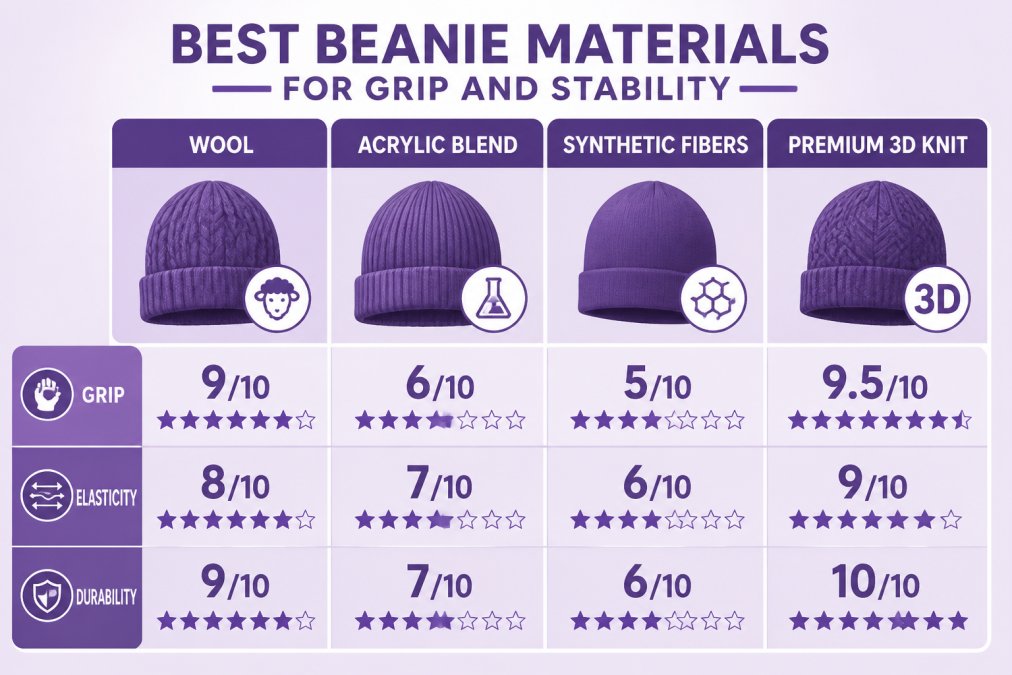
Wool versus acrylic and synthetic fibers
Wool is the gold standard for grip and durability. The natural fiber creates friction against hair and scalp, and quality wool maintains its elasticity without stretching out. Acrylic blends occupy the middle ground, softer and easier to care for, but naturally slippery and prone to stretching. Synthetic fibers like polyester or nylon perform similarly to acrylic and are the worst choice if preventing slipping is your goal.
Look for beanies with higher wool content or materials specifically engineered for stability. Crazy Beanies' 3D knit technology creates a denser, more structured fabric that maintains grip and shape simultaneously.
Knit tension and depth for secure fit
Professional-grade knitting uses higher tension to create a denser weave, providing better grip, greater durability, and maintained elasticity over time. Depth is equally important, a beanie that's too shallow won't cover your ears properly and will be more prone to riding up. The ideal depth reaches your ears without excess fabric bunching at the crown.
Using Bobby Pins and Elastic Bands to Secure Your Beanie
When material and fit alone aren't enough, mechanical solutions work. Bobby pins and elastic bands are quick, inexpensive fixes that add grip without modifying the beanie permanently.
Step-by-step bobby pin placement
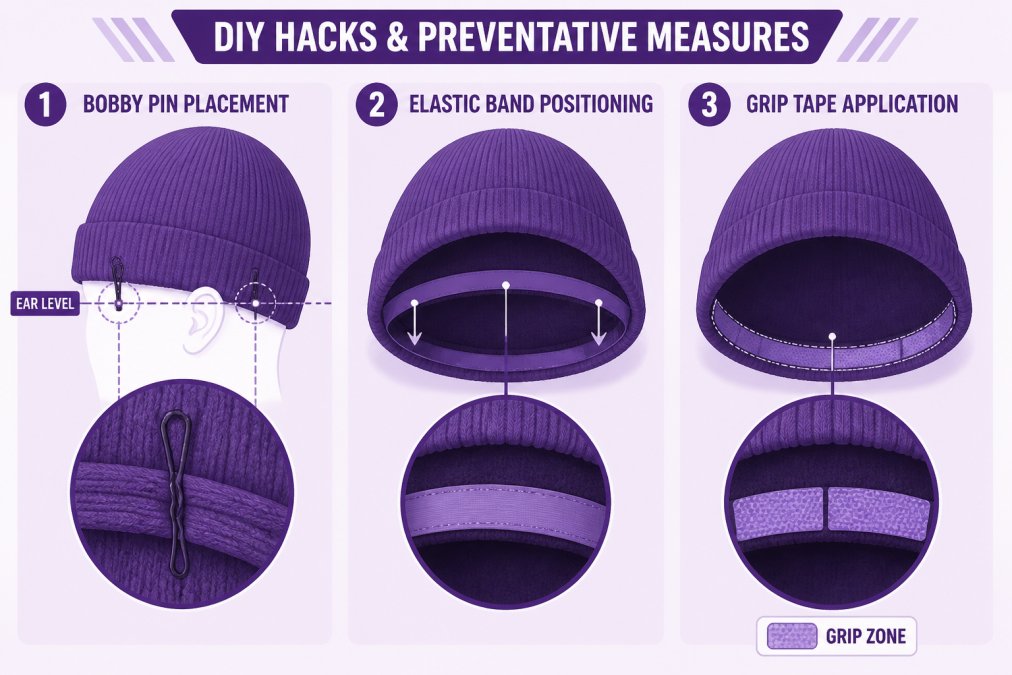
Bobby pins work by creating anchor points that prevent upward movement.
Step 1: Position the beanie correctly. Wear your beanie at the desired position, covering your ears, sitting at your natural hairline.
Step 2: Identify anchor points. The sides of your head, just above your ears, are ideal anchor points. Pin the beanie to your hair, not directly to your scalp.
Step 3: Insert pins horizontally. Take a bobby pin and insert it horizontally through the beanie fabric and into your hair, going from the outside of the beanie inward. Insert at least two pins, one on each side of your head.
Step 4: Secure with a second pass. Add a second pin slightly above or below the first, creating a cross-pattern to distribute pressure.
Step 5: Test stability. Gently tug on the beanie. It should resist movement. If it still slides, add a third pin at the back, near the nape of your neck.
This method works best for people with enough hair to grip. Fine or thin hair may not hold pins securely.
Elastic band hacks for extra grip
An elastic band creates a continuous grip around your head, distributing pressure evenly. Thread a thin elastic band through the interior of your beanie, creating a loop that sits snugly against your scalp. The elastic adds friction and prevents the beanie from sliding up while remaining completely invisible.
For the strongest hold, combine both methods: elastic band inside for distributed grip, bobby pins on the sides for localized anchoring.
Hat Grip Tape for Beanies: A Product-Based Solution
If DIY methods feel temporary or unreliable, grip tape offers a permanent solution. This specialized adhesive tape is designed specifically to prevent hats from slipping.
How grip tape works and where to apply it
Grip tape is fine-grained adhesive material that increases friction between the beanie's interior and your scalp or hair. The tape sticks to the inside of the beanie and creates a textured surface that your hair grips naturally. Unlike bobby pins or elastic bands, grip tape is permanent and stays in place through multiple wears and washes.
The best placement is along the interior band of the beanie, roughly 1-2 inches down from the crown. Apply tape in strategic strips rather than covering the entire interior. A second application point is just above the ears on both sides, where the hat experiences the most upward pressure.
Application tips for maximum hold
Clean the interior of your beanie thoroughly before applying tape. Cut your grip tape into strips approximately 2-3 inches long and 0.5 inches wide. Press each strip firmly into place, holding for 10-15 seconds to ensure good adhesion. Let the tape cure for a few hours before wearing the beanie.
Test the grip by putting on the beanie and gently tugging upward. The tape should resist movement noticeably. If slipping still occurs, add additional strips in the areas where movement happens.
How to Wear a Beanie with Long Hair Without Slipping
Long hair presents a unique challenge: there's more volume, more weight, and often more slipperiness at the scalp where the beanie sits.
Styling techniques for different hair lengths
For shoulder-length hair, style your hair into a low ponytail or bun before putting on the beanie. This reduces the volume directly under the hat, creating a flatter surface for the beanie to grip. For very long hair, a bun or ponytail becomes almost necessary for a secure fit. A high ponytail works better than a low one because it pulls hair away from the beanie's contact zone entirely.
Straight, fine long hair is the most challenging combination. Combine styling with mechanical solutions like bobby pins or grip tape for reliable security. Curly or textured long hair is easier to manage, the natural texture provides better grip, so styling adjustments alone may be sufficient.
Ear coverage and hat depth adjustment
With long hair styled up, your beanie's depth becomes more critical. Make sure your beanie reaches your ears fully, with the fabric sitting snugly against the side of your head. The crown of the beanie should sit at the natural apex of your head, not pushed back or forward.
Test the fit before leaving your house. Put on the beanie, position it where you want it, then gently tug upward. It should resist movement.
How to Fix a Loose Beanie and Adjust for the Perfect Fit
A beanie that's already loose needs either resizing or strategic adjustments.
Measuring head circumference for proper sizing
Measure your head circumference using a soft measuring tape. Wrap the tape around your head at the widest point, typically just above your eyebrows and around the back of your head at the crown. Keep the tape snug but not tight.
Most beanies are sized in ranges: small (20-21 inches), medium (21-22 inches), large (22-23 inches). If your measurement falls between sizes, choose the smaller size. Check the beanie's listed dimensions against your measurement.
Stretching and shrinking techniques
Shrinking a beanie requires careful handling. For a wool beanie: wash it in warm water with mild detergent. Rinse thoroughly in cool water. Gently squeeze out excess water, don't wring it. Lay it flat on a towel to dry, shaping it as it dries. The beanie will shrink slightly as it dries, tightening the knit by up to 0.5 inches.
For an acrylic beanie: the shrinking process is less reliable because acrylic doesn't respond as dramatically to heat and moisture.
If you need to stretch a beanie, wash it gently, then stretch it over a form while it dries. The beanie will relax slightly and conform to the shape you've created.
DIY Hacks and Preventative Measures
Beyond bobby pins and elastic bands, creative solutions using household materials can improve beanie grip.
Rubber band and fabric solutions
A thin rubber band looped through the interior of your beanie creates friction-increasing effects with more holding power than elastic bands. Fabric tape applied to the interior of the beanie creates a textured surface similar to grip tape but at a fraction of the cost. A thin strip of non-slip shelf liner can be glued to the interior of your beanie in strategic areas.
Hat liner options for improved stability
A hat liner is fabric sewn or glued into the interior of the beanie, creating a textured surface that grips hair better than bare knit. For a DIY approach, cut a piece of cotton fabric to fit the interior of your beanie and use fabric glue to attach it in strips. A fleece liner adds warmth as well as grip, making it ideal for winter beanies.
Knitting techniques to prevent stretching
If you knit your own beanies or have one custom-made, knitting tension directly determines how well it resists stretching and slipping. Higher tension during knitting creates denser fabric that maintains its shape. Ribbed knit patterns create natural elasticity and grip. Choosing thicker yarn (worsted weight or heavier) creates denser fabric with better grip than thin yarn.
How to Stop Beanies Slipping: The Bottom Line
A beanie that stays in place transforms your winter experience. The solution depends on your specific situation: your hair type, head shape, and circumstances. For most people, starting with proper sizing and material choice solves the problem immediately. If you need additional security, mechanical solutions like bobby pins or grip tape provide reliable, reversible options.
Crazy Beanies' 3D knit technology addresses the core problem at the manufacturing level, creating beanies with superior knit tension and elasticity that resist stretching and maintain grip naturally. Combined with proper sizing and fit adjustments, this approach eliminates slipping without requiring additional solutions.
Slipping isn't inevitable. It's a solvable problem with straightforward solutions.
Frequently Asked Questions
Why does my beanie keep sliding up?
Beanies slip primarily due to loose knit tension, inadequate depth, or friction mismatch between the hat material and your hair. Smooth hair types like straight or fine hair create less grip. Oversized beanies or those made from stretchy acrylic fabrics are more prone to riding up. The solution depends on your hair texture, hat depth, and how you're wearing it, bobby pins, grip tape, or material upgrades can all help stop beanies slipping.
What materials are best for beanies that don't slip?
Wool and wool-blend beanies offer superior grip and friction compared to pure acrylic or synthetic fibers. Wool's natural texture creates more resistance against hair movement. Tightly knitted beanies with deeper crowns provide better stability than loosely woven designs. For maximum hold, look for beanies with a snug fit around the head circumference and materials that resist stretching over time. Acrylic can work if the knit tension is tight and the depth is adequate.
Can you use bobby pins to keep a beanie on?
Yes, bobby pins are an effective DIY solution for securing beanies. Insert pins horizontally through the beanie fabric into your hair, positioning them near the temple area or behind the ears where they're hidden. Use two to three pins for stability without creating visible bumps. This method works best for longer hair that provides an anchor point. Pair bobby pins with elastic bands for extra security during active wear or winter sports.
How should a beanie fit on your head?
A properly fitting beanie should sit snugly on your head without gaps or rolling up. It should cover your ears completely for warmth and stability, with the crown sitting about half an inch above your hairline. Your head circumference determines the right size, measure around your head at the widest point just above your ears. The beanie should feel secure but not uncomfortably tight. If it slides during movement, it's too loose and needs adjustment or a smaller size.
This article was written using GrandRanker


