

Table of Contents
- 1. Strategic Beanie Placement to Disguise Uneven Layers
- 2. How to Style a Beanie With Short Hair
- 3. Up-Do Styles for Short Hair Under a Hat
- 4. How to Prevent Hat Hair and Maintain Your Style
- 5. Best Hats for Bad Hair Days: Choosing the Right Fit
- Hat Etiquette in Professional Settings
- Seasonal Hat Styling and Hair Recovery
- Frequently Asked Questions
Last Updated: September 19, 2026
1. Strategic Beanie Placement to Disguise Uneven Layers
Discover 5 ways to hide a bad haircut with hats so it doesn't derail your style. Strategic beanie placement covers the most noticeable damage while keeping your look intentional. Pull the beanie down far enough to hide choppy sections without appearing to hide something.
Pull the beanie low on your forehead, just above your eyebrows, to cover top damage while keeping the back visible. If layers are worse at the nape, wear it slightly higher on the crown. Find the sweet spot where it feels natural, not forced.
A beanie creates structure and volume that makes choppy sections blend better, filling gaps and drawing attention to the hat rather than the cut underneath.
Choose a beanie that complements your face shape and outfit. A fitted beanie works best if you have a round face, while a slouchy style flatters angular features. The American Academy of Dermatology notes that consistent styling with protective accessories can support hair health while you wait for a proper cut to grow out.
2. How to Style a Beanie With Short Hair
Short hair and beanies pair well when positioned correctly. Beanies can flatten hair or create awkward bulges, so position them to enhance rather than fight your texture.
Add texture before the beanie with texturizing spray, dry shampoo, or pomade. This prevents the beanie from flattening hair and ensures your hair has body when you remove it.
For very short cuts, pull the beanie back so it sits on the crown, exposing your forehead and drawing attention upward, away from choppy layers at the nape.
For textured or curly hair, twist or braid small sections before the beanie to create definition that shows when removed, transforming a bad haircut into a styling opportunity.
The Journal of Cosmetic Dermatology has documented that protective styling with accessories like beanies reduces breakage when done correctly, making this approach beneficial for hair health during regrowth.
3. Up-Do Styles for Short Hair Under a Hat
Even short cuts work with up-dos that look intentional under a hat and give hair a break from flattening. Choose techniques that work with your actual length.
Messy Bun and Top Knot Techniques
A messy bun works well with short hair. Gather hair at the crown and secure loosely, the messier, the better. This creates volume so the beanie sits higher and looks intentional.
For a top knot, twist small sections and wrap around the ponytail base, pinning in place. This compact knot creates minimal bulk under a hat and reads as intentional styling.
Use texturizing products beforehand, dry shampoo or sea salt spray makes short hair grip better and prevents slipping.
Ballerina Bun for Sleek Coverage
A ballerina bun is the sleek alternative. Pull hair into a tight ponytail at the nape, wrap around itself, and secure with bobby pins. Works best with hair at least two inches long.
A ballerina bun under a beanie creates a smooth, polished, professional look that hides the bad haircut completely.
The sleek bun prevents flyaways, so your hair looks controlled and styled when you remove the beanie.
4. How to Prevent Hat Hair and Maintain Your Style
Hat hair undermines a polished look. Prevent it with the right techniques so you don't have dents or flat spots that worsen the bad haircut.
Use a protective layer like a silk or satin hair wrap to reduce friction and prevent creases. Silk is gentler than cotton, reducing breakage and static.
Use dry shampoo or texturizing spray before the beanie to add grip and help hair bounce back when removed. Reapply for extended wear.
Choose breathable materials like acrylic or wool blends to reduce moisture buildup and prevent greasy, flat hair. A quality, well-fitting beanie makes a massive difference.
When removing your beanie, let hair settle for a minute, then gently separate clumped sections with your fingers or a wide-tooth comb. A light mist of dry shampoo revives texture instantly.
5. Best Hats for Bad Hair Days: Choosing the Right Fit
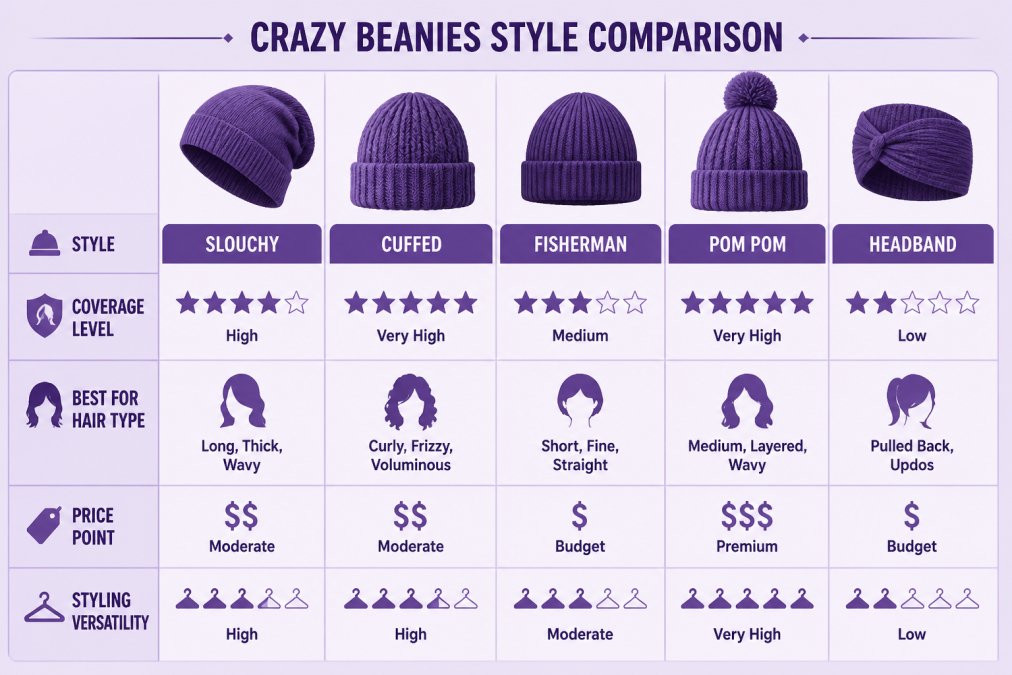
Learning 5 ways to hide a bad haircut with hats means the right beanie makes the difference between looking intentional and desperate. The best combine coverage, comfort, and style.
| Beanie Style | Coverage | Best For | Price | Styling Versatility |
|---|---|---|---|---|
| Bad Kitty | High (full head) | Bold statement looks, streetwear | $29.95 | Casual, trendy outfits |
| Zebra | High (full head) | Minimalist fits, statement pieces | $29.95 | Streetwear, winter layers |
| Street Panda | High (full head) | Edgy, personality-driven style | $29.95 | TikTok-ready looks, casual |
| Cute Panda | High (full head) | Playful, approachable vibes | $29.95 | Everyday wear, gifting |
| Axolotl | High (full head) | Soft, expressive aesthetics | $28.95 | Casual, cozy-era fashion |
A fitted beanie works best for most people hiding a bad haircut. It sits snug on your head without being tight, covers the majority of your hair, and creates a clean silhouette. Fitted beanies are easier to style with different outfits because they don't overwhelm your face.

Slouchy beanies offer more coverage and create a relaxed, intentional vibe. They work well if you have a longer bad haircut or if you want to draw attention away from your face entirely. The downside is that slouchy beanies can look sloppy if they're not styled intentionally, so pair them with fitted clothing and bold accessories.
Consider beanies with texture, patterns, or embellishments. A plain beanie draws all attention to your face, which can highlight a bad haircut. A beanie with visual interest like the Crazy Beanies collection, featuring bold designs, animal motifs, and handcrafted details, becomes the focal point of your outfit instead.
Hat Etiquette in Professional Settings
Wearing a beanie to hide a bad haircut at work requires understanding context and dress codes. In creative industries, casual offices, and remote work environments, a beanie is generally acceptable as long as it looks intentional and clean. In formal business settings, a beanie might read as too casual unless your workplace explicitly allows it. Choosing the right headwear provides a temporary buffer while you navigate the necessary steps to fix a bad haircut before your next professional appearance.
Seasonal Hat Styling and Hair Recovery
Hiding a bad haircut changes seasonally because different hats serve different purposes. Winter is obviously beanie season, but spring and summer require different strategies. The good news is that seasonal hat styling also supports hair recovery while you wait for your cut to grow out.
Frequently Asked Questions
How do I disguise a bad haircut with a hat?
The most effective way to hide a bad haircut is layering your styling approach. Start by using hair accessories like barrettes or clips to control uneven layers, then top with a beanie that offers full coverage. Beanies with poms or textured knits draw attention upward and away from problem areas. Pair this with an up-do like a messy bun or top knot underneath to flatten and contain hair, creating a smooth silhouette under your hat. The key is combining coverage with volume control.
What's the best way to style a beanie with short hair?
Short hair requires a different approach than longer styles. For short hair, focus on beanies that sit higher on your head rather than pulled down low, which can make short hair look matted. Choose designs with visual interest like striped or patterned beanies to draw attention to the hat itself rather than hair texture. If you have layers, use a light gel or styling cream to smooth flyaways before putting on your beanie. A beanie with a cuff that sits above your natural hairline works best for keeping short hair looking intentional rather than hidden.
How can I prevent hat hair when wearing a beanie all day?
Hat hair happens when moisture and friction flatten your hair against your scalp. To prevent it, start with dry hair and apply a light texturizing spray or dry shampoo before putting on your beanie. This creates friction-resistant texture and absorbs oils. Wear your beanie slightly loose rather than tight to allow air circulation. Take breaks throughout the day to remove your hat and fluff your hair. When you take off your beanie, use your fingers to gently separate and lift hair at the roots. If you're wearing a beanie for extended periods, consider styling your hair in a loose braid or ponytail underneath to maintain some structure.
Are beanies good for hiding uneven layers in a bad haircut?
Yes, beanies are one of the most effective tools for disguising uneven layers. The key is choosing a beanie with enough coverage and texture to create visual interest above the problem area. Beanies with poms, stripes, or bold patterns redirect attention away from hair texture and length inconsistencies. Pair your beanie with a styling technique underneath, like tucking layers into a clip or using a headband to control them. Textured beanies made from acrylic or wool blends work better than thin knits because they add volume and dimension, making uneven layers less noticeable.
What should I do if my haircut looks bad while waiting for a salon fix?
While waiting for a professional salon fix, use a multi-layered approach to manage your appearance. First, invest in quality hair accessories like barrettes and headbands to control and reposition problem areas. Use styling tools like a flat iron or curling iron to create intentional waves or curls that disguise choppy layers. Wear a bold beanie or hat that commands attention and becomes the focal point of your outfit. Consider up-do styles that minimize the visibility of bad layers. Focus on hair health during this time: use hydrating conditioners and avoid excessive heat styling to support hair recovery as it grows out.


