


News
How to Fix Brassy Hair After Bleaching
Last Updated: October 22, 2026
Quick Summary
To fix brassy hair after bleaching, diagnose whether your hair is orange or yellow, then neutralize those warm tones with the opposite color on the color wheel: blue toner for orange hair and purple toner for yellow hair. Always do a strand test first to confirm the right product and processing time before applying to your whole head.
- Orange hair needs blue-based toner; yellow hair needs purple-based toner to neutralize warmth
- Run a stretch test, porosity check, scalp check, and breakage check before toning to ensure your hair is healthy enough
- Always do a strand test on a hidden section, checking every 3 to 5 minutes to find your exact processing time
- Apply toner to mid-lengths and ends first, then roots last, since roots process faster from scalp heat
- Maintain cool tones weekly with color-safe shampoo, cool water rinses, and deep conditioning to prevent brassiness from returning
Table of Contents
- Why Hair Turns Brassy or Orange After Bleaching
- Diagnose Your Hair: Orange vs. Yellow vs. Brassy Tones
- Conclusion
- Frequently Asked Questions
Why Hair Turns Brassy or Orange After Bleaching
Bleaching strips melanin unevenly, leaving behind warm yellow and orange undertones, that leftover warmth is brassiness, and knowing how to fix brassy hair is essential after bleaching.
Darker hair has more pigment to lift, so it shows stronger orange; lighter blonde tends toward pale yellow. Warmth is a natural result of bleaching.
The solution to brassy results isn't to bleach again, it's to neutralize those warm undertones with the right toner.
Diagnose Your Hair: Orange vs. Yellow vs. Brassy Tones
Orange hair means your undertone is genuinely orange, usually from bleaching dark or medium brown hair without lifting it enough.
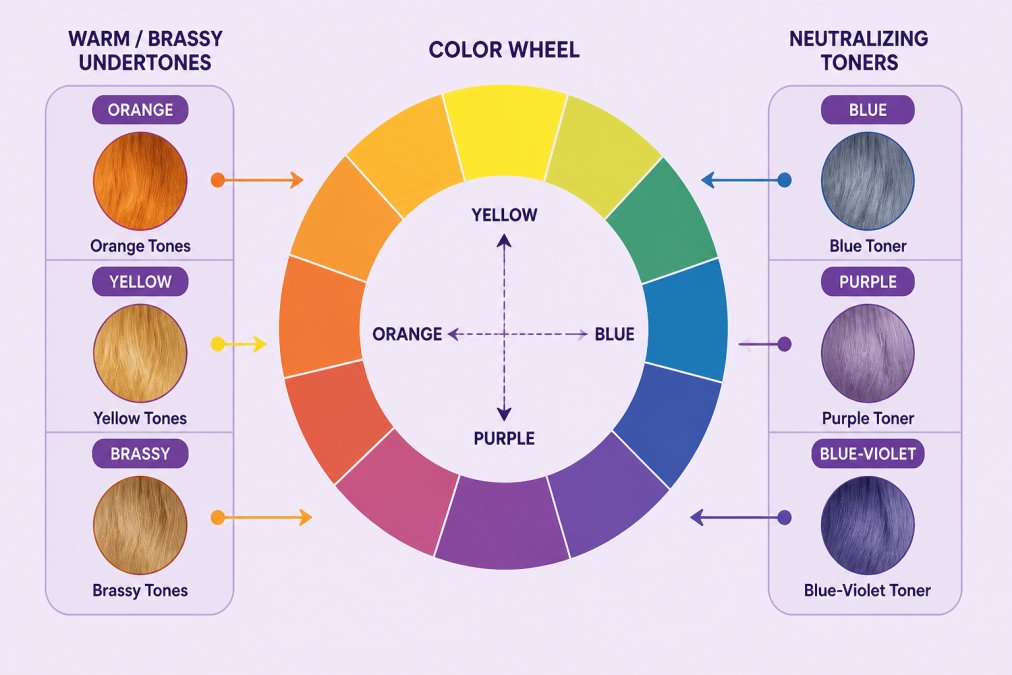
Yellow hair appears when you've lifted the pigment further but warm tones remain, pale straw rather than bright yellow.
Brassy hair is the umbrella term for any unwanted warm tone. When someone says "fix brassy hair," they mean neutralize whatever warmth is showing.
What Color Cancels Out Brassy Hair
The color wheel is your best tool: opposite colors cancel each other out. Blue sits opposite orange; purple sits opposite yellow.
Orange hair needs blue toner; yellow needs purple; in-between tones may need a blend of both.
(/blogs/news/how-to-fix-bad-hair) between toning sessions.Conclusion
Fixing brassy hair after bleaching comes down to three steps: diagnose your undertone, choose the right toner, and maintain the result with color-safe products and weekly toning shampoo. Start with a strand test, 20 minutes saves you from a costly mistake, and monitor processing time: too short and the toner won't work, too long and you risk over-toning.
If your hair shows signs of damage, wait before toning, bleached hair is fragile, and toning over damage causes breakage. Once you've achieved cool blonde tones, keep them with weekly purple or blue shampoo and deep conditioning. Cool water, color-safe products, and limited heat styling keep brassiness at bay for weeks.
Frequently Asked Questions
How to fix brassy bleached hair at home?
Start with a strand test using blue or purple toner. Apply the toner to damp hair, processing for 10-30 minutes depending on the product and how brassy your hair is. For at-home toning, purple shampoo works for yellow undertones, while blue shampoo targets orange tones. Use a toning mask 1-2 times weekly after bleaching to maintain cool tones and prevent brassiness from returning.
What color cancels out brassy hair?
Blue cancels orange, and purple cancels yellow. On the color wheel, complementary colors neutralize each other. If your bleached hair is orange, use blue toner or blue shampoo. If it's yellow, use purple toner or purple shampoo. The more saturated the unwanted tone, the stronger the toner you'll need to neutralize it effectively.
Can you tone brassy hair right after bleaching?
Wait 24-48 hours after bleaching before toning. Your scalp needs recovery time, and freshly bleached hair is porous and vulnerable to damage. If your hair shows signs of breakage, dryness, or scalp irritation, wait longer before applying toner. Always do a strand test first, even if you've used the product before.
How often should you use blue or purple shampoo?
Use toning shampoo 1-2 times weekly to maintain cool tones and prevent brassiness. Using it too frequently can over-tone your hair, making it look dull or ashy. On other wash days, use color-safe shampoo to protect your toned color and minimize dryness. Adjust frequency based on how quickly brassiness returns in your hair.
