


News
How Long Do 3D Knit Beanies Last: A Durability Guide
Table of Contents
- How Long Do 3D Knit Beanies Last: The Realistic Lifespan
- Key Factors That Affect How Long Your Beanie Lasts
- How to Care for a Knit Beanie to Extend Its Life
- How to Wash a Wool Beanie Without Damaging It
- How Often to Wash a Beanie and Why It Matters
- How to Keep a Beanie From Stretching Over Time
- Signs Your Beanie Is Wearing Out and When to Repair or Replace
- Frequently Asked Questions
Last Updated: October 14, 2026
How Long Do 3D Knit Beanies Last: The Realistic Lifespan
Well-made 3d knit beanies last anywhere from two to five years with proper care, though some hold up even longer.
What '3D knit' means and why it matters for durability
3D knit refers to a specialized knitting technique that creates a three-dimensional structure rather than a flat, traditional knit.
The construction method matters because it affects how the yarn interlocks. A proper 3D knit creates denser stitches and stronger connections between loops.
This is where most guides get it wrong. They talk about yarn weight and fiber content, but they skip the construction itself.
Typical lifespan by material type
Different yarns age differently. Here's what you can realistically expect:
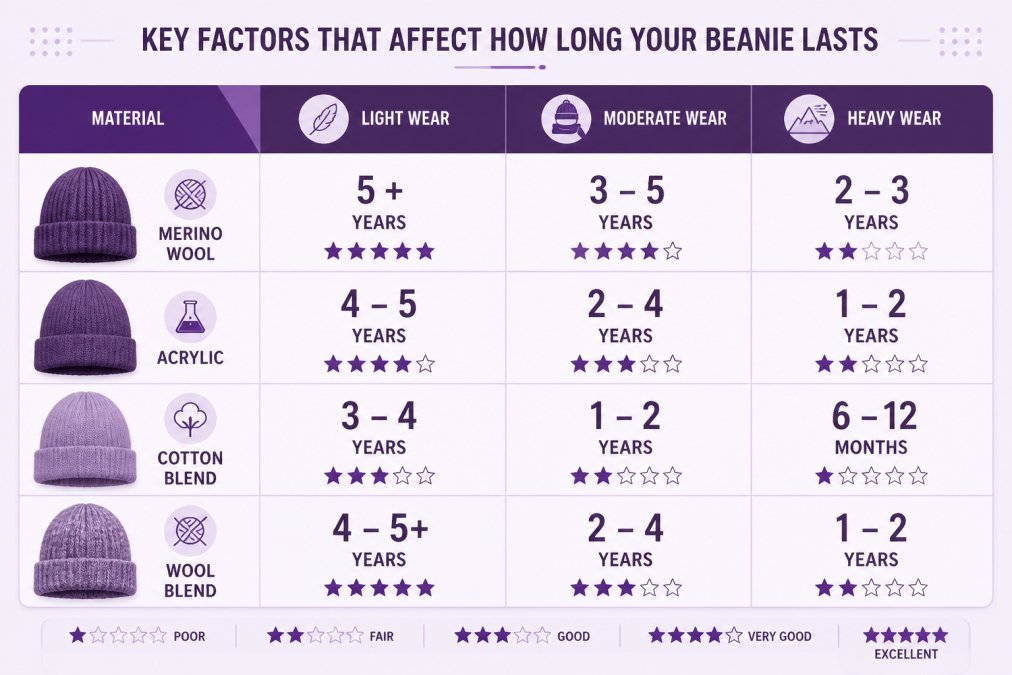
Merino wool beanies hold up best. Merino fibers are naturally elastic and resist pilling. With moderate wear (3-4 times per week), you'll get three to five years. Heavy daily use cuts that to two to three years. Light seasonal wear extends it to five years or beyond.
Acrylic beanies are durable but less forgiving. They pill more easily and lose softness faster. Expect two to three years with moderate wear. The upside: acrylics resist moisture and dry quickly, so they handle rough conditions well.
Cotton blend beanies fall in the middle. Cotton breathes better than wool but doesn't bounce back as well. Plan for two to three years with regular use. Cotton gets heavier when wet, which stresses the stitches.
Wool blends (merino mixed with synthetic fibers) give you the best of both worlds. You get merino's durability with synthetic strength. Three to four years is typical with moderate wear.
Key Factors That Affect How Long Your Beanie Lasts
Durability isn't just about the yarn. It's about how you treat it and how hard you push it.
Knit quality and construction standards
Not all knits are created equal. A beanie with tight, even stitches will outlast one with loose or irregular loops. When you inspect a beanie, look for these signs of quality construction:
- Stitches are consistent in size and tension throughout
- No visible gaps or thin spots where the yarn is stretched
- The hem is finished cleanly, not frayed or unraveling
- The crown (top of the hat) has proper decreases that taper smoothly
- The cuff sits evenly without bunching or loose edges
Tight stitches mean the yarn is locked in place. Loose stitches let the yarn shift and slip, which accelerates wear. A professional-grade 3D knit uses proper tension and finishing techniques that amateur knitters often skip.
The decreases matter too. A well-constructed crown uses gradual decreases that distribute the stress evenly. Poor decreases create weak points where the yarn is pulled too tight, and those spots fail first.
Wear frequency and rough use
How often you wear your beanie makes a huge difference. Light seasonal wear (once or twice a week) extends life significantly. Moderate wear (three to four times weekly) is the baseline most estimates use.
Rough use accelerates damage. Stuffing the beanie in a backpack, pulling it on and off repeatedly, or wearing it during intense activity stresses the fibers.
A common mistake is assuming a beanie will last the same amount of time regardless of how you treat it. It won't. A merino wool beanie worn casually once a week might last six years.
How to Care for a Knit Beanie to Extend Its Life
The way you handle your beanie between wears matters as much as how you wash it. Storage, handling, and maintenance all add years to its lifespan.
Store your beanie flat or loosely rolled, not stretched over a form. Hanging it or leaving it crumpled stresses the fibers. Keep it in a cool, dry place away from direct sunlight, which fades color and weakens yarn over time. Moths and other insects love wool, so consider storing it with cedar blocks or lavender sachets during off-season months.
Handle your beanie gently. Don't pull it on aggressively or stretch it to fit. Work it on gradually, and let it settle naturally on your head. The same goes for removing it. Rough handling breaks fibers and loosens stitches.
Pilling is normal and doesn't mean your beanie is failing. Use a soft brush or a pilling comb to gently remove pills. Never pull them off with your fingers, which can snap the fibers. A lint roller works in a pinch, but a dedicated pilling comb is gentler.
Check the hem and cuff regularly for loose stitches. If you catch a small unraveling early, you can secure it with a needle and thread before it spreads. This simple repair can add years to the beanie's life.
How to Wash a Wool Beanie Without Damaging It
Washing is where most people destroy their beanies. The wrong water temperature, detergent, or handling technique can felt wool, stretch the fibers, or cause permanent damage.
Step-by-step washing process
Use cool or lukewarm water, never hot. Hot water causes wool fibers to swell and lock together, creating permanent felting.
Submerge the beanie fully and let it soak for five to ten minutes. Don't agitate or scrub. The detergent does the work; you don't need to.
Drain the soapy water and rinse the beanie under cool running water. Squeeze gently to remove water, but don't wring or twist.
For acrylic beanies, the process is the same, but you can use slightly warmer water (up to lukewarm). Acrylics are more forgiving than wool, but they still benefit from gentle handling.
Drying techniques that preserve shape
Never put a wet beanie in the dryer. Heat and tumbling will shrink it, felt it, and damage the fibers. Air drying is the only safe method.
Gently squeeze out excess water without wringing. Lay the beanie flat on a clean, dry towel. You can reshape it gently to match its original form.
If you need to speed up drying, lay it on a dry towel in a well-ventilated room or near (not in front of) a fan.
How Often to Wash a Beanie and Why It Matters
You don't need to wash your beanie after every wear. Over-washing accelerates wear by exposing the fibers to repeated stress and moisture cycles.
Wash your beanie every two to four weeks if you wear it regularly. If you wear it a few times a week, once a month is sufficient. For light seasonal wear, washing every month or two is fine. If the beanie smells fresh and doesn't have visible dirt, it doesn't need washing yet.
Washing more frequently than necessary weakens the fibers faster. Each wash cycle, even gentle ones, stresses the yarn slightly. The cumulative effect adds up. By limiting washes to when they're actually needed, you preserve the beanie's integrity and extend its life by months or even years.
Between washes, air out your beanie. Hang it loosely in a ventilated space or lay it flat for a few hours. Fresh air removes odors and lets moisture evaporate naturally. A light brushing with a soft-bristled brush removes surface dirt and dust without stressing the fibers.
How to Keep a Beanie From Stretching Over Time
Stretching is one of the most common complaints about beanies, but it's largely preventable. The beanie stretches because the fibers relax under repeated pressure and moisture.
Avoid storing your beanie in a way that stretches it. Don't hang it on a hook or peg for long periods. Don't stuff it into a tight backpack where it gets compressed unevenly. Store it flat or loosely rolled. The less pressure the fibers experience when you're not wearing it, the less they stretch.
When wearing the beanie, don't pull it down hard or adjust it constantly. Repeated tugging stretches the fibers incrementally. Wear it at a consistent position on your head and let it settle naturally.
Proper drying prevents stretching too. When you lay the beanie flat to dry, reshape it gently to match its original dimensions. If you hang a wet beanie, gravity stretches it. If you let it dry crumpled, it sets into a stretched shape.
For beanies that have already started to stretch, blocking can help restore the shape. Wet the beanie lightly, shape it to the correct size on a flat surface, and let it dry. This resets the fibers to the new shape. It's not a permanent fix, but it can add months to the beanie's usable life.
Signs Your Beanie Is Wearing Out and When to Repair or Replace
Even well-made beanies eventually show their age. Knowing what to look for helps you decide whether to repair or replace.
Early signs of wear:
- Pilling appears on the surface (normal; use a pilling comb to remove)
- A few loose stitches at the hem or cuff (easily repaired with a needle)
- Minor color fading (cosmetic; doesn't affect function)
- The beanie feels slightly less soft (still wearable; wash gently to restore some softness)
Signs it's time to repair:
- Unraveling stitches spreading beyond a small area (catch it now before it gets worse)
- Small holes or thin spots (patch or reinforce with careful stitching)
- The cuff is separating from the body (secure it with needle and thread)
Signs it's time to replace:
- Large holes that can't be hidden by a patch
- Extensive felting that can't be reversed
- The beanie no longer fits because the fibers have permanently stretched or shrunk
- Widespread pilling that covers more than half the surface
- The yarn is breaking regularly when you handle it
A beanie that's still structurally sound but cosmetically worn can be repaired by a skilled knitter. A simple patch or reinforced seam can add another year or two of life.
When the damage is structural, large holes, permanent shape loss, or broken yarn, it's time to replace it. A worn-out beanie that no longer fits right or holds its shape isn't worth the repair cost.
How long your 3D knit beanie lasts depends on the yarn, how you wear it, and how you care for it. Two to five years is realistic for most people. But with quality construction, proper washing, smart storage, and timely repairs, you can push that to seven years or beyond. Crazy Beanies beanies are built with professional-grade 3D knit technology and handcrafted in the USA to withstand years of wear. Choose the right material for your climate, treat it gently, and your beanie will stay comfortable and looking great through countless seasons.
Frequently Asked Questions
How long do 3D knit beanies last with regular wear?
A well-made 3D knit beanie typically lasts 2-5 years with regular wear, depending on material and care. Wool and merino blends tend to last toward the longer end of that range, while acrylic or thinner yarn may wear faster. Heavy daily use and exposure to rough conditions can shorten lifespan to 1-2 years. Proper washing and storage significantly extend durability.
Does 3D knit construction make a beanie more durable than regular knit?
Yes. 3D knit technology creates a tighter, more structured weave that resists stretching and maintains shape better than traditional flat knit. The three-dimensional construction distributes wear more evenly across stitches, reducing pilling and fiber breakage. This means 3D knit beanies can withstand more wear cycles before showing signs of deterioration, especially around the cuff and crown.
How do I know when my beanie needs to be replaced?
Replace your beanie when you notice persistent pilling that won't brush out, visible holes or tears, a cuff that won't stay in place, or a crown that no longer holds its shape. If the yarn feels thin or brittle to the touch, or if stretching has made it too loose to wear comfortably, it's time for a replacement. Minor damage like small holes can sometimes be patched to extend life.
How often should I wash my beanie to keep it lasting longer?
Wash your 3D knit beanie as needed. Overwashing accelerates fiber breakdown. Use cold water, gentle detergent, and avoid the dryer. Spot-cleaning stains between washes can reduce the need for full washes and help your beanie last significantly longer.