

Table of Contents
- The Bad Hair Day Dilemma: Style vs. Comfort
- Quick Comparison: Bold Beanies vs. Comfort-First Options
- How to Style a Beanie with Long Hair for Maximum Impact
- How to Hide Greasy Hair with a Hat: Oil Control Strategies
- Protective Hairstyles for Hair Health Under Headwear
- Beanies That Deliver Both: Style and Comfort Combined
- Making Your Choice: When to Prioritize Style, When to Prioritize Comfort
- Frequently Asked Questions
Last Updated: September 26, 2026
The Bad Hair Day Dilemma: Style vs. Comfort
A bad hair day doesn't have to mean staying home. The real question is whether you prioritize turning heads or feeling cozy when you use a hide bad hair beanie with headwear. At Crazy Beanies, we've spent 25 years perfecting the balance between bold statement pieces and genuinely comfortable everyday wear. Understanding when to lean into each approach changes everything about how you solve a bad hair day.
Most people think of beanies as a last resort, but a beanie can be your best accessory. The difference comes down to knowing what you're trying to accomplish: do you want to make an impression, or prioritize a day where your scalp feels protected?
Bold statement beanies with graphic designs and eye-catching colors are conversation starters. Subtle beanies let your other features shine while keeping you warm. Both solve the bad hair day problem. The choice comes down to your mood, your schedule, and what you're trying to communicate.
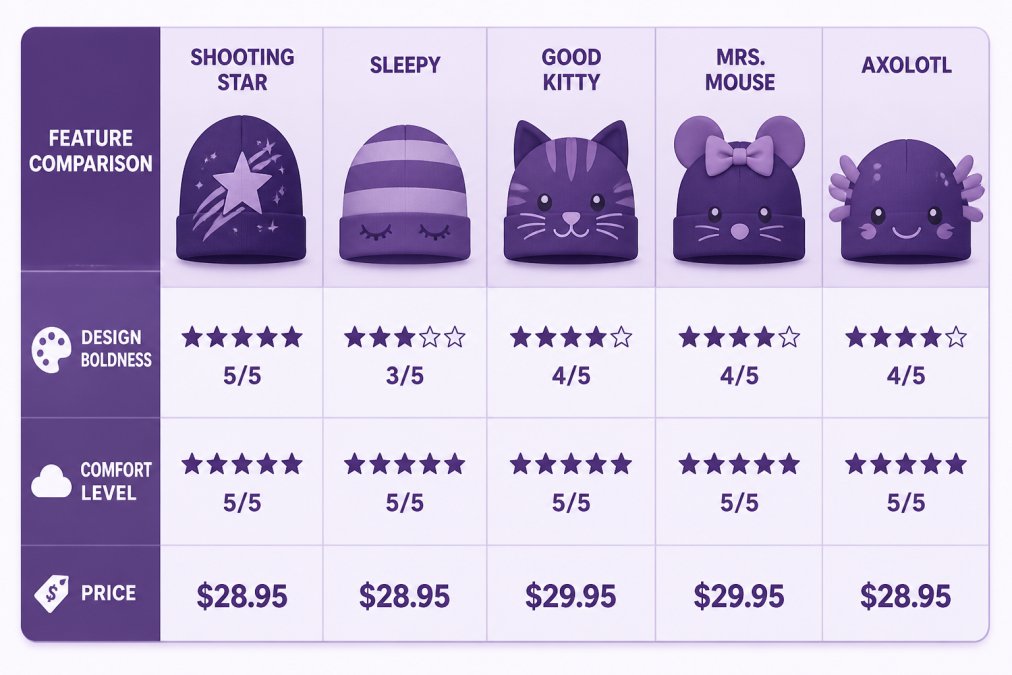
Quick Comparison: Bold Beanies vs. Comfort-First Options
Bold beanies announce your presence and work best when you want to make a statement. Comfort-first beanies prioritize fit and feel, the ones you can wear for eight hours without thinking about them.
A bold beanie with a striking design changes how people perceive your entire outfit. The Shooting Star beanie features a graphic with a pop of pink against black. The Sleepy beanie brings personality without demanding attention. Both serve different moments.

Bold beanies work when you have the energy for them. Comfort-first beanies work every single day.
| Beanie Style | Design Boldness | Comfort Level | Best for Bad Hair Days | Price | Hair Type Fit |
|---|---|---|---|---|---|
| Shooting Star | 5/5 | 4/5 | Yes, with style | $28.95 | All hair types |
| Sleepy | 3/5 | 5/5 | Yes, cozy vibe | $28.95 | All hair types |
| Good Kitty | 4/5 | 5/5 | Yes, playful | $29.95 | All hair types |
| Mrs. Mouse | 4/5 | 5/5 | Yes, character | $29.95 | All hair types |
| Axolotl | 4/5 | 5/5 | Yes, personality | $28.95 | All hair types |
How to Style a Beanie with Long Hair for Maximum Impact
Long hair and beanies work together when placement matters. Make the beanie part of your look, not something fighting against your hair.
Decide whether you want your hair visible or tucked. Visible long hair works best with beanies that sit higher on your head. Tucked hair works with any beanie but requires proper securing to prevent slipping.
Securing Without Slipping
The most common mistake is not securing hair before putting on the beanie. Long hair creates bulk at the base of your skull, pushing the beanie up and forward. Use a low, tight braid or bun at the nape of your neck to create a stable foundation.
If you prefer your hair down, use a texturizing spray or dry shampoo on your roots to create grip. A beanie with a snug fit, like Crazy Beanies' 3D knit technology, stays in place even with thick or long hair.
Test your setup before leaving home by moving your head side to side and bending forward. It should feel secure without pulling your hair. If it's slipping, add another bobby pin or use a headband underneath.
Framing Your Face
Pull the beanie down to your eyebrows for a cozy vibe, or push it back to show more forehead and frame your face with the design.
Hair that's shoulder-length or shorter benefits from being tucked or braided to prevent the beanie from looking buried. Balance visibility and intention.
How to Hide Greasy Hair with a Hat: Oil Control Strategies
Greasy hair is the most common reason people reach for a beanie. You can manage the oil so the beanie becomes a style choice, not a necessity.
Dry shampoo is your first defense. Apply it to your roots the night before or morning of, it absorbs oil, adds texture, and helps your beanie grip better.
If you don't have dry shampoo, baby powder or talc works in a pinch. Use sparingly, too much looks obvious and can cake.
A beanie with a snug fit prevents oil from being visible. Crazy Beanies' 3D knit technology keeps the beanie in place without slipping, so you're not constantly adjusting it.
Wash your hair the night before if you know you'll need a beanie. Greasy hair typically appears 24-48 hours after washing, so timing matters. A beanie worn on day-two hair is more effective than one worn on day-three hair.
Protective Hairstyles for Hair Health Under Headwear
Wearing a beanie every day can stress your hair if you're not careful. The constant friction and tension can lead to breakage and damage, especially at your hairline and the nape of your neck (the American Academy of Dermatology). Protective hairstyles minimize that damage while keeping your hair hidden and your beanie secure.
The goal is low tension. Tight braids and buns look sleek, but they pull on your hair roots and can cause hair loss over time (the American Academy of Dermatology). Loose, relaxed styles distribute pressure more evenly and cause less damage.
Braids and Twists
A loose Dutch braid or French braid works well under a beanie. The braid sits at the back of your head and distributes tension along the entire length of hair rather than pulling from one spot. Start the braid at your crown and braid loosely down the back of your head, ending at your nape.
A two-strand twist is even gentler. Divide your hair into two sections and twist them around each other, working from your crown down.
Low-Tension Options
A loose, low ponytail at the nape of your neck is the gentlest option. Your hair is secured but not pulled tight. The ponytail sits below where most beanies rest, so it doesn't create bulk that pushes the beanie up. Maintaining this sleek silhouette becomes even easier when you understand how different hair extension types influence the natural weight and volume of your ponytail.
Beanies That Deliver Both: Style and Comfort Combined
The best beanies don't force you to choose. They're bold enough to make a statement but comfortable enough to wear all day without thinking about them.
Bold Statement Beanies
The Shooting Star beanie is the ultimate both-and piece. It features a striking star-streak graphic that wraps across the knit with a pop of pink against black. It's designed to get noticed. But the soft acrylic-lycra blend means it sits comfortably on your head without feeling tight or restrictive. You get the visual impact of a bold beanie with the comfort of everyday wear.
Subtle Character Beanies
The Sleepy beanie proves that subtle design can be just as impactful as graphic boldness. The pale-blue knit with an offset sleepy-eyed design brings personality without demanding attention. It's the kind of beanie that sparks smiles without trying.

Making Your Choice: When to Prioritize Style, When to Prioritize Comfort
The decision between bold style and cozy comfort isn't permanent. You can choose differently depending on the day, your energy level, and what you're doing.
Frequently Asked Questions
How do I hide a bad hair day while still looking stylish?
The key is choosing a beanie that matches your vibe. Bold statement beanies like the Shooting Star work if you want to draw attention upward and own the look confidently. If you prefer subtle charm, options like the Sleepy or Axolotl distract with personality rather than boldness. The real secret: pair your beanie with a protective hairstyle underneath, like a low braid or twisted bun, to keep messy texture contained while the beanie does the visual heavy lifting.
Can I wear a beanie with long hair without it looking messy?
Yes. Style your long hair in a low ponytail or braid before putting on your beanie, then gently pull a few face-framing pieces loose if you want softness. The beanie will anchor everything in place and prevent flyaways from showing. Our 3D knit technology ensures a secure fit that won't slip, so your hairstyle stays put all day. This approach works especially well with beanies like the Good Kitty or Mrs. Mouse, which have structured fits designed to hold without squeezing.
What's the best way to hide greasy hair with a hat?
Start with a dry shampoo or texturizing spray before putting on your beanie, this absorbs excess oil and adds grip so the beanie stays secure. Wear your hair in a protective style like a braid or bun to contain the grease and prevent it from transferring to the beanie. Choose a beanie with a snug fit and soft material, like our acrylic-lycra blends, which won't show oil stains and feel comfortable against your scalp. The Sleepy and Axolotl both deliver all-day comfort without the bulk that can trap heat and make oily hair worse.
Do protective hairstyles really prevent hair damage under a beanie?
Protective hairstyles reduce tension on individual strands and minimize friction between your hair and the beanie material. Low braids, loose twists, and soft buns distribute pressure evenly across your scalp rather than pulling on specific sections. This prevents breakage and tangle formation, especially important on bad hair days when your hair is already stressed. Combined with a beanie that fits securely without squeezing, like those made with our 3D knit technology, protective styles keep your hair and scalp healthy while you solve the immediate bad hair day problem.


