

Table of Contents
- What Makes Handcrafted Beanies Different From Mass-Produced Options
- Top Handcrafted Beanie Alternatives to Akinz
- Feature Comparison: Price, Materials, and Customization
- Is Wool Beanie Worth It for Daily Wear
- Best American-Made Beanie Brands and What Sets Them Apart
- How to Style a Handcrafted Beanie for Maximum Impact
- Conclusion: Choosing Your Next Handcrafted Beanie
Last Updated: August 18, 2026
What Makes Handcrafted Beanies Different From Mass-Produced Options
Handcrafted beanies represent a fundamental shift in how people approach winter headwear. Artisans invest time in construction, material selection, and design details that mass production can't replicate. The difference shows immediately: in how the beanie sits on your head, how it holds its shape after weeks of wear, and whether it actually keeps you warm.
At Crazy Beanies, we've spent 25 years perfecting beanie construction. A handcrafted beanie uses techniques like 3D knit technology that create a form-fitting silhouette, whereas mass-produced alternatives rely on standard molds that work for nobody specifically and everybody generically.
Material quality separates the two categories entirely. Handcrafted beanies typically use premium acrylic blends, merino wool, or fleece-lined constructions chosen for specific performance characteristics. Mass production prioritizes cost reduction, which means thinner knits, synthetic blends that pill after three washes, and linings that lose insulation properties by mid-winter.
Limited-edition design is another defining feature. Handcrafted beanies come in small batches with thoughtful colorways and patterns, geometric designs, retro aesthetics, bold stripes, rather than the safe neutrals that dominate retail shelves. The Pinwheel beanie with its spinning pom-pom or the That Carpet design pulling from nostalgic '90s patterns represent design choices that only emerge when someone cares enough to invest in details.

The manufacturing process itself matters. Handcrafted beanies are made in small batches using equipment calibrated for precision rather than speed, allowing quality control at every stage: checking tension consistency, verifying seam integrity, ensuring color saturation. Mass production runs 24/7 with minimal human oversight, which inevitably means defects slip through.
Top Handcrafted Beanie Alternatives to Akinz
When you're looking for alternatives to Akinz, the market offers several compelling options in the handcrafted beanie space. Each brings different strengths: some emphasize bold design, others focus on material quality, and a few combine both with exceptional shipping speed.
Crazy Beanies: Bold 3D Knit Design with 24-Hour Shipping
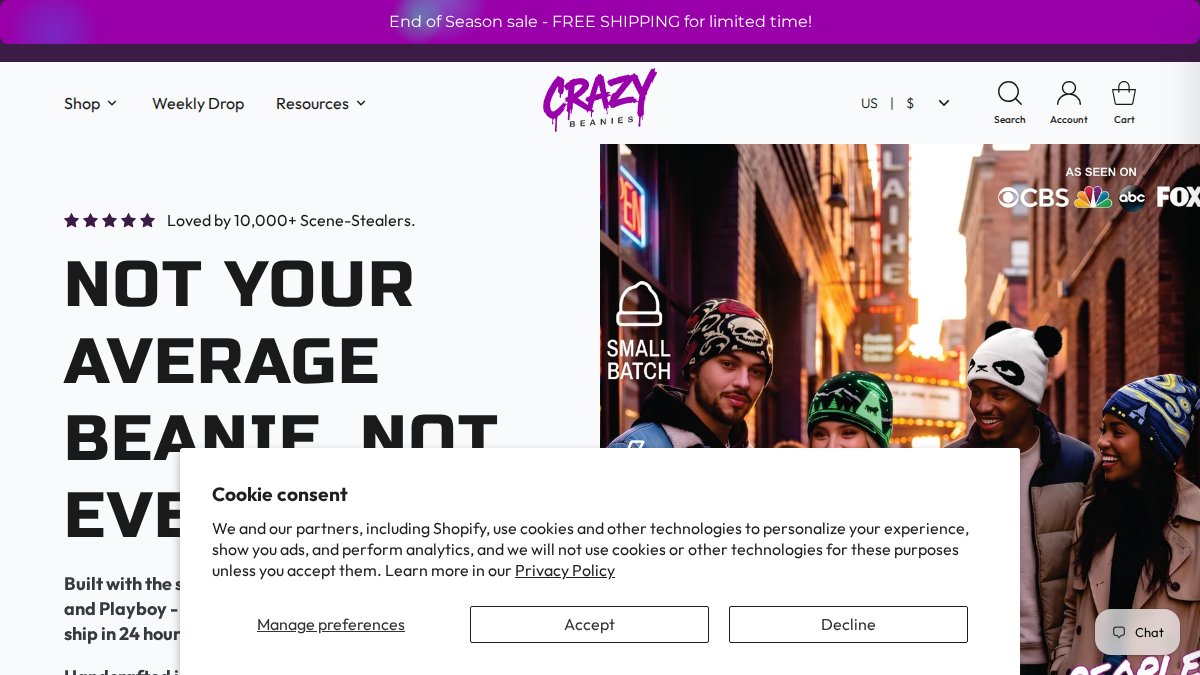
Crazy Beanies leads the handcrafted beanie category by combining three elements competitors struggle to balance: distinctive design, technical construction, and actual speed. The 3D knit technology creates a form-fitting silhouette that stays secure without constant adjustment, a practical advantage most guides overlook.
The design philosophy centers on personality. Rather than subtle earth tones, you get intentional patterns: the CrazyOG with its graffiti-inspired wraparound logo, the Rainbow beanie with bold stripes wrapping the full circumference, the Pinwheel with an actual spinning pom-pom, or the That Carpet pulling from unmistakable '90s arcade aesthetics. These designs work because they're bold enough to make a statement without requiring a complete outfit overhaul.

Construction uses soft, durable acrylic knit that maintains its shape through repeated wear and washing. The lightweight construction provides genuine warmth without the bulk that makes heavier beanies uncomfortable for all-day wear. Most designs start at $28.95 to $29.95, positioning them as premium but accessible.
The 24-hour shipping promise separates Crazy Beanies from most handcrafted competitors. Small-batch production typically means longer lead times. Crazy Beanies has engineered their process to ship within a day, which matters for gift-giving, last-minute festival attendance, or simply not wanting to wait weeks for something you're excited about.
Small-Batch Artisan Brands Focused on Limited Editions
Beyond Crazy Beanies, several artisan-focused manufacturers emphasize handcrafted aspects through limited production runs and design exclusivity. These brands typically produce 50-200 units per design, then move to the next concept. This scarcity model appeals to people who want something genuinely rare.
Artisan brands commonly source materials domestically or from specialty suppliers rather than bulk wholesalers. This increases costs but guarantees material consistency and often supports smaller textile operations. You might see beanies made from merino wool blends that naturally regulate temperature or fleece-lined constructions engineered for specific climates. Customization options expand too: hand-embroidered patches, custom pom-pom colors, even personalization with initials.
The trade-off is typically delivery time and pricing. Limited-edition production means longer lead times, often 4-8 weeks from order to shipment. Pricing also reflects labor intensity: expect $50-80 for premium artisan beanies versus the $28-30 range at Crazy Beanies. For gift-givers with advance planning or collectors who view beanies as wearable art, this investment makes sense.
The appeal is customization depth and material exclusivity. Some artisan makers offer consultation services where you describe your vision and they source or create a beanie to specification. Others focus on specific material stories: beanies made from reclaimed wool, organic cotton blends, or fibers sourced from particular regions. This narrative-driven approach resonates with consumers who care about supply chain transparency.
Feature Comparison: Price, Materials, and Customization
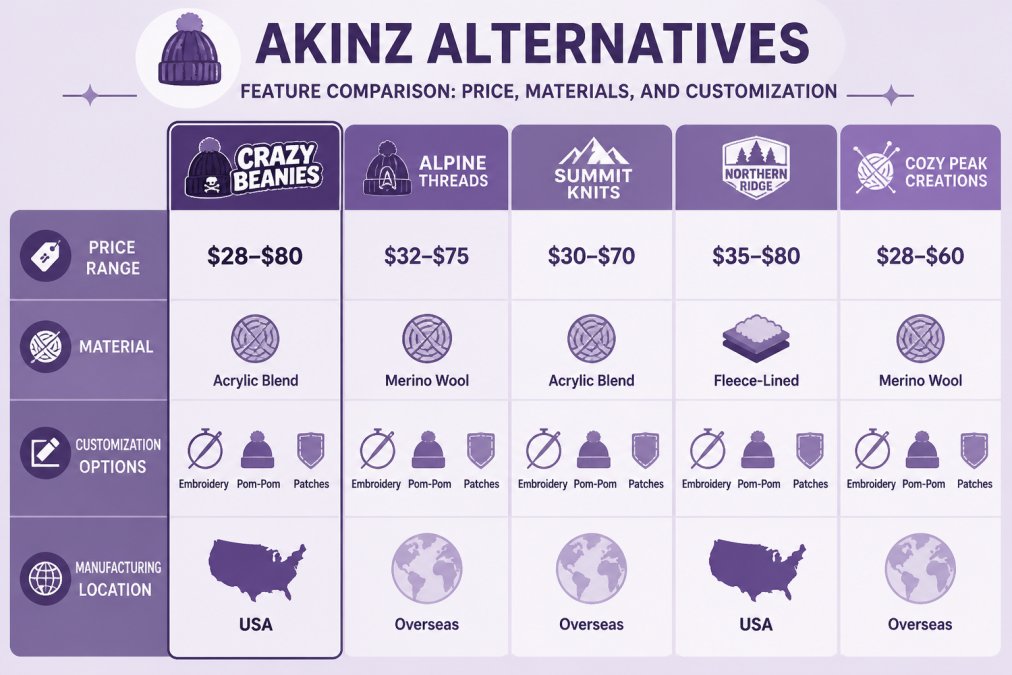
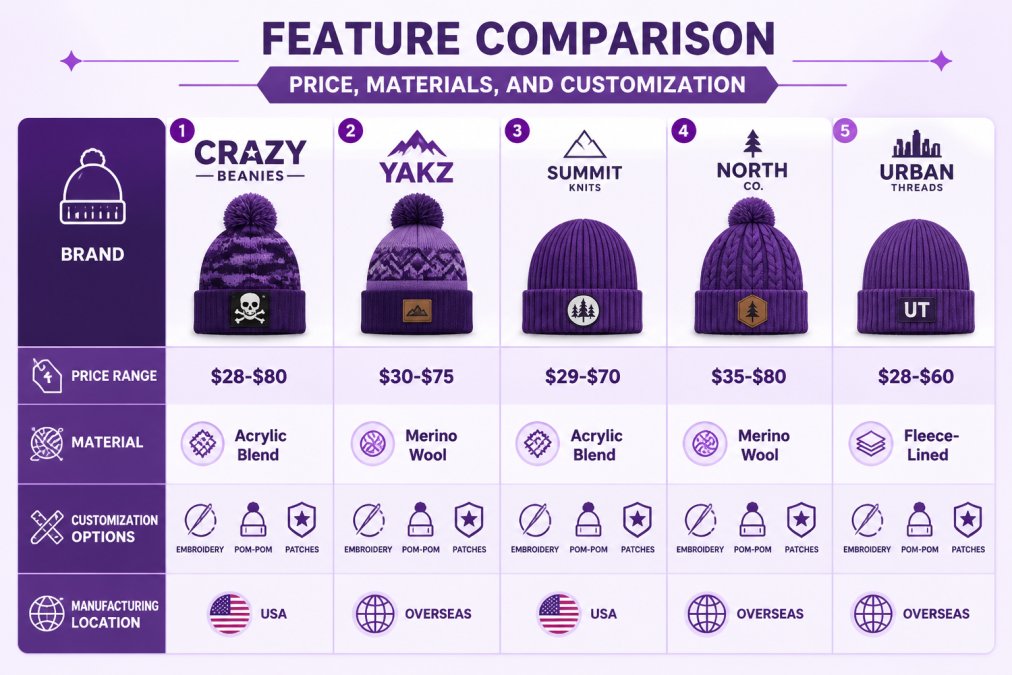
Comparing handcrafted beanie alternatives requires understanding how price, material composition, customization options, and manufacturing location intersect.
| Brand | Price Range | Primary Material | Customization | Made In |
|---|---|---|---|---|
| Crazy Beanies | $28.95-$29.95 | Acrylic knit blend | Pom-pom colors, limited designs | USA |
| Artisan Limited Edition | $50-$80 | Merino wool, organic cotton | Full customization, embroidery, patches | USA |
| Heritage Wool Makers | $45-$70 | 100% merino wool | Minimal customization | USA |
| Eco-Conscious Brands | $40-$65 | Recycled fibers, organic materials | Embroidery, custom tags | USA/Overseas |
| Boutique Etsy Makers | $35-$90 | Variable (wool, acrylic, blends) | Extensive personalization | Varies |
Price tells a clear story. Crazy Beanies delivers handcrafted quality at mass-market pricing because their 3D knit process optimizes production efficiency without sacrificing construction integrity. Artisan brands charge more because each unit receives individual attention and hand-finishing. Heritage wool makers emphasize material cost; 100% merino wool commands premium pricing regardless of production method.
Material choice drives performance differences. Acrylic blends offer durability and color vibrancy at lower cost; they're ideal for bold designs where color saturation matters. Merino wool provides natural temperature regulation and moisture-wicking, better for serious outdoor use but requires careful washing. Fleece linings add warmth but increase bulk; they're worth it for cold climates, less relevant for mild winters.
Customization ranges from negligible to extensive. Crazy Beanies offers design variety within their existing catalog but minimal personalization. Artisan makers typically provide embroidery, patch addition, color selection, and sometimes material choice. Boutique Etsy makers often offer maximum customization, but this flexibility comes with longer timelines and higher prices.
Manufacturing location matters for supply chain transparency and labor standards. USA-made beanies guarantee domestic production and support local economies, but cost more than overseas alternatives. Knowing where your beanie is made helps you align purchase with values.
Is Wool Beanie Worth It for Daily Wear
This question cuts to the heart of handcrafted beanie purchasing. Wool beanies cost more than acrylic alternatives, so the decision hinges on whether the performance justifies the premium for your specific use case.
Merino wool beanies excel in three scenarios: serious outdoor use, variable temperature environments, and people who sweat under hats. Wool naturally wicks moisture away from skin while maintaining insulation even when damp, a property acrylic can't match. If you're hiking, skiing, or spending hours outside in winter, merino wool performs measurably better.
For daily urban wear, the calculation changes. If you're walking to your car, sitting in heated offices, and spending most time indoors, acrylic provides sufficient warmth at lower cost. The performance advantage of wool diminishes when you're not stressing the material's moisture-management capabilities.
Durability slightly favors wool. Quality merino wool beanies maintain their shape and softness through years of wear, while acrylic can pill and lose loft. However, this assumes proper care; wool requires gentle washing and air-drying, not machine washing on hot cycles. If you throw everything in the washer, acrylic's durability advantage reverses.
The honest answer: wool beanies are worth it if you use them for their intended purpose, outdoor activity, temperature variability, moisture management. For casual daily wear in mild climates, acrylic handcrafted beanies deliver better value. Crazy Beanies' acrylic blend construction sits in this practical middle ground: durable enough for regular use, warm enough for winter, and priced to match the actual utility.
Best American-Made Beanie Brands and What Sets Them Apart
American manufacturing in the beanie category has contracted significantly over the past two decades, which makes the brands still producing domestically noteworthy. These manufacturers compete not on price, overseas production is always cheaper, but on quality control, supply chain transparency, and labor standards.
Crazy Beanies represents the modern American beanie maker: using advanced manufacturing techniques (3D knit technology) to achieve efficiency without sacrificing craftsmanship. The 25 years of expertise translates to process optimization that allows competitive pricing despite domestic production.
Heritage wool makers focus on material sourcing and traditional construction. These brands often source merino wool from specific regions, sometimes even from domestic sheep farms, and manufacture using time-tested techniques. The narrative matters here: you're buying a story about American agriculture, textile tradition, and craftsmanship continuity. Pricing reflects this premium positioning.
What distinguishes American-made brands from overseas alternatives goes beyond labor practices. Supply chain transparency becomes possible when production happens domestically. Quality control happens in real-time rather than through inspection of finished goods shipped across oceans. Defect rates typically run lower because mistakes get caught immediately.
The trade-off is price. American-made beanies cost 40-60% more than equivalent overseas products because labor and facility costs are higher domestically. This premium is justified if you prioritize supporting domestic manufacturing, want guaranteed quality control, or need supply chain transparency.
How to Style a Handcrafted Beanie for Maximum Impact
A handcrafted beanie only delivers on its potential if you style it intentionally. Bold designs demand coordination; subtle designs require confidence to wear without disappearing into your outfit.
Bold-Design Beanies (like Crazy Beanies' Rainbow, That Carpet, or Pinwheel) require restraint elsewhere in your outfit. When your beanie is the statement piece, keep the rest simple: solid-color hoodie or oversized tee, neutral outerwear, minimal accessories. This creates contrast that lets the beanie shine rather than competing with other patterns or colors.
Streetwear Approach pairs a bold beanie with oversized silhouettes and layering. Hoodie under a denim or bomber jacket, relaxed-fit jeans, and clean sneakers create a cohesive aesthetic. This works particularly well for the CrazyOG with its graffiti-inspired design. The key is committing to the aesthetic rather than mixing it with preppy or minimalist elements.

Festival Styling embraces the beanie as part of a coordinated statement. Vintage band tees, oversized jackets, and statement jewelry work alongside bold beanies because festivals inherently celebrate visual expression. The Pinwheel beanie with its spinning pom-pom or the Vintage Rainbow fit perfectly into this context.
Winter Casual treats the beanie as functional accessory within a practical outfit. Puffer jacket, jeans, boots, and a solid-color or subtly patterned beanie create warmth without trying too hard. Crazy Beanies' acrylic construction excels here, warm enough for genuine winter use and styled enough to look intentional.
Minimalist Styling pairs a beanie with monochromatic or near-monochromatic outfits. A black beanie with a charcoal coat, black jeans, and neutral boots creates visual cohesion. This approach works best with subtle design details rather than bold colors.
The universal principle: intentionality beats accident. A handcrafted beanie styled deliberately, with complementary colors, coordinated silhouettes, and confidence, elevates your entire appearance.
Conclusion: Choosing Your Next Handcrafted Beanie
Selecting a handcrafted beanie requires balancing design preference, material performance, price, and manufacturing values. The choice between Crazy Beanies and other alternatives ultimately depends on what matters most to you: whether that's bold design with fast shipping, premium materials, American manufacturing, or extensive customization.
Crazy Beanies delivers on all fronts, distinctive 3D knit designs, genuine American craftsmanship, and 24-hour shipping, without premium pricing. The CrazyOG, Rainbow, Pinwheel, and That Carpet designs represent the kind of intentional craftsmanship that separates handcrafted beanies from mass-produced alternatives. Get started with Crazy Beanies and discover how a well-made beanie transforms your winter style and actually stays on your head.
Frequently Asked Questions
What makes handcrafted beanies worth the premium price compared to mass-produced alternatives?
Handcrafted beanies offer superior textile quality, attention to detail, and durability that mass-produced options skip. Small-batch manufacturing allows artisans to control every step, from sourcing high-quality acrylic blends and merino wool to hand-finishing seams and adding custom details like woven patches and pom-pom accessories. You're paying for craftsmanship, limited availability, and a product designed to last multiple seasons without pilling or losing shape. Brands like Crazy Beanies use professional-grade 3D knit technology to create a fit that actually stays secure, preventing the slipping and stretching issues common in cheaper alternatives.
Is wool beanie worth it for daily wear, or should I choose acrylic?
Merino wool beanies excel for serious outdoor use, they offer superior thermal insulation and moisture-wicking that keeps you warm even when damp. However, for daily casual wear, quality acrylic blends often make more sense. They're easier to care for, less prone to itching, and acrylic-blend construction from artisan makers provides excellent warmth without the higher price tag. The real differentiator isn't the material alone, it's the craftsmanship. A well-made acrylic beanie from an artisan producer outperforms a cheap wool option. Choose wool if you're doing winter sports or extended outdoor work; choose quality acrylic blends for everyday comfort and styling flexibility.
How do I know if a beanie is truly handcrafted or just marketed that way?
Legitimate handcrafted beanies come from brands with transparent supply chain information and verifiable manufacturing locations. Look for specific details: where the beanie is made (USA-based production is easier to verify), small batch numbers (not thousands per design), and visible craftsmanship markers like hand-finished seams, custom embroidery, or attached patches. Crazy Beanies, for example, clearly states 25 years of real craft and uses professional-grade 3D knit technology with verifiable production timelines (24-hour shipping). Avoid vague claims like 'artisan-inspired' or 'handcrafted feel', those are red flags. Authentic makers showcase their process, offer customization options, and have consistent quality control.
What customization options should I look for in a handcrafted beanie?
Top-tier customization includes embroidery (name, logo, or design), pom-pom color and material choices, woven patches, and fleece lining options. Some brands offer low MOQ (minimum order quantity) custom production, letting you order as few as 10 units with your design. For personal use, look for brands offering basic customization like patch placement or pom-pom swaps. Crazy Beanies delivers limited-edition designs with personality-driven details already built in, eliminating the need for additional customization. If you're starting an apparel business or need bulk custom orders, prioritize brands with transparent low-MOQ policies and clear lead times for custom production.
The handcrafted beanie market offers genuine alternatives to Akinz, each with distinct strengths. Your decision should reflect whether you prioritize design distinctiveness, material quality, customization depth, or manufacturing transparency. Whichever direction you choose, you're investing in something that lasts longer, performs better, and means more than standard retail options.
This article was written using GrandRanker


