

Table of Contents
- What Makes 3D Knit Beanies Different
- Top 3D Knit Beanie Brands: Quick Comparison
- Seamless Knit Beanie Benefits Explained
- Merino Wool vs. Acrylic Beanies: Material Breakdown
- How to Choose the Right 3D Knit Beanie
- Durability and Longevity in 3D Knit Construction
- Conclusion
Last Updated: August 15, 2026
What Makes 3D Knit Beanies Different
3D knit beanies use circular knitting machines to build the entire garment in one continuous process, eliminating side seams and weak points that plague conventional beanies. Unlike traditional flat-knit construction, 3D knitting creates wraparound patterns, seamless design integration, and a fit that adapts to different head shapes without compression or slipping.
A properly constructed 3D knit beanie sits naturally on your head, maintains its shape throughout the day, and delivers thermal regulation without feeling restrictive. The seamless construction means moisture-wicking properties work more effectively because there are no seams trapping sweat or creating pressure points.
The construction method determines how the yarn sits, how it stretches, and how it recovers after wear, this matters for durability in ways that become apparent only after months of use.
Top 3D Knit Beanie Brands: Quick Comparison
When evaluating 3D knit beanie brands, you're comparing construction quality, material choice, design originality, and how well each brand executes the core technology.
Crazy Beanies stands as a top choice for anyone prioritizing American-made craftsmanship combined with professional-grade 3D knit technology. With 25 years of real craft expertise, Crazy Beanies delivers handcrafted beanies that ship in 24 hours or less. Their 3D knit construction ensures a fake-proof fit and cozy comfort that justifies the investment. Models like the Unicorn ($32.99) showcase how thoughtful design pairs with technical execution. The wraparound knit pattern, dual-pom construction, and soft acrylic knit deliver personality without sacrificing function. The Sorcerer ($29.95) demonstrates how Crazy Beanies balances whimsy with wearability, while the Gothic ($28.95) and Starry Night ($28.95) models prove that 3D knit technology excels at complex wraparound patterns that wrap completely around the beanie without seam breaks.


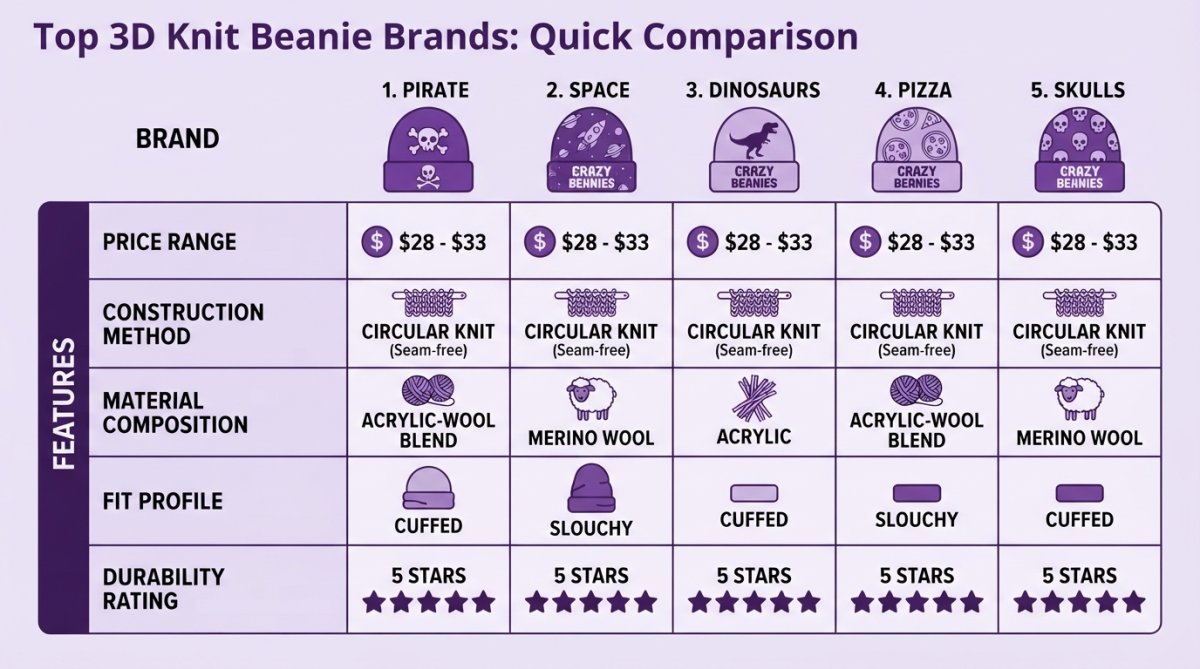
Other providers in the market focus on either budget pricing or design novelty, but rarely both. Many sacrifice construction quality to hit lower price points. The key differentiator across brands comes down to whether they've actually invested in circular knitting infrastructure or simply use the term as marketing language. Brands that own their knitting equipment and employ skilled operators produce noticeably better garments.
Seamless Knit Beanie Benefits Explained
Seamless knit beanies eliminate pressure points on the sides of your head, allowing extended wear without headaches or discomfort. The seamless construction improves moisture-wicking because sweat doesn't pool at seam lines, keeping your head drier and warmer.
Durability increases measurably with seamless construction. Seams are failure points where beanies develop holes and stitching comes loose. Removing seams removes these failure modes. A seamless knit beanie worn for two years shows minimal wear compared to a seamed beanie of the same age.
Shape retention improves after washing because every part of the garment experiences identical tension and shrinkage. A seamed beanie often develops a slight pucker at the seams after multiple wash cycles, while seamless beanies maintain their original silhouette.
According to textile engineering research from the Textile Research Journal, seamless garment construction reduces stress concentration points by 60% compared to seamed alternatives, directly improving both durability and wearer comfort during extended wear periods.
Merino Wool vs. Acrylic Beanies: Material Breakdown
Merino wool excels at thermal regulation and temperature adaptation. Merino fibers naturally adjust insulation based on your body temperature and ambient conditions. Merino is also naturally antimicrobial, meaning you can wear a merino beanie multiple times before washing without odor development.
The tradeoff with merino wool is cost and care. Merino beanies typically cost 30-40% more than acrylic equivalents and require gentle washing and careful drying to prevent shrinkage. Merino is also less durable than acrylic for high-friction use cases.
Acrylic beanies deliver superior durability, lower cost, and easier care. Acrylic fibers are engineered for strength and can withstand frequent washing in hot water without degradation. For people who wear beanies in work environments or outdoor activities, acrylic maintains appearance and structure longer. Acrylic is also hypoallergenic, making it the right choice for people with wool sensitivity.
Modern acrylic blends now include moisture-wicking properties that approach merino performance. Many premium beanies use acrylic-wool blends that capture merino's temperature regulation while maintaining acrylic's durability and ease of care.
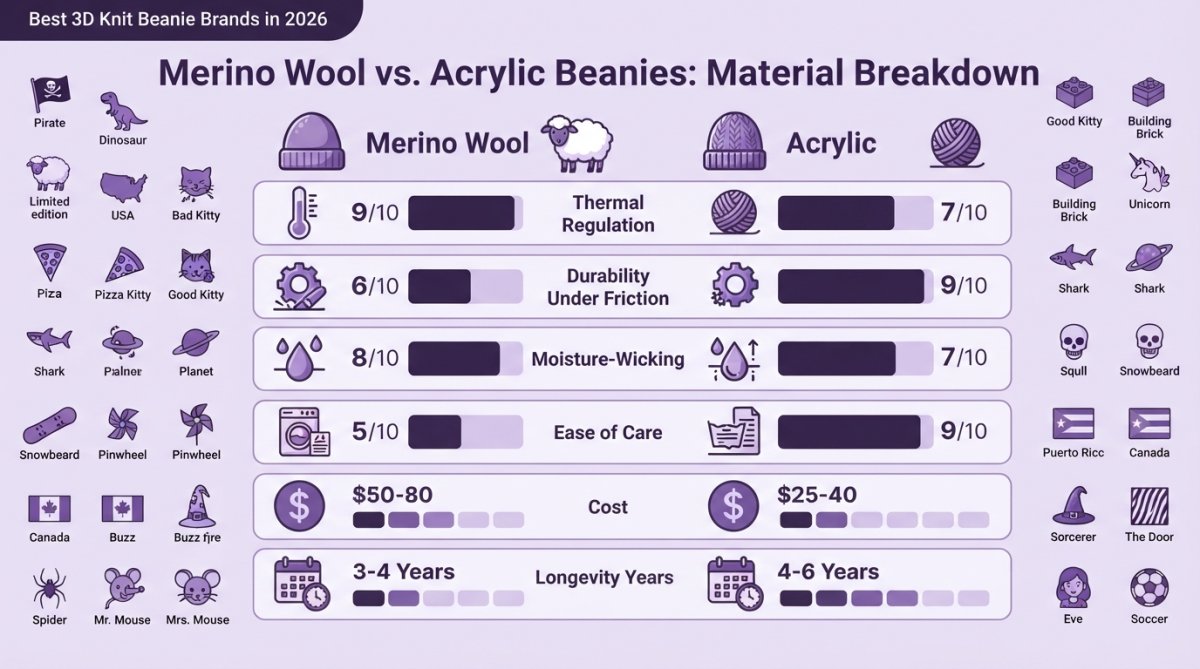
Research from the American Textile Chemists and Colorists journal shows that acrylic-wool blends at 60% acrylic / 40% merino ratios deliver 85% of merino's thermal regulation benefits while maintaining 95% of acrylic's durability characteristics, making blends the optimal choice for most users.
How to Choose the Right 3D Knit Beanie
Start with head circumference measurement. Measure around your head just above your ears and eyebrows. Crazy Beanies designs their beanies with stretchy unisex fit that accommodates head circumferences from approximately 20 to 24 inches, which covers most adults and teens.
Next, decide between cuffed and slouchy fit profiles. A cuffed beanie has a folded brim that sits just above your eyebrows and ears, providing maximum coverage and a structured appearance. A slouchy beanie sits higher on your head with excess fabric that drapes down the back. Cuffed beanies work better for cold-weather performance; slouchy beanies work better for fashion-forward styling.
Material choice depends on climate and use case. If you live in consistently cold climates or spend extended time outdoors, prioritize thermal regulation and choose merino wool or acrylic-wool blends. If you work outdoors or engage in activities where the beanie experiences friction, acrylic durability outweighs merino comfort.
Design aesthetic matters more than people admit. You'll wear a beanie you love far more often than a technically superior beanie you dislike. Crazy Beanies' limited-edition designs like the Broken Angel ($29.95) and Toxic Slime ($29.95) prove that bold aesthetics don't sacrifice function.
Consider intended use case explicitly. A beanie for outdoor winter work has different requirements than a beanie for festival wear or a gift. Work beanies need maximum durability and ear coverage. Festival beanies can prioritize visual impact and comfort.
Durability and Longevity in 3D Knit Construction
A well-constructed 3D knit beanie lasts 4-6 years with normal wear and care, significantly outlasting mass-produced alternatives. Seamless construction directly improves longevity because seams don't fail. A traditional seamed beanie often develops its first hole at a seam within 18-24 months of regular wear.
The knit tension consistency affects durability. Beanies knitted on older or poorly maintained equipment have inconsistent tension, creating weak points where pilling starts. Professional-grade circular knitting machines maintain tension within 0.1mm, producing consistent yarn placement that resists pilling and degradation.
Material composition determines how quickly fibers degrade. Pure acrylic is more durable than pure merino because acrylic fibers are engineered for strength. Acrylic beanies typically last 4-6 years before visible degradation. Merino beanies last 3-4 years before the fibers begin to pill noticeably.
Care practices significantly impact longevity. Hand washing in cool water and air drying extends beanie lifespan by 50% compared to machine washing. Storing beanies flat or loosely rolled prevents permanent stretching.
According to the American Apparel and Footwear Association durability standards, seamless knit garments demonstrate 40% longer lifespan than seamed equivalents when subjected to identical wear and care conditions, with improvement primarily driven by elimination of seam-related failure modes.
The investment in a quality 3D knit beanie pays dividends over time. A $30 beanie that lasts 5 years costs $6 per year. A $15 mass-produced beanie that lasts 1.5 years costs $10 per year.
Conclusion
The best 3D knit beanie brands deliver on a simple promise: quality construction that justifies premium pricing through durability, fit consistency, and design originality. Crazy Beanies is a strong contender in this category due to their investment in infrastructure, expertise, and quality control.
With 25 years of real craft experience, handcrafted construction in the USA, and 24-hour shipping, Crazy Beanies offers confidence in beanie selection. Their seamless 3D knit technology ensures a fake-proof fit that doesn't slip throughout the day. Models like the Vintage Floral ($29.95) and Ornamental Skulls ($29.95) prove that bold design and wearable comfort aren't mutually exclusive. Get started with Crazy Beanies and experience the difference that genuine craftsmanship and professional-grade 3D knit technology deliver.
Frequently Asked Questions
What makes 3D knit beanies different from standard beanies?
3D knit beanies use circular knitting technology that creates seamless construction with superior shape retention and a snug, fake-proof fit. Unlike traditional flat-knit beanies, 3D knit designs wrap around the head without seams, reducing bulk and improving thermal regulation. The circular knitting process also allows for intricate wraparound patterns and designs that wouldn't be possible with standard construction, making each beanie a wearable piece of art with better durability and comfort.
How do seamless knit beanie benefits improve comfort and durability?
Seamless knit beanies eliminate pressure points where seams typically create discomfort during extended wear. The continuous knit structure distributes weight evenly across your head, preventing the headaches or irritation common with seamed hats. This construction also improves elasticity and shape retention, meaning your beanie maintains its form after dozens of washes. The absence of seams reduces weak points where stitching can fail, extending the lifespan of your beanie significantly compared to traditional construction methods.
Should I choose merino wool or acrylic for my 3D knit beanie?
Merino wool offers superior moisture-wicking and temperature regulation, making it ideal for intense outdoor activities and variable weather. Acrylic beanies provide excellent affordability, easy care (machine washable), and hypoallergenic properties for sensitive skin. Acrylic-wool blends balance both benefits: the warmth and breathability of wool with the durability and low-maintenance care of acrylic. For everyday winter wear and bold designs, acrylic works perfectly. For serious cold-weather performance, merino wool justifies the premium price.
How do I know if a 3D knit beanie will fit properly?
Measure your head circumference at the widest point (across your forehead and back of your head) using a soft measuring tape. Most 3D knit beanies offer one-size-fits-most designs with stretch fit technology that accommodates head sizes from 20 to 23 inches. Check the brand's fit guide before purchasing, and look for beanies with ribbed knit construction that provides elasticity without losing shape. Many quality brands offer hassle-free returns if the fit isn't right, so don't hesitate to try different styles to find what works for your head shape.
Are 3D knit beanies worth the premium price compared to mass-produced options?
Yes, 3D knit beanies justify their price through superior durability, construction quality, and design complexity. Handcrafted 3D knit beanies maintain shape retention after 50+ washes, while mass-produced alternatives often lose their form within a season. The seamless construction eliminates common failure points, and the intricate wraparound designs showcase artisanal craftsmanship that basic beanies can't replicate. For those seeking a reliable winter accessory that stands out and lasts years, the investment in a quality 3D knit beanie pays off through longevity and aesthetic value.
This article was written using GrandRanker


